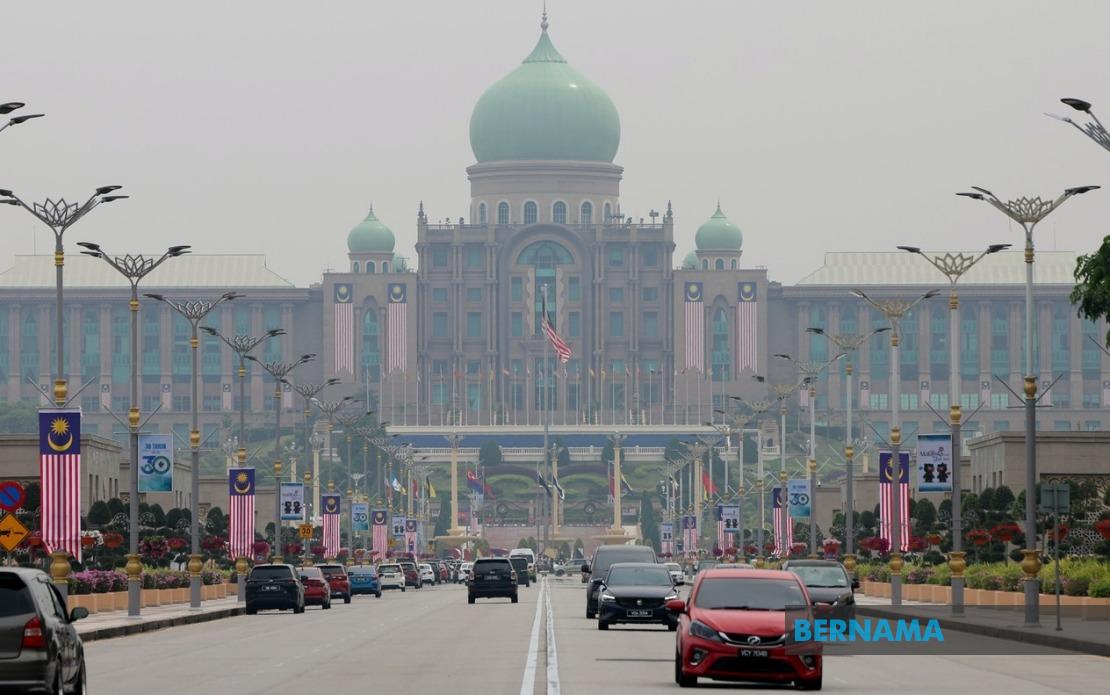
Prime Minister Datuk Seri Anwar Ibrahim will bring the escalating haze problem to the forefront of bilateral discussions when he meets Sultan Hassanal Bolkiah in Brunei tomorrow, as part of the 27th Malaysia-Brunei Annual Leaders' Consultation. The environmental crisis, which has been severely impacting air quality across parts of Malaysia and the broader region, represents a critical issue requiring coordinated attention at the highest political levels between the two neighbouring nations.
Malaysian High Commissioner to Brunei Datuk Mohd Aini Atan confirmed that regional air pollution will feature prominently in tomorrow's talks, emphasising that both governments regard it as a pressing contemporary concern demanding immediate bilateral cooperation. The presence of senior figures from Malaysia's most affected states—Sarawak Premier Tan Sri Abang Johari Tun Openg and Sabah Chief Minister Datuk Seri Hajiji Noor—at the consultation underscores the government's recognition that this transnational environmental challenge requires coordinated solutions spanning multiple administrative levels.
The seriousness of the air quality situation became evident through real-time monitoring data released on August 20, which painted a troubling picture of pollution levels across eastern Malaysia. Serian in Sarawak emerged as the most severely affected locality, registering an alarming Air Pollutant Index reading of 204—classified as "very unhealthy" and approaching hazardous thresholds that pose significant risks to public health. This single measurement encapsulates the urgency driving the diplomatic agenda during Anwar's forthcoming visit.
Beyond Serian's alarming peak, a cluster of additional Sarawak locations reported dangerous air quality measurements that require immediate intervention. The state capital Kuching recorded an API of 195, placing it in the "unhealthy" category alongside Samarahan at 182, Sri Aman at 179, Sarikei at 158, and Sibu at 152. These readings, compiled through Malaysia's Air Pollutant Index Management System portal as of late afternoon on August 20, demonstrate that the pollution crisis extends across a broad geographic swathe of the state rather than being confined to isolated pockets.
The geographic concentration of hazardous readings in Sarawak reflects the complex meteorological and geographical factors that intensify transboundary pollution in Borneo. Located on the eastern Malaysian portion of the shared island, Sarawak's exposure to regional air mass movements and its proximity to major emission sources in neighbouring territories make it particularly vulnerable to haze episodes. The state's economy, heavily dependent on tourism, agriculture, and natural resource industries, faces substantial disruption when air quality deteriorates to levels that deter visitors and complicate outdoor operations.
The Annual Leaders' Consultation mechanism represents the foremost formal channel for strategic dialogue between Malaysia and Brunei at the executive level. By elevating the haze issue to this summit platform, the Malaysian government signals its view that transnational environmental challenges demand treatment comparable to traditional security and economic negotiations. The format allows both nations' leaders to establish overarching policy directions and mechanisms that cascade through bilateral bureaucracies, potentially facilitating faster implementation of coordinated responses compared to technical-level discussions.
Brunei's significance in these discussions extends beyond mere geographical proximity. The sultanate shares Borneo's complex environmental systems and faces its own air quality challenges during regional haze episodes. Brunei's small but developed economy and its strategic position within ASEAN mean that collaborative regional approaches to transboundary pollution resonate with the sultanate's broader interests in maintaining stable, interconnected Southeast Asian systems. Bilateral engagement on environmental matters also strengthens the diplomatic foundation between the two nations, building reciprocal goodwill that facilitates cooperation across multiple policy domains.
The timing of Anwar's visit assumes particular significance given the pattern of haze episodes across Southeast Asia. These transnational air quality crises typically intensify during specific seasons and often stem from agricultural burning, industrial emissions, and natural phenomena in multiple countries simultaneously. Malaysia's experience managing previous haze crises—including the severe episodes of 1997-1998 and more recent occurrences—has generated institutional knowledge and diplomatic relationships that can be leveraged to address recurrent problems. By incorporating haze discussions into the highest-level bilateral forum, Malaysia positions itself to negotiate commitments that could reduce future pollution episodes through coordinated regional monitoring, early warning systems, and cross-border environmental enforcement cooperation.
The inclusion of Sarawak's political leadership in the consultation reflects the practical reality that solutions to transboundary haze require active participation from subnational governments that bear the immediate consequences of air pollution. Sarawak's premier and the Sabah chief minister bring on-the-ground experience of how haze disrupts state-level economic activities, public health outcomes, and administrative operations. Their presence enables the prime minister to ground diplomatic discussions in concrete regional impacts, transforming abstract environmental cooperation into negotiations addressing tangible concerns that state governments can monitor and enforce.
Looking forward, the outcomes of the Anwar-Sultan Hassanal Bolkiah consultation may establish frameworks for enhanced cooperation on monitoring, information sharing, and coordinated responses to future haze episodes. Such mechanisms could include real-time data exchange protocols, joint task forces addressing regional emission sources, and diplomatic channels for rapid escalation when air quality readings approach crisis levels. For Malaysian readers and regional observers, the diplomatic elevation of this environmental issue signals a maturing recognition that Southeast Asian development and stability depend increasingly on managing transnational environmental challenges through structured, high-level political cooperation alongside technical expertise.
The implications extend to Malaysia's broader regional leadership aspirations within ASEAN. Demonstrating commitment to collaborative solutions for shared environmental problems enhances Malaysia's credibility as a partner concerned with collective regional welfare rather than narrow national advantage. This positions Malaysia to shape emerging regional environmental governance frameworks as Southeast Asian nations increasingly grapple with climate change, biodiversity loss, and transboundary pollution—challenges that no individual country can effectively address through unilateral action alone.

