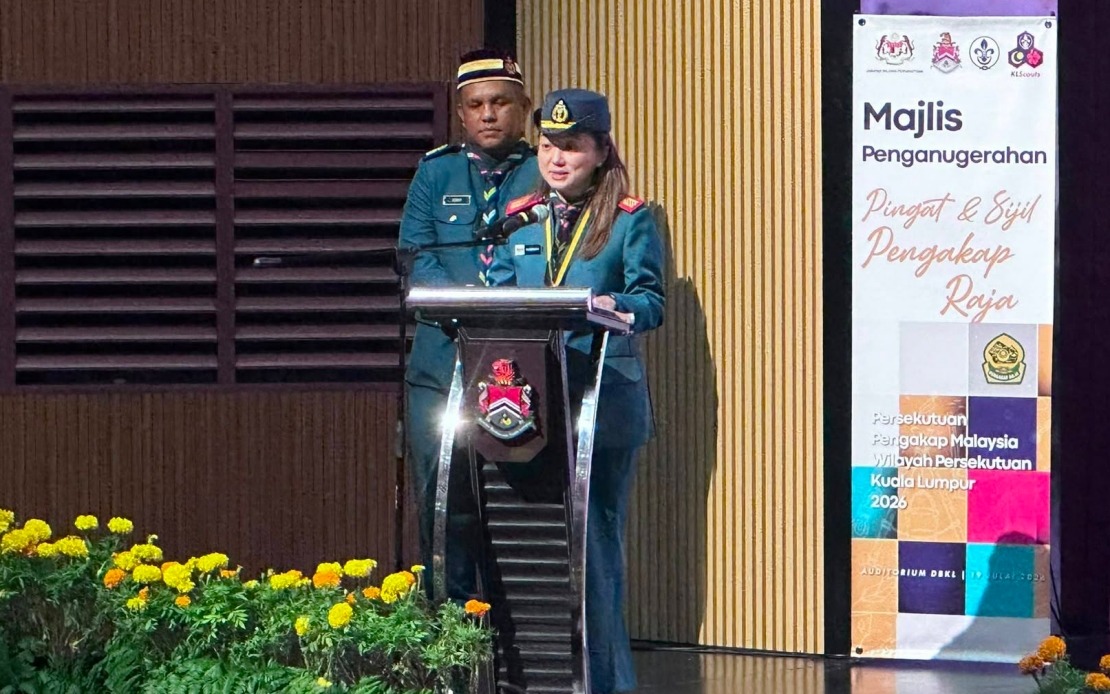
Hannah Yeoh, Minister in the Prime Minister's Department (Federal Territories), has taken on a new leadership role after being proclaimed president of the Federal Territories State Scouts Council during a formal ceremony held at City Hall Auditorium in Kuala Lumpur on July 19. The appointment signals the government's commitment to strengthening youth development initiatives in Malaysia's capital region through the established scouting movement, which has served as a cornerstone for character building and civic engagement among young Malaysians for generations.
The proclamation ceremony coincided with the 2026 Kuala Lumpur Federal Territory King's Scout Medal and Certificate Presentation Ceremony, an annual event recognising exceptional achievement within the scouting fraternity. By merging the leadership transition with this prestigious awards gathering, organisers underscored the significance of youth development as a ministerial priority. Yeoh's appointment arrives at a moment when Malaysia's scouting organisations are scaling up their outreach, particularly to communities with limited access to structured youth programmes.
Yeoh demonstrated her administrative support immediately by pledging RM20,000 in direct ministerial allocation toward strengthening scouting initiatives throughout the Federal Territories. The funding strategy reflects a two-pronged approach: RM10,000 has been earmarked for the Kuala Lumpur Federal Territory branch of the Scouts Association of Malaysia to design and execute enhanced programming during school holiday periods, maximising youth engagement when young people have availability outside academic commitments. The minister subsequently added a second RM10,000 tranche specifically designated for training initiatives targeting youth populations who face barriers to standard scouting participation, whether due to socioeconomic constraints, geographical isolation, or other limiting factors.
This dual allocation strategy addresses a recognised gap in youth programme accessibility. While traditional scouting structures have successfully cultivated leadership qualities in participating youth, many Malaysian teenagers remain outside these networks due to logistical or financial obstacles. By explicitly ringfencing funds for inclusive programming, the ministry acknowledges that sustainable youth development requires intentional efforts to reach marginalised populations. The expanded training component recognises that mentorship and skill-building transcend formal scouting ranks, encompassing broader community investment in human capital.
Kuala Lumpur City Hall Executive Director Rosli Nordin was simultaneously proclaimed chairman of the Kuala Lumpur Federal Territory State Scouts Council, establishing a collaborative governance structure between municipal authorities and state scouting leadership. This administrative pairing positions city planning and youth development as complementary functions, suggesting that urban governance in Malaysia's federal territories now explicitly incorporates youth engagement within strategic frameworks. Nordin's dual role bridges administrative hierarchies, potentially facilitating resource allocation and programme coordination across municipal and scouting organisations.
The ceremony recognised 58 recipients earning King's Scout Certificates, the scouting movement's apex credential. Attaining this distinction requires demonstrating mastery across multiple competency domains: leadership capability, technical skills proficiency, psychological resilience, measurable community service contributions, and deep internalisation of scouting principles. Recipients represent exemplary young leaders whose achievements validate the movement's developmental methodology. These individuals embody the movement's ideology that rigorous character formation produces citizens capable of serving Malaysian society with integrity and constructive commitment.
Beyond apex awards, 75 scout leaders received Chief Scout's Commendation Certificates, acknowledging their instructional contributions and mentorship. An additional 108 scout leaders earned Federal Territories Scouts Wangsa Certificates, recognising sustained engagement in youth development infrastructure. These tiered recognition systems maintain engagement across the scouting hierarchy, ensuring that adult volunteers sustaining programme delivery receive acknowledgment for their often-invisible organisational contributions. The breadth of recipients indicates substantial volunteer infrastructure supporting scouting activities throughout the federal territories.
The gathering included Malaysia's Chief Scout, Major General Datuk Prof Dr Mohd Zin Bidin, lending institutional legitimacy to the proceedings and signalling national-level endorsement of Federal Territories scouting initiatives. Dewan Rakyat Speaker Tan Sri Johari Abdul, serving as National Scout Council member, also attended, demonstrating that parliamentary leadership recognises scouting's developmental significance. This high-level participation reflects an understanding across Malaysia's political establishment that youth engagement through structured organisations like scouting contributes to social stability and national cohesion.
The ceremony's timing and composition suggest deliberate positioning of scouting within broader national youth policy conversations. As Malaysia navigates demographic shifts and evolving social challenges, institutional mechanisms fostering leadership development among young citizens gain strategic importance. The Federal Territories, as administrative entities directly under federal purview and encompassing the capital's complex urban demographics, serve as pilot territories for testing scalable youth engagement models. Success in KL, Labuan, and Putrajaya could inform nationwide approaches to youth programming across Malaysian states.
Yeoh's ministerial allocation carries implications beyond immediate fund disbursement. The decision to specifically fund inclusive programming suggests recognition that Malaysia's scouting movement, while historically successful among particular socioeconomic cohorts, requires deliberate expansion to serve broader demographic representation. By targeting youth facing participation barriers, the ministry acknowledges that democratic societies benefit from broad-based leadership development extending beyond traditionally advantaged populations. This inclusive framing potentially reshapes how Malaysian youth organisations conceptualise access and belonging.
The Federal Territories' scouting infrastructure now operates under ministerial-level strategic direction and direct funding commitments, elevating its institutional priority within the federal administrative apparatus. This elevation reflects confidence that youth development through scouting mechanisms justifies sustained resource investment and high-level political attention. For Southeast Asian observers monitoring Malaysia's youth policy approaches, the Federal Territories model demonstrates how governments can leverage traditional civic institutions like scouting toward contemporary inclusion objectives.

