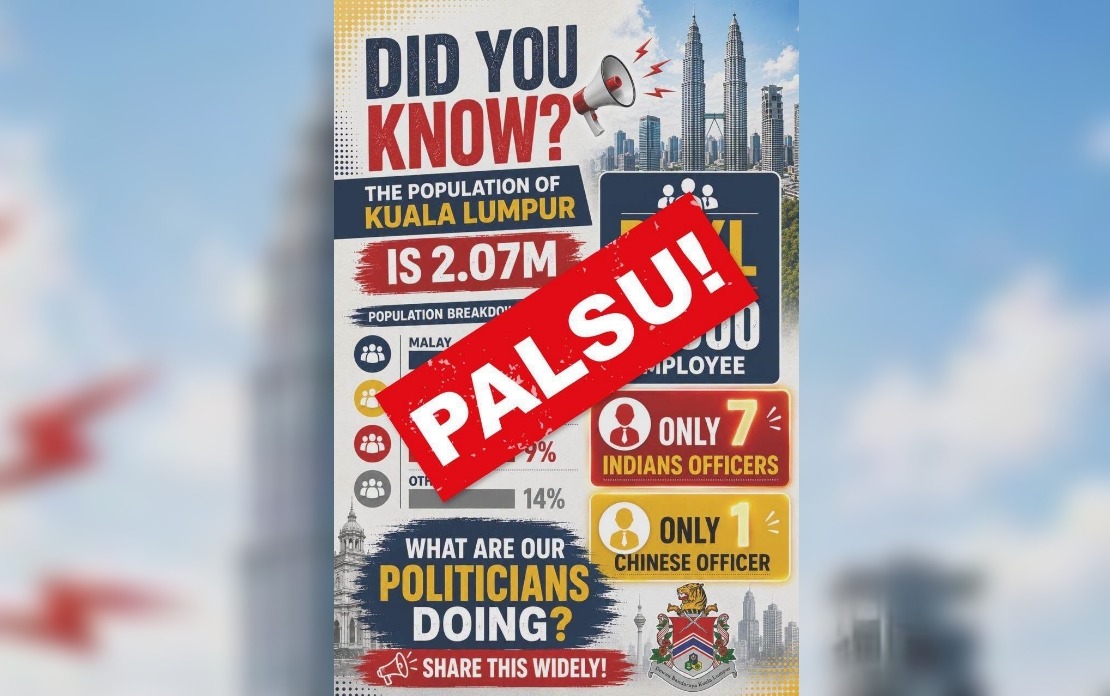
Kuala Lumpur City Hall (DBKL) has become the subject of deliberate misinformation during Malaysia's current election campaign, with false claims about the local authority's staff composition spreading rapidly through social media. A WhatsApp poster making specific allegations about the representation of minority ethnic groups has prompted the Federal Territories Minister to issue a public clarification, underscoring growing concerns about how disinformation tactics are being weaponised in electoral politics.
Minister in the Prime Minister's Department (Federal Territories) Hannah Yeoh directly addressed the controversy by providing verified employment figures that contradict the viral narrative. According to official DBKL records as of July 1, 2026, the city hall maintains a workforce of 9,131 staff members, including 490 Indian employees and 22 Chinese staff—substantially higher numbers than the false claims of just seven Indian and one Chinese employee that had been circulating online. The disparity between the misinformation and reality highlights how easily distorted data can take root during politically charged periods when public attention is heightened.
Within DBKL's Management and Professional Group specifically, the figures show greater diversity than the viral post suggested, with 10 Indian officers and two Chinese officers holding positions in these white-collar categories. These positions typically carry greater responsibility and influence within the organisation, making their inclusion in any accurate assessment of workforce representation crucial. Nevertheless, Yeoh acknowledged that even with these corrected numbers, the organisation recognises that minority ethnic representation in its upper echelons remains an area warranting further development and targeted improvement.
Yeoh's response moved beyond simple fact-correction to embrace a broader institutional reform agenda. She has directed DBKL to conduct a comprehensive review of its recruitment data, examining hiring practices, promotion processes, and job advertisement channels to identify systemic gaps that may inadvertently disadvantage any applicant groups. This proactive stance suggests recognition that while the viral claims were fabricated, underlying questions about fair representation and merit-based advancement in government employment deserve serious investigation and remedy. The review framework emphasises transparency and fairness—principles essential for public confidence in government institutions.
The episode reflects a troubling pattern in Malaysian electoral discourse where claims about ethnic composition of government agencies become flashpoints for political mobilisation. By manufacturing specific workforce statistics, the original poster appeared designed to inflame sensitivities around opportunities and representation, exploiting legitimate concerns about equitable access to employment. Such tactics risk poisoning the broader conversation around how to genuinely address any legitimate gaps in workforce diversity and merit-based advancement across public sector institutions.
Yeoh's statement also carried an implicit appeal for political responsibility, urging all parties to refrain from exploiting workforce diversity issues as tools for sowing racial discord. She framed the challenge not as a crisis demanding emotional or divisive responses, but as an operational and institutional matter requiring careful data analysis and evidence-based reform. This distinction matters significantly in a multicultural democracy where competing narratives about equity and representation can easily escalate into communal tensions if weaponised for political gain.
The specific allegation of severely underrepresented minority groups within DBKL would have carried significant implications for public sector hiring practices across Malaysia had it been accurate. Local authorities in Malaysia's federal territories serve as visible symbols of government inclusion and merit-based advancement, making their employment practices subject to public scrutiny. The misinformation campaign, whether deliberate or accidentally amplified, risked eroding public confidence in DBKL's hiring integrity and triggering calls for investigations that a simple fact-check would have rendered unnecessary.
In the Malaysian context, where interethnic relations remain sensitive and government institutions are expected to embody the constitutional principles of equal opportunity across all communities, accusations about discriminatory hiring at major public agencies carry particular weight. The revelation that false data had spread so readily through social media channels during an election period underscores how digital platforms enable rapid dissemination of unverified claims with potential to inflame public sentiment. The fact that such claims could gain traction despite the availability of official employment records raises questions about digital literacy and how citizens evaluate information sources during politically polarised moments.
Yeoh's commitment to improving recruitment transparency and merit-based processes suggests government willingness to strengthen institutional credibility beyond merely debunking individual false claims. By opening DBKL's hiring and promotion mechanisms to scrutiny and committing to improvements, she signals that legitimate concerns about representation—even when the specific allegations prove baseless—warrant institutional response. This approach sidesteps the defensive posture that might entrench polarisation, instead reframing diversity and fair opportunity as shared values that all stakeholders should support.
For Malaysian civil service management more broadly, this incident carries lessons about the vulnerability of public institutions to reputational damage through disinformation, particularly during electoral cycles. DBKL's experience demonstrates how rapidly false workforce statistics can spread before official corrections gain equivalent reach and credibility. The episode may prompt other government agencies to proactively publish workforce composition data and recruitment criteria, reducing ambiguity that misinformation campaigns might otherwise exploit.
The timing of such false claims during active election campaigns raises questions about coordination and intent that authorities may wish to investigate further. Whether the misinformation emerged organically through WhatsApp group amplification or represented deliberate political strategy, its circulation reflects a broader challenge facing Malaysian democracy: ensuring that public discourse remains anchored in verifiable facts even when political competition intensifies. The rapid deployment of Yeoh's corrective statement demonstrates that government institutions can respond quickly to misinformation, but such reactive corrections may reach only portions of the audience initially exposed to false claims.

