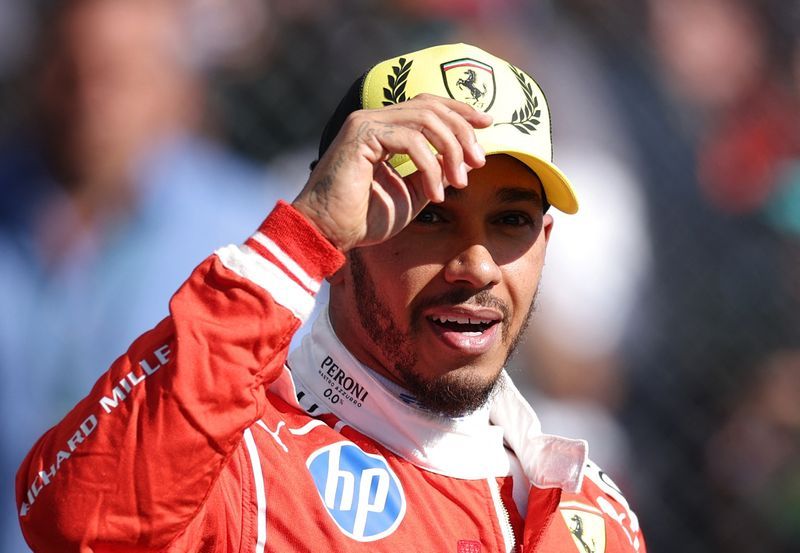
Formula One's Hungarian Grand Prix this weekend presents a starkly contrasting narrative for the Mercedes team. While Lewis Hamilton arrives at the Hungaroring with genuine optimism about Ferrari's prospects on a circuit that rewards mechanical precision over raw engine power, his teammate George Russell is desperately seeking redemption after a run of results that has undermined the outfit's championship credentials. Russell's recent struggles have dominated conversation in the paddock, with the Briton's car apparently surrendering substantial time on straightaways—a deficiency that proved catastrophic at the high-speed Spa-Francorchamps circuit, where he spun into gravel for his third points-less finish of the campaign. That costly weekend exit allowed Russell to be leapfrogged by Hamilton in the overall standings, a reversal that underscores how quickly fortunes can shift in the sport's upper echelon.
Hamilton's repositioning into second place, 45 points adrift of championship leader Kimi Antonelli, coincides with his arrival at a venue where he holds an almost proprietorial record. The seven-time world champion has accumulated eight Hungarian victories across his decorated career, an astonishing tally unmatched by any other driver at the Budapest facility. Tellingly, six of those triumphs came during his time at Mercedes, before his controversial switch to Ferrari. Should Hamilton prevail this weekend, he would draw level with his all-time record of nine wins at a single circuit—a mark he established at his beloved Silverstone, McLaren's home venue. These aren't merely statistical curiosities; they represent Hamilton's intimate familiarity with extracting performance from the Hungaroring's technical demands, where smooth inputs and tyre management supersede the straightline grunt that has plagued Mercedes' campaign.
The topographical and aerodynamic characteristics of the Hungarian circuit hold particular significance in the current power hierarchy. Unlike Spa's emphasis on engine performance and high-speed stability, Budapest demands meticulous setup work and sophisticated energy deployment. This shift in priority offers Ferrari genuine encouragement, as the Maranello team has historically found the tight, twisting Hungaroring less punishing than circuits favouring Mercedes' superior engine characteristics. Ferrari team principal Fred Vasseur, however, adopted a notably cautious tone when discussing his squad's prospects, counselling against complacency despite widespread paddock optimism. His insistence that the circuit represents "a different game" and that Ferrari cannot assume success—even on paper, where the engine deficit should prove less consequential—reflects the experienced strategist's reluctance to overlook the variables that complicate prediction in modern Formula One.
Charles Leclerc has emerged as Ferrari's most consistent performer through the recent European sequence, securing victory at Silverstone and following that with second place at Spa, outperforming Hamilton in the immediate standings. Hamilton's own recent record—wins in Barcelona coupled with a third-place finish at Silverstone and fourth at Spa—demonstrates capability across varying circuit types but falls short of the consistency required to mount a sustained championship challenge. The Hungaroring represents an opportunity for Hamilton to recapture momentum and justify the calculated gamble he undertook in joining Maranello. For Leclerc, maintaining competitive form becomes essential to capitalising on Ferrari's structural improvements and the favourable circuit characteristics.
Antonelli's perspective on the competitive landscape proves instructive regarding the four-way battle likely to materialise at Budapest. The Italian teenager, who has accumulated six victories through the opening ten rounds, compared the Hungaroring's demands to Monaco's requirements—circuits where raw speed and instinctive racecraft matter as much as technological advantage. This assessment suggests that Max Verstappen's Red Bull and the McLaren team, both capable performers on twistier venues where energy management plays a reduced role, possess legitimate prospects of challenging for victory. The concentration of multiple previous Hungarian winners among the top contenders—with only Mercedes drivers and Leclerc lacking prior success at the venue—indicates that experience on this particular circuit confers tangible advantage, yet Mercedes' technical problems may neutralise that historical edge.
McLaren's competitive response demonstrates the team's determination to reclaim championship momentum through substantive technical upgrades. The Woking squad is introducing a new floor alongside revised aerodynamic components, accompanied by continued development of an experimental rear wing configuration. These enhancements, targeted at Budapest's specific demands, represent McLaren's attempt to narrow the gap created by recent races where Red Bull and Mercedes advances have provided unexpected advantage. The temporary substitution of reserve driver Leonardo Fornaroli—last year's Formula Two champion—during Friday's opening practice session, with Oscar Piastri sidelined, suggests McLaren's desire to extract maximum data from their upgrades whilst managing their regular driver commitments.
Aston Martin's trajectory presents a longer-term development challenge. The team has finally prepared their long-awaited chassis upgrade for Hungarian introduction, yet the accompanying engine enhancement from Honda partner will not arrive until the Dutch Grand Prix closes August. This staggered delivery of technical improvements typifies the logistical complexities confronting midfield competitors seeking to bridge the performance chasm separating them from the front-running trio. Such constraints reinforce the importance of maximizing current components before fresh power units become available, a reality that contextualises Aston Martin's developmental patience against the pressing commercial demands of championship competition.
For Malaysian and Southeast Asian Formula One enthusiasts, the Hungarian Grand Prix carries significance beyond Hamilton's personal quest for vindication. The championship's trajectory through August represents a critical inflection point determining whether Mercedes can recover from Russell's recent setbacks, whether Ferrari's engine limitations will constrain their title ambitions despite favourable circuit characteristics, or whether McLaren's upgrade package will restore competitive balance. Hamilton's historical mastery at Budapest, combined with Ferrari's structural advantages on technical circuits, suggests the weekend could reshape championship perceptions before the sport's traditional August recess provides teams opportunity for radical developmental consideration. The Hungaroring has frequently produced unexpected results despite surface predictability, a characteristic that renders Budapest simultaneously challenging for favourites and unpredictably generous to those with strong machinery and decisive tactical execution.
The broader narrative arc encompasses questions about Ferrari's genuine competitiveness under contemporary regulations and whether Hamilton's transition will ultimately represent the masterstroke it initially appeared. His eighth Hungarian victory would provide compelling evidence that Ferrari's technical trajectory and strategic direction validate his summer departure from Mercedes. Conversely, sustained Mercedes struggles would accelerate questions about Russell's adaptability to high-pressure circumstances and whether the team's recent construction fundamentally misaligns with contemporary aerodynamic philosophy. Budapest's technical nature suggests that neither engine power nor straightline advantage will determine the outcome, but rather the driver and team combining superior strategic acumen with mechanical preparation and instinctive racecraft—qualities that Hamilton, despite recent circumstance, has seldom failed to deliver when circumstances align favourably.

