The 2026 PKR National Congress in Melaka on August 15 witnessed a significant show of unity when Sabah Chief Minister Datuk Seri Hajiji Noor and a delegation of Gabungan Rakyat Sabah (GRS) leaders attended as special guests. The high-profile attendance has been interpreted by Sabah PKR officials as a powerful endorsement of the deepening ties between Sabah's state administration and the federal MADANI Government, suggesting that political cooperation in the peninsula extends well beyond traditional coalition alignments.
The symbolic weight of the occasion cannot be understated for Malaysian political observers. While Sabah's GRS operates independently from Peninsular Malaysia's major coalitions, the prominent presence of state leaders at a PKR-organised national gathering underscores a pragmatic approach to governance that prioritises addressing citizen concerns over rigid partisan boundaries. This cross-coalition engagement has become increasingly characteristic of Malaysia's political landscape, particularly in how regional leaders navigate both state and national interests.
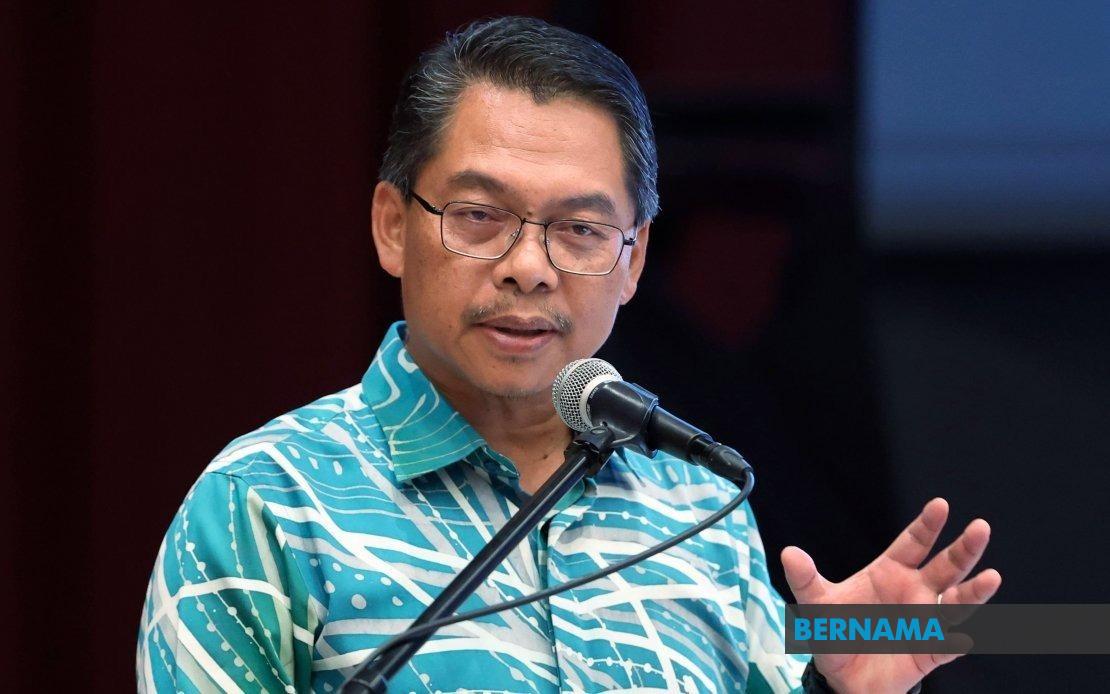
Datuk Mustapha Sakmud, who chairs the Sabah PKR Leadership Council and serves as Minister in the Prime Minister's Department (Sabah and Sarawak Affairs), articulated the rationale behind this cooperation in carefully measured terms. He framed the gathering not merely as a political event but as evidence of substantive collaboration that transcends electoral calculation. According to Mustapha, the partnership encompasses economic development, infrastructure improvements, and addressing the fundamental needs of Sabah's population—areas where federal-state alignment directly impacts delivery of public services.
The emphasis on development and economic opportunity reflects a broader commitment that the MADANI Government has made regarding equitable national growth. Mustapha stressed that Prime Minister Datuk Seri Anwar Ibrahim's administration recognises its obligation to implement development initiatives fairly across all regions, with particular sensitivity to Sabah's distinct characteristics and governance requirements. This framing suggests that federal policy will be calibrated to address not merely generic national objectives but region-specific challenges that emerge from Sabah's geography, demographics, and historical position within Malaysia.
A central theme of Mustapha's statement concerned the Malaysia Agreement 1963 (MA63), the foundational accord under which Sabah (then North Borneo) joined the Federation. Implementation of MA63 provisions has been a recurring priority for Sabah administrations across party lines, touching on matters of fiscal allocation, resource rights, and constitutional protections. The PKR minister's reaffirmation that his party would champion these rights within what he described as a fair federal framework provides assurance that MA63 remains a living policy concern for the federal government, not merely historical documentation.
Among the GRS dignitaries present were Deputy Chief Minister I Datuk Seri Dr Joachim Gunsalam, Sabah Rural Development Minister Datuk Rubin Balang, Sabah Youth, Sports Development and Creative Economy Minister Datuk Nizam Abu Bakar Titingan, and Sabah Education, Science and Technology Minister Datuk James Ratib. The breadth of ministerial representation—spanning rural development, education, youth affairs, and creative economy portfolios—signals that cooperation encompasses diverse policy domains rather than being confined to ceremonial or security matters.
The political significance of cross-coalition attendance at major party congresses warrants contextual examination. In earlier phases of Malaysian politics, such appearances might have been rare or controversial, viewed as implicit endorsements of rival coalitions. The contemporary normalisation of such engagement reflects both the fragmentation of Malaysia's two-coalition structure and a maturation of political culture whereby leaders distinguish between electoral competition and governance partnership. For Sabah particularly, this flexibility has allowed successive administrations to secure resources and policy support regardless of federal coalition composition.
Mustapha's statement that the GRS leaders' presence conveyed a message—that political differences need not prevent constructive dialogue on matters of state interest—encapsulates a philosophy increasingly embraced across Malaysia's regional governments. This approach has practical implications for Sabahans, potentially translating into more responsive federal agencies, faster project implementation, and greater influence in shaping policies affecting the state. When political friction is minimised at leadership level, the bureaucratic mechanisms through which federal resources flow tend to operate more smoothly.
The congress itself, themed "Memugar Reformasi, Membina MADANI," was officially opened by Prime Minister Anwar Ibrahim at the Melaka International Trade Centre. The theme reflects PKR's self-positioning as custodian of Malaysia's reform agenda while simultaneously advancing the MADANI framework that structures the government's policy priorities. For PKR, the presence of Sabah's leadership provided an opportunity to demonstrate that the party's influence and coalition extend into the East Malaysian states, enhancing its credentials as a genuinely national party rather than one confined to Peninsular concerns.
The implications for Malaysian federalism and regional governance extend beyond immediate political theatre. The Sabah-federal cooperation model, exemplified by Hajiji and GRS leaders' participation, suggests that Malaysia's states increasingly function as negotiating partners rather than subordinate administrative units. This evolution reflects both constitutional reality—Malaysia is a federation with substantive state powers—and pragmatic recognition that federal policy succeeds only with state-level buy-in and implementation capacity. For other states observing these dynamics, the message is clear: engagement across coalition lines can yield tangible benefits.
Looking ahead, the maintenance of these cooperative ties will likely depend on continued alignment of substantive interests. Federal delivery on development promises and implementation of MA63 provisions will matter more than ceremonial gestures. For Sabahans, the critical question remains whether the goodwill evidenced at the PKR congress translates into concrete policy outcomes: infrastructure projects, business opportunities, and meaningful progress on long-standing state grievances. The effectiveness of this federal-state partnership will ultimately be measured not in attendance at party events but in improvements to citizens' daily lives.

