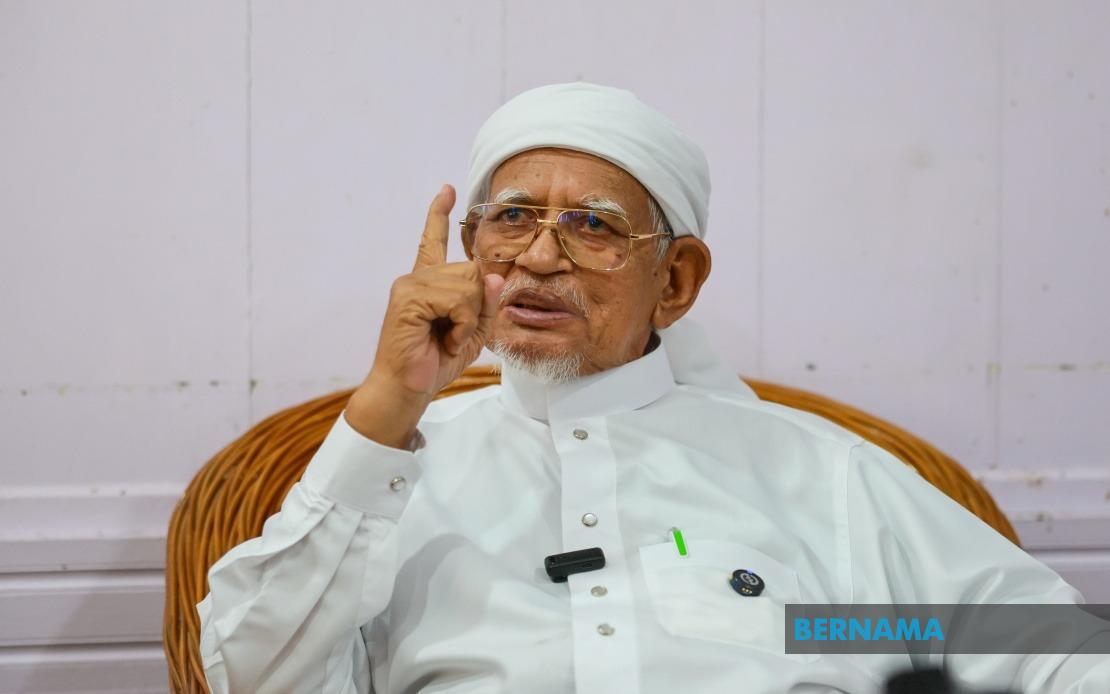
A sharp dispute has erupted within Malaysia's opposition coalition Perikatan Nasional over the status of Bersatu's membership, with PAS president Tan Sri Abdul Hadi Awang asserting that the party has automatically forfeited its place following leadership signals to establish an alternative political alliance. Speaking after delivering a morning lecture at Rusila Mosque in Marang on August 7, Abdul Hadi maintained that Bersatu's expressed intention to pursue coalition arrangements with other parties effectively terminated its position within PN, requiring no formal administrative process or official notification from the coalition leadership.
The dispute centers on divergent interpretations of PN's constitutional framework and membership obligations. Abdul Hadi's position rests on the principle that an announcement of intent to form competing political structures represents an irreconcilable conflict with PN membership, making automatic withdrawal the logical consequence. From his perspective, the coalition need not undertake formal procedural steps to enforce an outcome that occurs through the member party's own actions and declarations.
The trigger for this confrontation traces back to recent statements by Bersatu president Tan Sri Muhyiddin Yassin, who indicated the party would explore establishing a new coalition involving several political organisations following the Negeri Sembilan state election. These remarks signalled a potential shift in Bersatu's strategic positioning and raised questions about the party's continuing commitment to PN's collective framework.
Bersatu secretary-general Datuk Seri Mohamed Azmin Ali has categorically rejected Abdul Hadi's interpretation, launching a counter-assertion grounded in constitutional technicalities. Azmin contends that Bersatu retains legitimate membership status precisely because the PN Constitution contains no provision allowing component parties to lose membership automatically. He points specifically to Clause 7A of the Perikatan Nasional Constitution, which vests authority for membership decisions exclusively in the presidential council, a body comprising PN's senior leadership.
Under Azmin's reading of these constitutional provisions, any determination regarding a component party's membership status must follow formal procedures rather than occurring through tacit understanding or the party's own actions. He emphasised that unless the presidential council convenes and formally votes to revoke or terminate Bersatu's membership, the party maintains all rights and responsibilities associated with PN membership regardless of public statements about exploring alternative arrangements.
This distinction between procedural and substantive interpretations reflects a broader tension within Malaysian opposition politics, where coalition membership operates under constitutional frameworks that may not accommodate the fluid, tactical repositioning that parties increasingly pursue. The disagreement suggests potential ambiguities in how PN's founding documents address scenarios where component parties signal intent to explore alternatives without formally withdrawing.
Azmin has explicitly denied that Abdul Hadi possesses authority to determine Bersatu's PN status unilaterally. By framing the PAS president's assertion as an unauthorised intrusion into constitutionally prescribed procedures, Azmin stakes Bersatu's claim on procedural legitimacy rather than substantive alignment. This approach shields Bersatu from the accusation of disloyalty while maintaining flexibility regarding future coalition arrangements.
The dispute carries implications extending beyond internal PN mechanics. For Malaysian observers, this confrontation illustrates how opposition coalitions operate under tension between formal constitutional structures and informal political dynamics. When component parties grow strategically restless, constitutional ambiguities become battlegrounds where competing factions contest membership rights and coalition discipline.
Azmin has signalled that Bersatu will escalate the matter by lodging an official complaint with the Registrar of Societies, shifting the dispute from internal coalition discourse toward state regulatory apparatus. This escalation potentially transforms what might have remained an internal disagreement into a legally-framed controversy, with implications for how coalition membership gets documented and recognised by Malaysian authorities.
The confrontation reflects deeper challenges facing opposition alliances in sustaining unity amid competing strategic interests. Bersatu's exploration of alternative coalitions suggests the party perceives opportunities or necessities that diverge from PN's current positioning, whether regarding electoral strategy, policy priorities, or leadership hierarchies. Rather than withdrawing voluntarily, the party appears intent on maintaining nominal PN membership while pursuing parallel arrangements.
For Malaysia's broader political landscape, this episode underscores how coalition structures remain vulnerable to unilateral reinterpretation during moments of strategic realignment. Both PAS and Bersatu claim constitutional legitimacy for mutually exclusive positions, suggesting that PN's founding documents may require clarification regarding membership procedures and the rights of component parties to explore alternative arrangements without automatic consequences.
The resolution of this dispute will likely depend on whether PN's presidential council convenes to formally adjudicate the matter, whether regulatory authorities intervene following Bersatu's complaint, or whether informal negotiations restore consensus within the coalition. Until clarity emerges, the ambiguity surrounding Bersatu's membership status will persist, demonstrating how constitutional interpretation disputes can effectively paralyse coalition decision-making when fundamental procedures remain contested.

