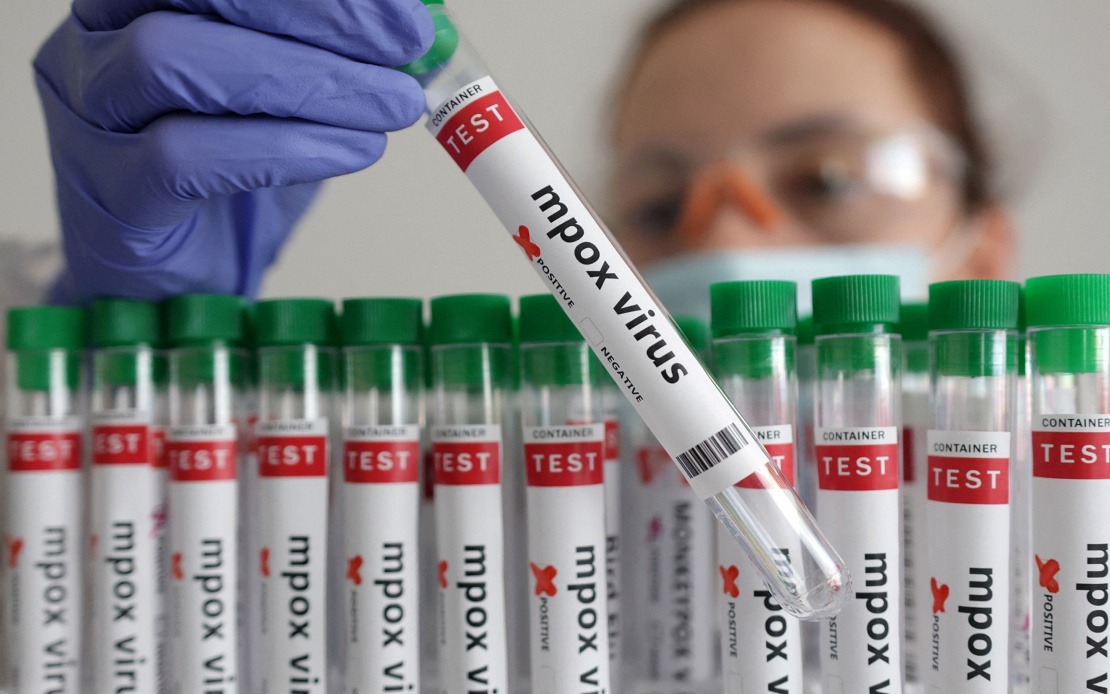
Guinea-Bissau has confirmed its first case of mpox, marking a significant public health development for the West African nation and prompting swift intervention by authorities. Public Health Minister Quinhin Nantote made the announcement on Saturday evening, identifying the patient as a 27-year-old woman who initially presented for medical assessment on June 24. The identification and confirmation process involved multiple institutional layers, reflecting the seriousness with which the discovery was treated and the cooperation mechanisms now in place across the region.
The diagnostic pathway demonstrated how West African health systems work collaboratively to verify emerging threats. Initial samples collected from the patient's characteristic skin lesions were processed at Guinea-Bissau's National Institute of Public Health, where preliminary testing identified the mpox virus. However, to ensure diagnostic accuracy and meet international standards, these samples were subsequently forwarded to the Institut Pasteur in Dakar, Senegal, where the diagnosis received final confirmation. This two-stage verification process, while extending the timeline for official announcement, provides the epidemiological certainty necessary for proportionate public health response.
The activation of Guinea-Bissau's national response mechanisms represents a coordinated mobilisation aligned with the International Health Regulations framework and guidance established by the World Health Organisation. These mechanisms encompass systematic epidemiological investigation designed to trace and monitor all individuals who had close contact with the confirmed patient, a critical step in controlling potential transmission chains. The health ministry has simultaneously enhanced disease surveillance systems nationwide, extending heightened monitoring protocols to all border crossing points. This geographic expansion of vigilance acknowledges Guinea-Bissau's position within a larger regional ecosystem where cross-border movement is commonplace and disease containment requires coordination across jurisdictions.
Minister Nantote has issued comprehensive public health guidance emphasising preventive measures that remain fundamental to mpox control. These recommendations include frequent handwashing with soap and water, deliberate avoidance of close physical contact with individuals displaying fever or unexplained skin rashes, and general awareness of symptoms that warrant immediate medical attention. The emphasis on accessible preventive measures reflects understanding that effective disease control depends not solely on institutional response but on informed public behaviour and community vigilance. For Malaysian readers familiar with similar campaigns during the COVID-19 pandemic, this public messaging approach represents standard epidemiological communication practice.
Mpox transmission occurs through multiple pathways that distinguish it from some other infectious diseases, requiring multifaceted prevention strategies. The virus spreads via direct contact with infected body fluids, respiratory droplets released during close interaction, and contaminated materials including textiles and surfaces that have contacted infected individuals. This transmission profile means that healthcare workers, close household contacts, and sexual partners face elevated risk, necessitating targeted counselling and protective measures for these populations. The disease itself presents with a characteristic symptom complex including initial fever, muscle aches, and the distinctive appearance of skin lesions, frequently accompanied by swollen lymph nodes that aid clinical recognition.
The emergence of mpox in Guinea-Bissau occurs within a broader regional context where the disease has gained epidemiological significance across Africa. The confirmation adds Guinea-Bissau to the list of nations confronting mpox, though the scale and trajectory of transmission remain to be determined. For regional observers in Southeast Asia, this development underscores how infectious diseases respect no borders and how countries with robust disease surveillance systems can identify and respond to emerging health threats systematically. The relatively swift detection and confirmation in Guinea-Bissau demonstrates that even nations with constrained health resources can mobilise effective responses when institutional capacity and regional cooperation exist.
The case carries implications for Guinea-Bissau's broader public health priorities and regional health security. The health ministry must balance mpox containment efforts with existing commitments to combating other infectious diseases endemic to West Africa, including malaria, dengue, and yellow fever. The activation of national response mechanisms diverts resources and attention, though early detection and swift action can theoretically prevent larger outbreaks that would impose substantially greater burdens. Guinea-Bissau's health system, while facing recognised constraints typical of lower-income countries, has demonstrated the capacity to implement WHO-aligned protocols and engage regional laboratory networks for diagnostic confirmation.
For Malaysia and other Southeast Asian nations, Guinea-Bissau's experience offers instructive lessons about preparedness and early detection. The Malaysian Ministry of Health maintains sophisticated disease surveillance networks and has demonstrated rapid response capacity during previous health emergencies. The Guinea-Bissau case demonstrates the value of maintaining these systems even during periods when specific threats seem distant or unlikely. Investment in laboratory capacity, as evidenced by Guinea-Bissau's cooperation with Senegal's Institut Pasteur, proves essential when novel or re-emerging pathogens appear. Similarly, Malaysia's capacity to contribute to regional disease surveillance and provide technical assistance to neighbouring countries, as demonstrated through various ASEAN health cooperation agreements, reflects the same collaborative principle.
The psychological and social dimensions of mpox confirmation warrant consideration alongside epidemiological factors. Public anxiety about emerging infectious diseases can fuel misinformation and stigmatisation, particularly affecting individuals from communities perceived as higher-risk. Guinea-Bissau's health authorities will need to balance urgent public health communication with careful messaging that avoids scapegoating and maintains public trust. The emphasis on factual information about transmission modes and prevention, rather than sensationalised warnings, represents best practice in health communication. This approach protects both vulnerable populations and the credibility of public health institutions essential for sustained compliance with control measures.
Looking forward, Guinea-Bissau's health response will depend on sustained vigilance, adequate resource allocation, and continued regional cooperation. The identification of the index case provides an opportunity for proactive containment before larger transmission networks develop. Contact tracing effectiveness, healthcare worker protection, and public adherence to preventive measures will determine whether this initial case remains isolated or represents the beginning of broader circulation. For the region and the international community observing Guinea-Bissau's response, the coming weeks will provide important data about transmission dynamics and the effectiveness of coordinated response protocols in the West African context.

