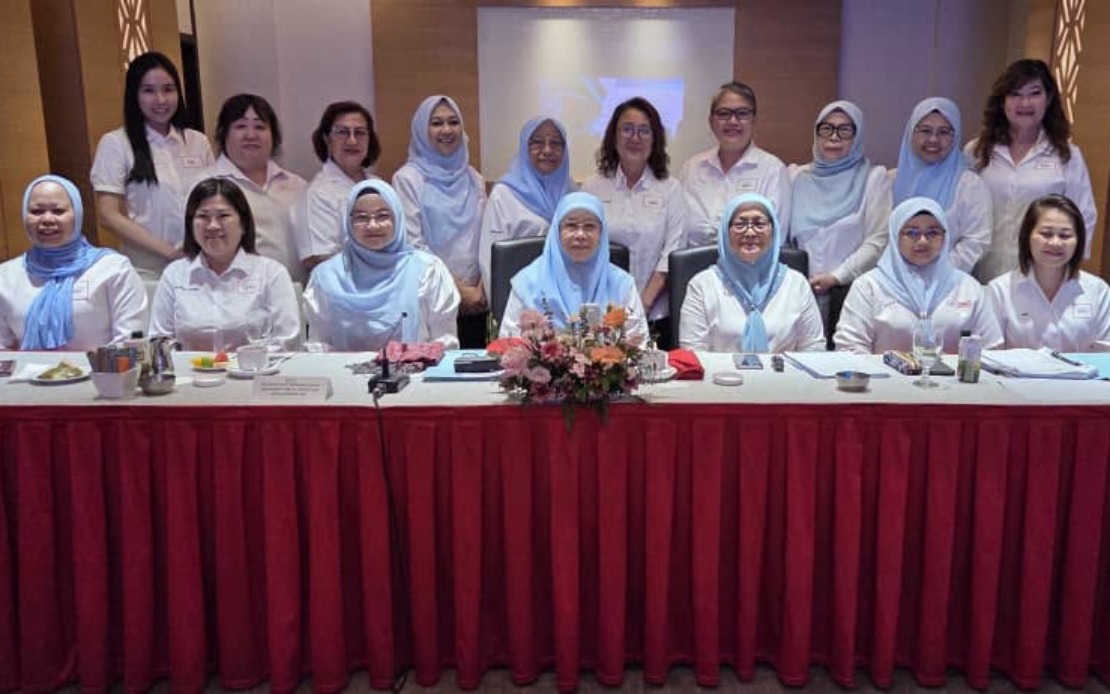
The Gabungan Rakyat Sabah Women's wing has moved to restructure its organizational framework by establishing five specialized operating units, marking a strategic pivot toward more systematic electoral preparation. The decision, ratified at a meeting in Kota Kinabalu on July 22, reflects the coalition's recognition that effective grassroots mobilization requires dedicated teams with clearly delineated responsibilities rather than generalized approaches. This organizational overhaul signals GRS leadership's understanding that the evolving political environment demands more nimble, responsive structures capable of addressing diverse community concerns.
Datuk Seri Azizah Mohd Dun, who leads the women's wing, articulated the rationale behind the restructuring as a necessity to maintain organizational dynamism. She emphasized that the five units—Policy and Strategy, Economic, Health, Information, and Welfare—represent a deliberate shift toward proactive community engagement underpinned by specialized expertise. By fragmenting responsibilities across distinct units rather than concentrating them, GRS seeks to deepen its penetration into different voter constituencies, each with unique priorities and concerns that demand tailored messaging and programmatic responses.
The Policy and Strategy Unit, headed by Azizah herself, will serve as the intellectual backbone of the women's wing, responsible for developing positions on major issues and coordinating messaging across the coalition. This unit carries significance beyond routine party operations; it positions the women's wing as a serious policy voice within GRS rather than a supplementary mobilization mechanism. The consolidation of strategic direction at the apex suggests recognition that coherent, well-articulated policy platforms resonate more effectively with educated urban voters increasingly influenced by programmatic rather than purely patronage-based appeals.
Economic concerns occupy a central place in the reorganized structure, with Datuk Surinam Sadikun assuming leadership of the Economic Unit. This placement reflects acute awareness among GRS strategists that cost-of-living pressures, employment uncertainty, and income disparities dominate voter conversations across Sabah. By creating a dedicated economic unit within the women's wing, GRS signals its intention to develop and communicate economic policies that speak directly to the challenges women face as household financial managers, wage earners, and entrepreneurs. The unit can translate macroeconomic rhetoric into concrete proposals addressing childcare costs, entrepreneurial financing, wage equity, and household budgeting.
The Health Unit, under Simi Linggom's direction, addresses another domain where women's perspectives and experiences carry particular weight. Healthcare accessibility, maternal and child health outcomes, and long-term care arrangements disproportionately affect women as both primary users and family caregivers. By establishing a dedicated health unit, GRS positions itself to develop and advocate for health policies informed by women's lived experiences rather than purely bureaucratic or medical perspectives. This approach potentially allows the coalition to differentiate itself politically by demonstrating attentiveness to gendered health concerns often overlooked in mainstream political discourse.
Communications infrastructure receives explicit attention through the Information Unit, led by Datin Atin Belynda Buntot. In an era where political messaging occurs across fragmented media landscapes—traditional news outlets, social media platforms, community messaging applications, and direct voter contact—a dedicated information unit becomes crucial for consistency and speed. The unit's creation acknowledges that effective grassroots movements require constant narrative management and rapid response capabilities. Women's wings historically excel at person-to-person communication networks; formalizing this capacity through an information unit could amplify organic community-level messaging.
Welfare provisions, under Datin Wong Siow Lee's purview, represent the traditional domain of women's political participation in Malaysia. By maintaining this unit while adding four others, GRS preserves continuity with established expectations while simultaneously expanding the women's wing's scope beyond charity and community care into policy advocacy and economic analysis. This balance between tradition and innovation allows the coalition to honor existing community relationships while modernizing the women's wing's political relevance.
Azizah's insistence that GRS Women cannot remain in a comfort zone reflects broader competitive pressures within Sabah's complex political ecosystem. The state's political landscape has shifted repeatedly over the past decade, with voters demonstrating willingness to switch allegiances in response to perceived failures in governance or responsiveness. By explicitly warning against complacency, Azizah signals to the women's wing membership that structures and past achievements provide no guarantee of continued electoral support. This messaging, aimed ostensibly at internal mobilization, implicitly acknowledges that GRS Women must demonstrate tangible value to constituent communities rather than simply leveraging party machinery.
The emphasis on regular coordination and readiness to respond to political changes suggests GRS strategists anticipate another hotly contested electoral cycle. Rather than assuming current political configurations will persist, the organizational restructuring prepares the women's wing for rapid adaptation to shifting conditions. This forward-looking approach contrasts with purely defensive postures and instead embraces the volatility characteristic of contemporary Malaysian politics, particularly in Sabah where coalition arrangements and voter alignments remain relatively fluid.
For Malaysia's broader political context, the GRS Women's wing restructuring offers insights into how major coalitions are professionalizing their organizational structures and deepening their engagement strategies. The model—creating specialized units around policy domains and demographic concerns—represents a modernization of women's political participation beyond ceremonial roles. If successful, this approach could prompt similar reorganization within other major political movements seeking to enhance electoral competitiveness and governance legitimacy through more sophisticated organizational frameworks and policy development mechanisms.

