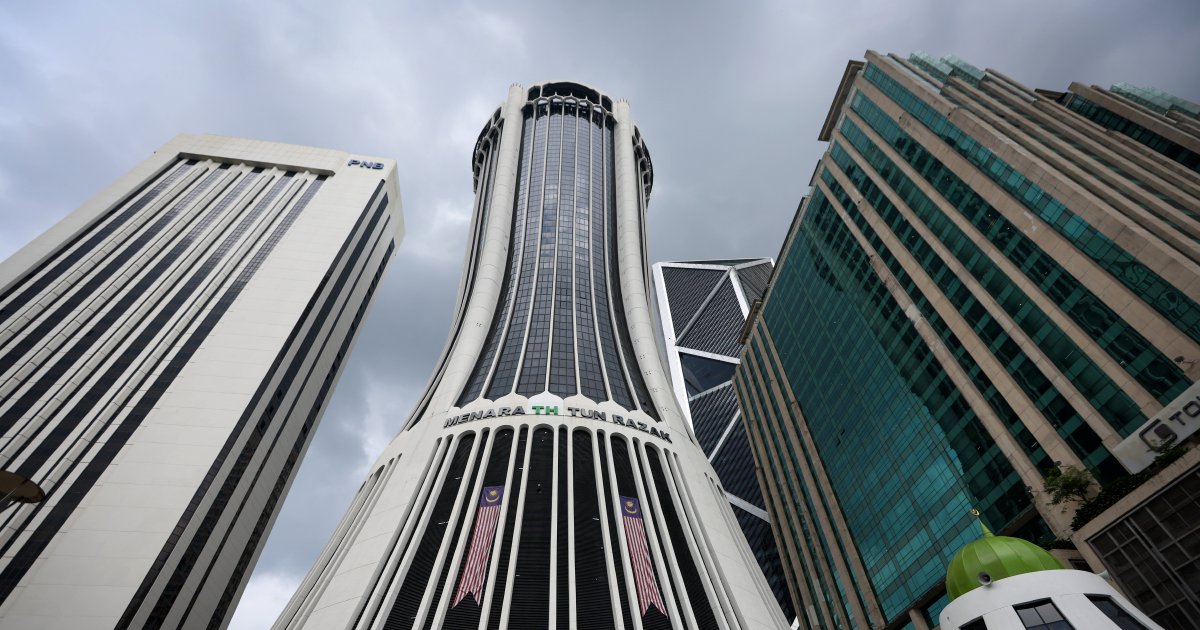
Prime Minister Datuk Seri Anwar Ibrahim has directly attributed Tabung Haji's brush with institutional collapse to a toxic combination of greed, weak governance structures, and widespread financial mismanagement, delivering a sobering assessment of what transpired within one of Malaysia's most significant financial institutions serving millions of Muslim pilgrims.
The candid acknowledgement marks a significant moment in Malaysia's reckoning with corporate governance failures and financial irregularities that have tested public confidence in major state-linked institutions. Tabung Haji, which manages savings and pilgrimage arrangements for devout Muslims seeking to perform the Hajj, sits at the intersection of religious obligation, public finance, and fiduciary duty, making its institutional health a matter of both economic and spiritual significance to believers across the country.
The fund's deterioration represents far more than a balance-sheet problem. When an institution trusted to safeguard the savings of millions enters crisis mode, the implications ripple through communities nationwide. Pilgrims who have set aside money through decades of contributions find their carefully husbanded resources at risk. Families planning life-changing religious journeys face uncertainty about their accumulated reserves. The institutional breaches also underscore broader questions about accountability mechanisms within government-linked corporations and whether oversight structures adequately protect ordinary Malaysians from poor decision-making at the top.
Anwar's public identification of greed as a contributing factor suggests that the problems stemmed not merely from incompetence or operational shortcomings, but from deliberate pursuit of personal or organisational gain at the expense of the institution's core mission. This distinction carries weight in Malaysian political and public discourse, implying that certain individuals or groups prioritised their own advancement over fiduciary responsibilities. The emphasis on governance weaknesses points toward inadequate board oversight, insufficient internal controls, and possibly deficient transparency mechanisms that failed to catch or prevent problematic decisions before they metastasised into existential threats.
Financial mismanagement encompasses a spectrum of potential failures: poor investment decisions that squandered returns, ventures into unfamiliar or overly risky territories without proper due diligence, asset underperformance relative to benchmarks, or operational expenses that spiralled without commensurate value creation. Each failure compounds the others, eroding the fund's capacity to meet its obligations to contributors awaiting their chance to perform their pilgrimage. The cumulative effect creates the kind of crisis that demands intervention at the highest governmental levels.
For Malaysia's broader financial ecosystem, Tabung Haji's near-catastrophe serves as a cautionary tale about the consequences of governance drift. The fund operates within a regulatory framework, but the Prime Minister's comments implicitly question whether that framework proved sufficient to prevent institutional degradation. This raises immediate questions about whether similar weaknesses might exist in other government-linked corporations, statutory bodies, or financial institutions operating across Malaysia's landscape. Regulators and board members overseeing comparable entities will likely face renewed scrutiny regarding their monitoring practices and intervention thresholds.
The crisis also carries international dimensions worth considering. Malaysia's reputation as a financial hub and responsible manager of Islamic finance depends partly on the integrity of its pilgrimage-focused institutions. Tabung Haji's collapse would have reverberated through Muslim communities worldwide and potentially complicated Malaysia's positioning as a centre for Islamic financial products and services. The country's ability to stabilise the fund and implement credible reform measures therefore carries weight beyond domestic borders.
Looking forward, Anwar's diagnosis suggests that remedial action must address governance fundamentals, not merely financial engineering. Rebuilding trust requires transparent investigations into how mismanagement occurred, identification of decision-makers responsible for poor choices, and implementation of structural changes preventing recurrence. This might encompass stronger board independence, enhanced audit functions, clearer accountability frameworks, and revised investment mandates that prioritise the fund's primary mission over speculative returns.
The episode demonstrates that Malaysia's larger institutional reform agenda, already underway across various sectors, extends necessarily to entities managing ordinary citizens' savings. Public institutions entrusted with people's money carry obligations that transcend commercial performance metrics. When those institutions falter, the human impact extends far beyond financial statements. Pilgrims who have invested years of discipline and sacrifice into their Hajj savings deserve certainty that their funds remain secure under competent stewardship. Anwar's forthright acknowledgement of institutional failures represents a necessary first step toward restoring that confidence.

