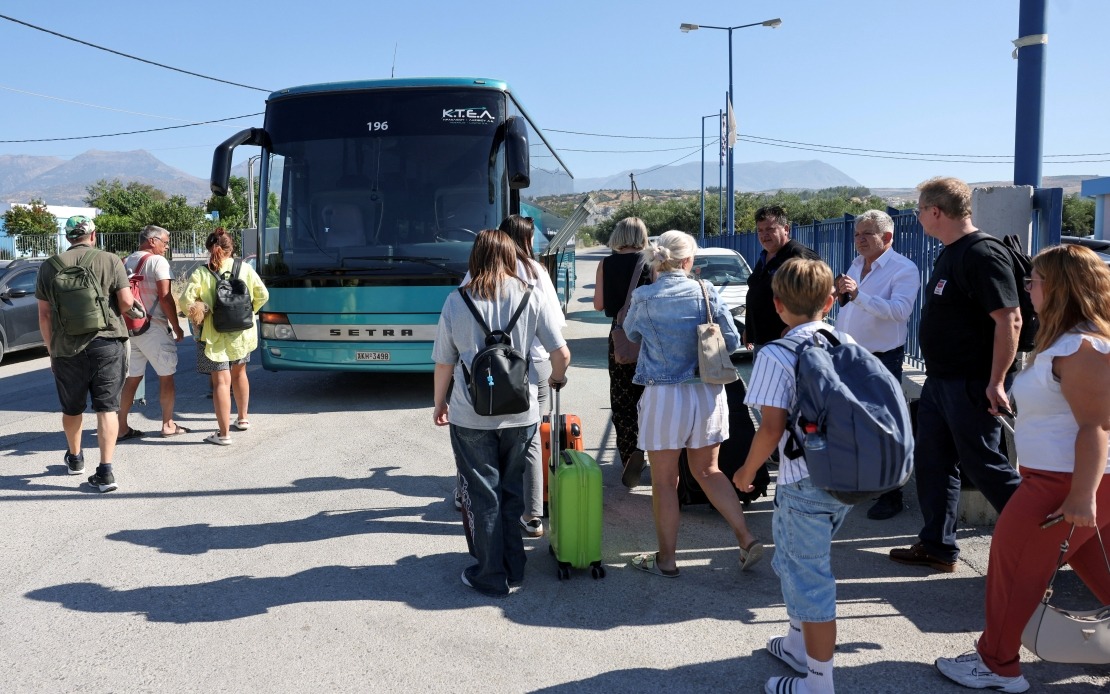
Greek authorities have declared a state of emergency in the Agios Vasileios municipality of Rethymno following an uncontrolled wildfire that has forced the evacuation of some 8,000 residents and visitors from Greece's largest Mediterranean island, Crete. The emergency declaration, issued on Thursday, underscores the severity of the situation as firefighting operations struggle against formidable natural obstacles that continue to intensify the crisis.
The wildfire in Rethymno has rapidly emerged as the country's most destructive active blaze in recent weeks, with the fire front now extending across a front line exceeding 15 kilometres. The flames, driven by extremely adverse meteorological conditions, have created multiple active zones across the southern portion of the island, requiring authorities to coordinate complex evacuation and containment procedures simultaneously across geographically dispersed areas.
A particularly concerning secondary fire front developed near Asomatos village, subsequently spreading toward the Preveli area, a renowned destination attracting significant numbers of seasonal tourists. This threatened one of Crete's most economically important coastal regions, prompting immediate action to secure the safety of both permanent residents and visiting holidaymakers who had gathered in the zone.
Weather conditions have become the primary obstacle to managing the crisis effectively. Wind gusts reaching 125 kilometres per hour, combined with visibility reduced to near-zero levels, have rendered aerial firefighting operations virtually impossible. Water-dropping aircraft and helicopters remain grounded, eliminating a crucial tool typically deployed during major wildfire emergencies. This meteorological handicap has significantly constrained the strategic options available to incident commanders attempting to halt the fire's advance.
The evacuation process itself has been remarkably complex, reflecting both the scale of the threat and the coordination required across multiple agencies. Approximately 700 people spent Thursday night sheltering in an indoor sports facility, whilst thousands of others relocated to the homes of family members or friends across unaffected communities. Tourists have been transferred to hotels situated in safer zones, effectively displacing the tourism sector's operations during peak summer season.
A dramatic maritime rescue operation demonstrated the scale of the emergency when Hellenic Coast Guard personnel, supported by two private vessels, successfully evacuated 51 individuals from the Preveli coastline under hazardous conditions. The operation involved transporting evacuees across difficult waters to Agia Galini, a coastal town further west along Crete's southern shore, where emergency accommodation and support services were established.
The firefighting response has mobilised substantial resources despite the challenging circumstances. Over 190 firefighters have been deployed across multiple sectors, supplemented by specialised forest firefighting units, mechanised fire engines, and coordinated support from local government and civilian volunteers. Yet the intensity of wind conditions and the fire's aggressive spread have consistently outpaced containment efforts, with suppression teams frequently forced to shift strategies in response to sudden directional changes.
The economic and environmental damage extends beyond the immediate threat to human life. Substantial areas of cultivated agricultural land, pasture fields utilised for livestock grazing, and residential properties have already been destroyed or damaged. Livestock losses have compounded the impact on rural communities who depend upon pastoral activities, whilst the destruction of stored crops and farm infrastructure threatens livelihoods throughout the affected region.
Authorities maintain heightened vigilance as meteorological forecasts predict continued strong winds throughout the coming days, sustaining an extremely elevated wildfire risk across the island. Investigations into the fire's origin remain preliminary, with officials yet to determine whether the blaze was initiated through natural causes such as dry lightning strikes, or through human activity—a distinction that carries significant implications for preventative policy and public safety messaging.
For Southeast Asian observers, particularly those in Malaysia and neighbouring countries facing their own seasonal fire challenges, the Crete emergency exemplifies the vulnerability of Mediterranean and subtropical regions when extreme weather patterns align with dry vegetation conditions. The incident underscores how even densely populated developed nations with sophisticated emergency infrastructure can rapidly become overwhelmed when environmental stressors exceed management capacity, a sobering reminder for regional authorities planning resilience strategies.
The evacuation of such large populations, whilst tragic, reflects European Union disaster protocols that prioritise rapid civilian withdrawal over asset protection—a fundamentally different calculus than approaches adopted in some developing regions. This case study offers Malaysian emergency planners valuable perspectives on evacuation logistics, inter-agency coordination, and the particular challenges posed by tourism zones requiring dual-purpose crisis response.

