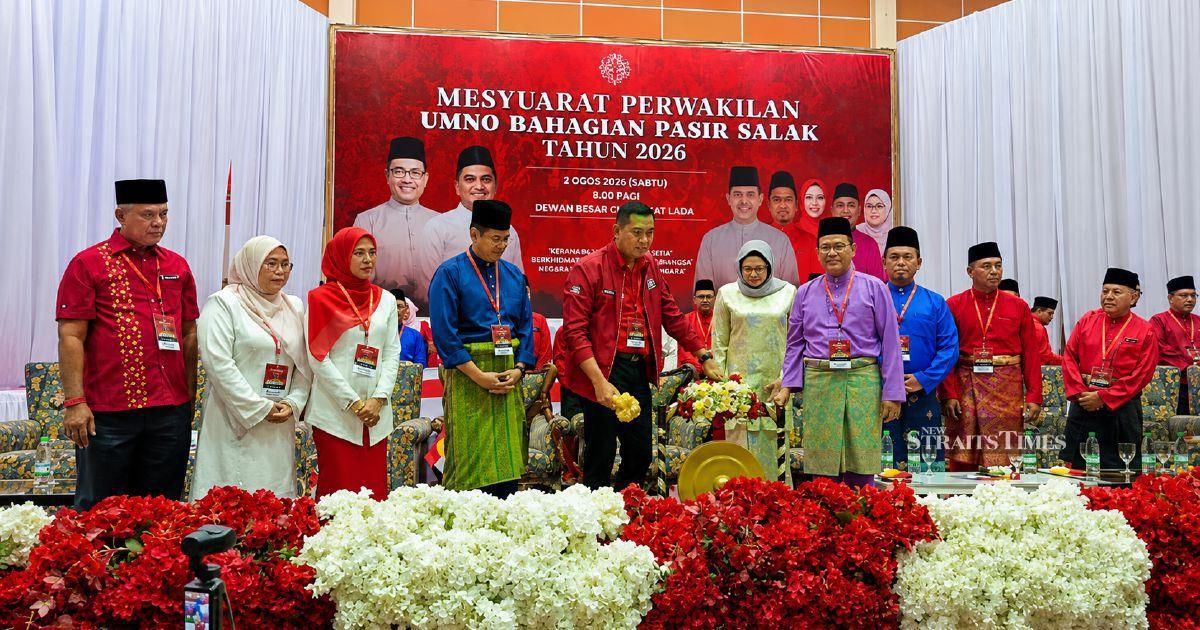
The political realignment between Barisan Nasional and Perikatan Nasional has entered a critical phase where local party structures are beginning to assert their interests, with Umno Youth chief Datuk Dr Muhamad Akmal Saleh calling for respect towards divisional leaders' perspectives on how parliamentary and state seats should be distributed. His statement, made in Pasir Salak, reflects the growing complexity of translating national-level political agreements into ground-level reality, where division chiefs wield considerable influence over candidate selection and party machinery.
The BN-PN understanding, forged at the national leadership level, now faces the practical challenge of resource allocation across Malaysia's 222 parliamentary constituencies and numerous state assemblies. Rather than imposing top-down solutions, Akmal's position suggests that Umno recognises the legitimacy of input from its divisional wings, which understand local political dynamics, community expectations, and the electoral viability of specific candidates in their territories. This reflects a broader principle of party democracy, where representatives closest to voters retain meaningful agency in crucial decisions.
Divisional leaders typically command deep knowledge of constituency boundaries, demographic shifts, voter sentiment, and the relative electoral strengths of various candidates. Pasir Salak, a relatively compact constituency, exemplifies the type of seat where local party structures maintain detailed understanding that national negotiators may overlook. When Umno divisions express preferences regarding seat allocations, they are drawing on accumulated electoral intelligence and grassroots networks that ultimately determine whether candidates succeed or fail at the ballot box.
The timing of Akmal's remarks matters considerably. Coalition negotiations at this stage often involve placeholder agreements on broad seat numbers—Umno receives X seats nationally, Perikatan Nasional receives Y seats—but the actual distribution among divisions frequently becomes contentious as implementation approaches. Historical precedent shows that failed coalition arrangements often stem not from disagreements on headline numbers, but from disputes over specific seats that divisional chiefs regard as their strongholds or territories due for advancement.
For Malaysian voters, particularly in Selangor and other electorally competitive states, this translates into uncertainty about candidate credentials and electoral preparation timelines. When divisional positions diverge from negotiated allocations, candidates may be parachuted into unfamiliar terrain or face internal party friction that weakens campaign cohesion. Umno's emphasis on respecting divisional input could mitigate such disruptions, though it may also prolong the seat-allocation process as consensus is hammered out.
The reference to divisions' "stance" suggests that these structures have already begun forming positions, indicating that internal Umno processes are running parallel to BN-PN negotiations. This dual-track approach—formal leadership talks combined with divisional consultations—can either strengthen the final agreement by building consensus or create conflict if divisions reject top-level compromises. Akmal's language appears designed to validate divisional input proactively, signalling that leaders should consult their members before finalising seat allocations.
Perikatan Nasional, meanwhile, faces similar internal dynamics. PAS divisions and Bersatu wings will form their own positions on preferred constituencies, necessitating parallel negotiations within that coalition partner. The ultimate BN-PN seat distribution therefore depends on reconciling interests across multiple divisional structures, multiplying negotiation complexity but potentially creating more robust outcomes that survive post-election tensions.
From a Southeast Asian perspective, Malaysia's coalition politics offer insights into power-sharing challenges in multi-ethnic democracies. The BN-PN understanding represents pragmatic collaboration between competing political forces, yet its stability depends on mechanisms ensuring that grassroots structures feel fairly treated. Countries across the region grappling with similar coalition mathematics—from Thailand to the Philippines—often underestimate the importance of including sub-national political actors in negotiations, leading to later breakdown.
The emphasis on respecting divisional positions also reflects recognition that Umno's electoral prospects depend fundamentally on member mobilisation and volunteer networks rooted in divisions. Imposing unpopular seat allocations risks demoralising grassroots organisers precisely when intensive campaigning is required. By signalling respect for divisional input, Umno leadership aims to maintain internal cohesion while pursuing coalition advantage nationally.
Moving forward, the BN-PN arrangement's credibility will be tested during actual seat announcements. If divisional leaders' stated preferences are incorporated visibly into final allocations, Akmal's principle receives validation and strengthens party unity. Conversely, if divisions feel ignored, internal discontent could manifest as lukewarm campaign efforts or public criticism during the election campaign period. The political understanding between BN and PN ultimately succeeds only when implemented through structures that Malaysian voters recognise as legitimate and representative.

