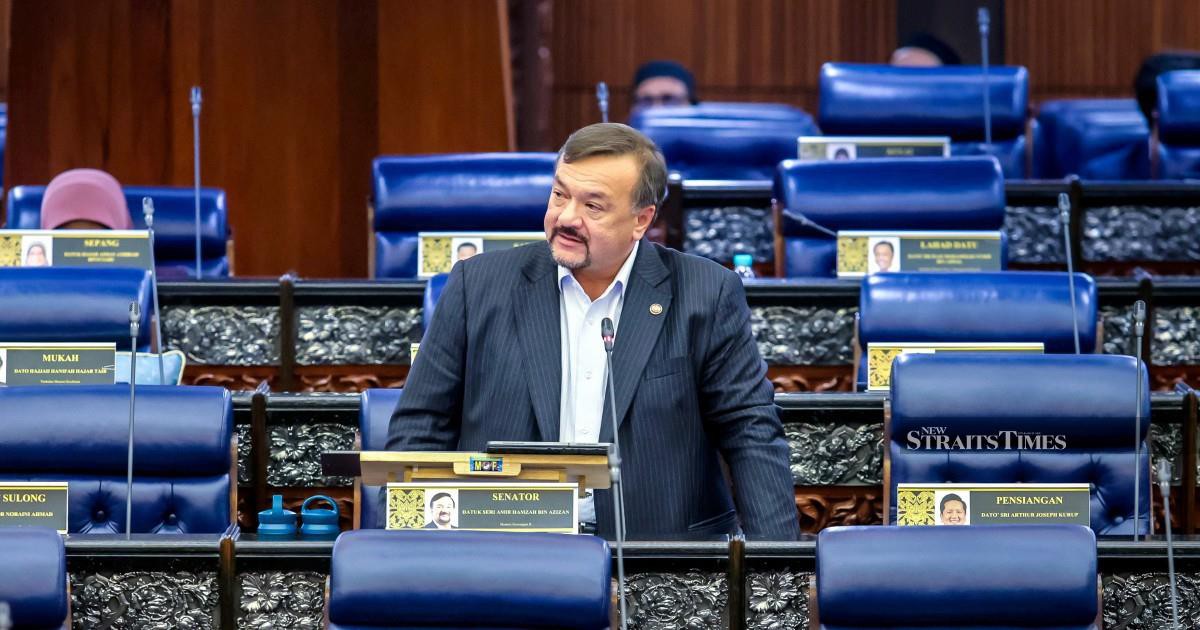
Authorities have signalled an uncompromising stance toward accountability at Tabung Haji, with a senior government official declaring that investigations into the Islamic pilgrimage fund's historical management will spare no one. The commitment reflects growing pressure to address concerns about how the institution has handled deposits and financial commitments over several years.
Tabung Haji, which holds savings from millions of Malaysian Muslims saving toward the Hajj pilgrimage, has faced scrutiny regarding its investment strategies and the way it managed contributor funds. The fund's significance extends beyond financial services—it represents a cornerstone of many Malaysian Muslim families' aspirations to perform one of Islam's five pillars. Any mismanagement of these resources thus carries both material and spiritual implications for contributors across the country.
The government's pledge to investigate thoroughly and impartially carries particular weight in Malaysia's contemporary political environment. Public confidence in major institutions has been tested repeatedly by previous financial scandals and allegations of preferential treatment based on political connections or corporate relationships. Against this backdrop, assurances that investigations will proceed without protecting specific individuals—regardless of rank, influence, or affiliation—address a fundamental concern about institutional integrity.
Tabung Haji's financial landscape has become increasingly complex over recent decades. The fund manages substantial assets accumulated through regular contributions from millions of members seeking to fund their religious obligations. Investment decisions made across various market cycles have produced mixed outcomes, with some periods showing robust returns while others registered losses that prompted member concerns. Understanding how these investment choices were made, who authorised them, and whether proper oversight mechanisms existed forms the core of any credible examination.
The scale of potential exposure remains significant. Tabung Haji's asset base runs into billions of ringgit, and any systematic mismanagement could affect the saving capacity of individual contributors seeking to perform the Hajj. This makes the investigation's scope and rigour matters of direct consequence for everyday Malaysians, many of whom depend on the fund to accumulate capital for this essential religious journey.
Prior concerns about Tabung Haji's operations have circulated periodically within financial and religious communities. Members have raised questions about transparency in how investment returns are calculated and distributed, and whether the fund's decision-makers acted with appropriate caution when deploying capital into certain ventures. These queries reflect reasonable expectations that an institution holding deposits for a specifically religious purpose should operate with exceptional clarity and conservative financial practices.
The investigative approach outlined emphasises that individuals at all levels bear potential accountability. This messaging is deliberately inclusive, suggesting that whether individuals held executive positions, board roles, advisory functions, or other capacities, none would receive special consideration if evidence demonstrated wrongdoing. Such categorical language attempts to assure stakeholders that hierarchical position or political connections will not determine outcomes.
For Malaysian Muslims, this commitment carries practical implications. The Hajj remains an essential component of Islamic faith, yet its execution requires careful financial planning by most pilgrims. Tabung Haji has traditionally provided a formal mechanism to accumulate these savings securely and productively. Any doubt about the fund's integrity could theoretically drive members toward informal arrangements or alternative schemes, potentially reducing their protection and transparency.
Southeast Asia's broader financial ecosystem has become increasingly conscious of governance standards and institutional accountability. Malaysia's explicit commitment to investigate Tabung Haji without favouritism demonstrates alignment with contemporary expectations regarding transparency and meritocratic accountability. Such positions enhance Malaysia's standing among regional peers and international observers monitoring institutional integrity.
The investigation's trajectory will likely shape perceptions of Malaysia's capacity to police its own major institutions fairly. If the process proves thorough, transparent, and produces consequences proportionate to wrongdoing discovered, it could restore confidence among Tabung Haji members and the broader public. Conversely, if investigations appear compromised or selective in identifying culpability, they might reinforce existing scepticism about institutional impartiality.
Tabung Haji members now await concrete results from these investigations. Their interests align fundamentally with institutional accountability—they have no stake in protecting particular individuals or relationships if those relationships came at the expense of their savings. The government's stated resolve to pursue wrongdoing without exception must now translate into visible action, explicit findings, and appropriate consequences if it is to restore the trust upon which the fund ultimately depends.

