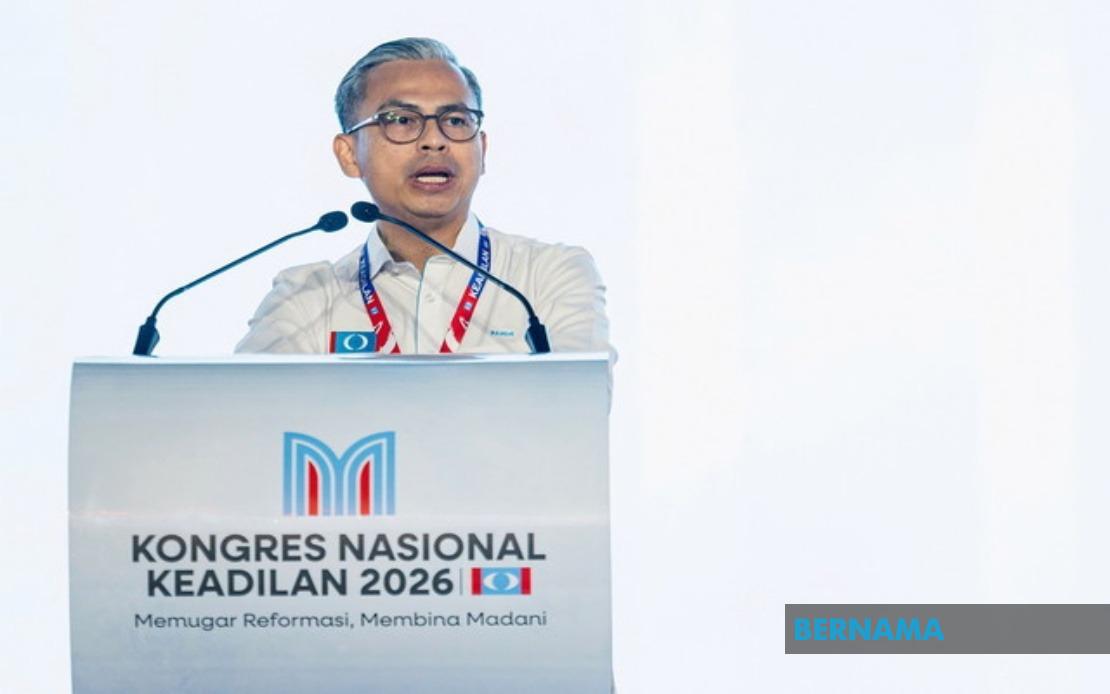
The Malaysian government has acknowledged a communication shortfall and pledged to intensify efforts in explaining its policies and achievements to the public, with Communications Minister Datuk Seri Fahmi Fadzil signalling that current messaging approaches fall short of connecting macroeconomic success to everyday citizen experiences. Speaking at the 2026 PKR National Congress in Melaka, Fahmi identified a critical gap between what the administration describes as strong economic performance and public perception of actual improvements in living standards, presenting a challenge that extends beyond mere factual dissemination to encompassing emotional and experiential dimensions of governance.
Fahmi's remarks at the congress, held over two days with concluding remarks from Prime Minister Datuk Seri Anwar Ibrahim, underscore an internal recognition within the ruling coalition that policy wins in macroeconomic indicators—what Fahmi termed the broader "pot economy"—have not translated effectively into tangible benefits that citizens can directly observe and feel in their daily lives. This observation reflects a growing frustration within government circles that despite what they characterise as significant achievements under Anwar's leadership, public sentiment has not shifted proportionally towards acknowledging these gains. The disconnect suggests that technical economic success and citizen welfare perception operate on different registers, requiring a more sophisticated communication apparatus than traditional government information channels.
The PKR information chief's emphasis on the "emotional dimension" of public communication marks a notable shift in how Malaysia's ruling coalition frames its messaging strategy. Rather than focusing solely on policy announcements and statistical achievements, Fahmi advocated for communication approaches that allow citizens to feel invested in and connected to government successes. This represents an acknowledgement that information alone—no matter how accurate or comprehensive—does not guarantee public buy-in or satisfaction if the messaging fails to resonate on a personal or community level. The approach aligns with broader trends in political communication globally, where narrative and emotional connection increasingly matter as much as factual content.
To operationalise this enhanced communication framework, the government plans to leverage grassroots structures within the PKR party, enlisting division chiefs and local leaders as conduits for information flow. This decentralised approach aims to replace top-down announcements with more conversational, localised explanations of policies. By shifting communication to smaller-scale forums and informal settings, the government hopes to create space for genuine dialogue rather than one-directional messaging, allowing citizens to ask questions and raise concerns in environments that feel less formal and intimidating than official government channels. This strategy recognises that trust and understanding often develop through direct conversation rather than broadcast media.
Parallel to these internal communication improvements, the government is intensifying collaboration with the Malaysian Communications and Multimedia Commission (MCMC) to combat misinformation and coordinated disinformation campaigns. Fahmi revealed that since the Johor state election, authorities identified and flagged more than 8,410 fake accounts exploiting 3R issues—religion, race, and the royal institution—for removal by social media platforms. The focus on these three sensitive domains reflects concern that bad actors deliberately amplify emotionally charged content to undermine public understanding of government efforts, essentially hijacking the emotional register that the government itself is trying to harness for positive messaging.
The scale of coordinated inauthentic behaviour identified by MCMC underscores a significant operational challenge facing Malaysia's information environment. Fake accounts and coordinated networks can shape public discourse disproportionately, creating artificial perceptions of controversy or discontent around government policies. By targeting specifically 3R issues, these operations exploit social fault lines that remain sensitive across Malaysia's multicultural context, suggesting coordinated actors understand which narratives generate amplification and polarisation. The government's response—requesting platform removals—addresses the symptom rather than the underlying dynamics, though represents a necessary first step in protecting information integrity.
Fahmi articulated a notably cautious approach to media relations, explicitly denying that the government seeks to "control" media while simultaneously indicating willingness to engage media outlets over factual inaccuracies through "proper and respectful channels." This positioning attempts to navigate the politically sensitive terrain between press freedom and information management, framing corrections not as censorship but as collaborative fact-checking. However, the distinction between requesting corrections and exerting control remains contested territory in Malaysian media politics, particularly given historical tensions between government and press over coverage of sensitive issues. The minister's emphasis on "orderly and courteous" engagement suggests an attempt to model non-coercive approaches, though critics may view such engagement as subtle pressure.
The government's planned adjustments to communication strategy include deepened coordination with the PKR Women's wing, recognising that women constitute both a significant portion of the electorate and household decision-makers whose perceptions influence family attitudes toward government performance. By channelling information through women-focused networks and leadership structures, the government aims to reach demographic segments that may respond differently to messaging framed through the priorities and concerns typically emphasised within women's organisations. This targeted approach reflects sophisticated understanding that communication effectiveness varies by audience segment and that one-size-fits-all messaging often fails to penetrate distinct communities effectively.
The timing of these communication initiatives at the PKR National Congress carries significance, as the congress provides a venue for party leadership to recalibrate messaging ahead of the 2025 budget announcements and ongoing governance cycles. By frontloading discussion of communication improvements, party leaders signal that addressing the perception gap remains a priority, even as they manage internal party dynamics and factionalism. The emphasis on grassroots engagement and local dialogue also serves to energise party machinery, reminding divisional structures of their role in government legitimacy and voter retention.
For Southeast Asian observers and Malaysian business stakeholders, these communication adjustments reflect broader governance questions about how administrations in the region translate economic policy into public legitimacy. Malaysia's case demonstrates that strong macroeconomic performance does not automatically generate citizen satisfaction or political stability if the public fails to perceive direct personal benefit. As governments across Southeast Asia pursue economic transformation agendas, how effectively they communicate progress and connect macro indicators to micro-level improvements increasingly determines political sustainability. The PKR government's self-critical assessment of its communication shortfalls, rather than blaming public misunderstanding, suggests a maturation in how political leadership frames its governance challenges, though translating this awareness into measurably improved public perception will require sustained effort beyond the communication infrastructure adjustments announced.

