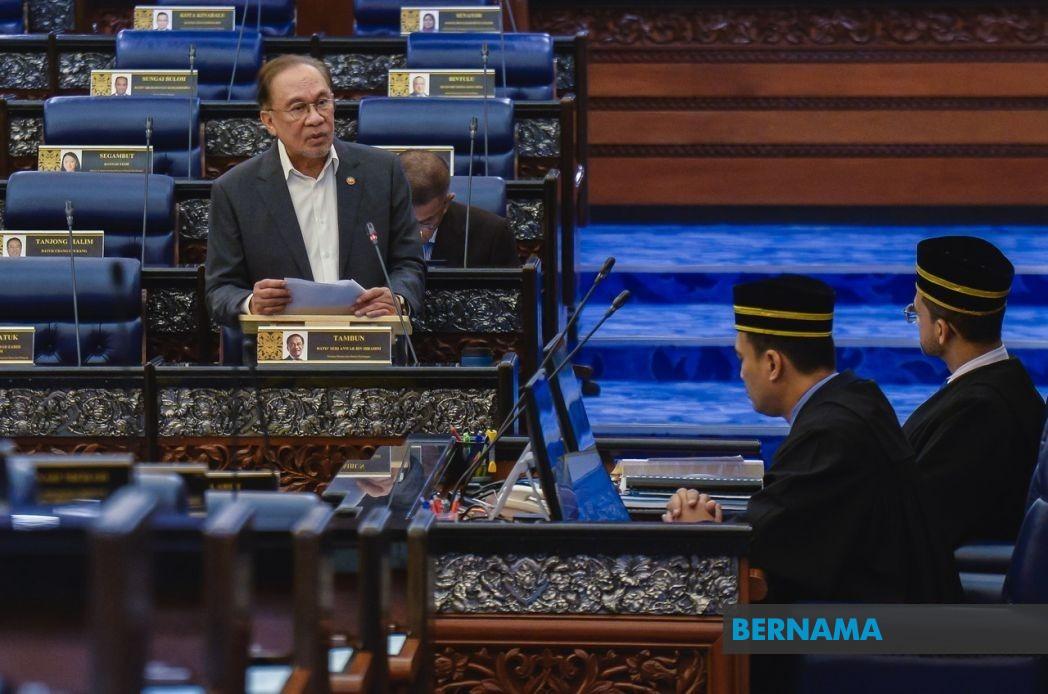
Prime Minister Datuk Seri Anwar Ibrahim has pledged that his government will investigate claims of financial losses incurred by petrol station operators during the rollout of the enhanced targeted fuel subsidy scheme. Speaking during ministerial question time in Parliament on July 7, Anwar indicated that the administration plans to gather comprehensive details from relevant oil companies and station owners to establish the full extent of any difficulties experienced during the transition period.
The issue emerged when DAP parliamentarian Howard Lee Chuan How, representing Ipoh Timur, raised concerns that petrol station operators faced losses ranging between RM40,000 and RM50,000 each during the shift to the new subsidy mechanism. This disclosure suggests that the transition from the previous fuel pricing arrangement to the current targeted subsidy system for RON95 petrol and diesel created unforeseen financial strains for those operating at the retail distribution level.
Anwar, who holds the dual portfolio of Prime Minister and Finance Minister, assigned responsibility for conducting these discussions to the Second Finance Minister, Datuk Seri Amir Hamzah Azizan. This delegation indicates the government's recognition of the complexity involved in reviewing potential financial losses across Malaysia's extensive petrol station network. By tasking the Second Finance Minister with this investigation, the administration is attempting to ensure that any genuine hardships experienced by operators receive serious consideration and appropriate remedial action.
The Prime Minister's response emphasised the government's appreciation for the cooperation extended by oil companies and petrol station operators throughout the implementation of the targeted subsidy programme. This acknowledgement suggests that despite operational challenges during the transition, the industry stakeholders have largely worked constructively with authorities to ensure the subsidy system functions as intended. The relative smoothness of implementation, despite apparent losses at the station operator level, indicates a degree of goodwill that the government seeks to preserve.
Anwar's cautious language—stating that the government will "hold discussions" and "work towards a good solution"—reflects the politically sensitive nature of operator grievances. Petrol station operators form a significant constituent group across Malaysia's urban and rural areas, and their financial health directly impacts fuel distribution efficiency and consumer accessibility. Any perception that the government has disregarded legitimate concerns could undermine confidence in future policy transitions and create friction with the broader retail fuel sector.
The targeted RON95 petrol and diesel subsidy scheme represents a significant departure from Malaysia's traditional fuel pricing approach. Rather than providing blanket subsidies that benefit all consumers equally, the targeted mechanism aims to direct subsidies more efficiently to those identified as needing assistance most. This structural shift necessarily creates periods of price adjustment and operational uncertainty as the distribution system adapts to new cost structures and profit margins.
Operators may have experienced losses during the transition because the pricing mechanisms and margin adjustments were calibrated for a different operating environment than the one they encountered in practice. Regional variations in fuel consumption patterns, unexpected demand fluctuations, or logistical complications during the system switchover could all have contributed to the RM40,000 to RM50,000 losses cited by Lee. Understanding these root causes will be essential for preventing similar disruptions if further subsidy adjustments are contemplated in future.
The investigation also carries implications for Malaysia's broader economic management narrative. The government has invested considerable political capital in transitioning toward more efficient and sustainable subsidy mechanisms that reduce fiscal burden while protecting vulnerable consumers. If the implementation process inadvertently created uncompensated losses for private sector participants, it could complicate future collaboration on complex policy reforms. This makes the government's willingness to investigate a strategic necessity, not merely a courtesy.
For Malaysian consumers and businesses, the outcome of this investigation may signal how seriously the administration takes collateral economic impacts when implementing major policy changes. If the government moves to compensate or support affected operators, it demonstrates commitment to managing transitions with minimal disruption. Conversely, if legitimate losses are dismissed as acceptable costs of reform, it could discourage industry cooperation with future government initiatives requiring private sector participation and adjustment.
The remarks made during parliamentary question time also underscore the importance of maintaining dialogue between government, oil companies, and retail operators as the targeted subsidy system matures. As Anwar noted, continued cooperation remains essential for effective programme implementation. Building trust requires both that officials listen to concerns and that they take concrete steps to address them when evidence of hardship emerges.
Second Finance Minister Amir Hamzah Azizan's pending investigation will likely involve detailed examination of transaction records, cost structures, and margin data from petrol station operators during the critical transition window. This process may also yield insights into how future policy transitions can be managed more smoothly, perhaps through advance notice periods, adjusted margin structures, or temporary support mechanisms that buffer operators against unavoidable disruptions.
Ultimately, the government's commitment to investigate these losses reflects recognition that sustainable policy reform requires buy-in from all stakeholders involved in implementation. While the targeted fuel subsidy programme represents sound fiscal policy in principle, its practical success depends on the willingness of petrol station operators to function effectively within the new system. Addressing legitimate grievances from this crucial link in the distribution chain strengthens both the policy's credibility and the government's reputation for responsive, equitable governance.

