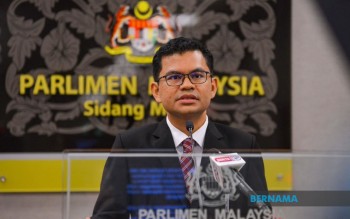
The Malaysian government has directed both the Ministry of Investment, Trade and Industry (MITI) and the Economy Ministry to conduct a thorough examination of proposals submitted by the Malaysian Plastics Manufacturers Association (MPMA) following discussions at the National Economic Action Council (NEAC). Economy Minister Akmal Nasrullah Mohd Nasir emphasised that policymakers are treating the matter with considerable urgency, recognising that the nation's plastics sector faces mounting pressures from worldwide supply chain disruptions and escalating costs of raw materials.
During a recent NEAC session, industry representatives laid out their case before government officials, highlighting structural disadvantages that downstream manufacturers encounter relative to competitors in other countries. The crux of their argument centres on the disparity in raw material pricing, which creates a cost burden for local producers seeking to maintain international competitiveness. Akmal Nasrullah framed the government's approach as requiring careful calibration to serve multiple stakeholders simultaneously, balancing the interests of the entire production ecosystem while maintaining fiscal prudence and ensuring Malaysia remains economically competitive globally over the medium to long term.
The plastics manufacturing sector carries substantial significance within Malaysia's industrial apparatus, functioning as a crucial input provider to numerous downstream industries. Current market data reveals that the sector generated RM62.69 billion in sales value during 2025, representing a slight decline from the previous year's RM64.78 billion figure. Within this market, packaging applications command the largest share at 45 per cent, followed by the electrical and electronics segment which accounts for 29 per cent of output. This composition underscores how interconnected the plastics industry is with Malaysia's broader manufacturing ecosystem, particularly its world-class semiconductor and electronics assembly operations.
A significant aspect of the government's policy review involves examining proposals for implementing Extended Producer Responsibility (EPR) on a voluntary basis. This framework would place greater responsibility on manufacturers for managing the lifecycle of plastic products, particularly their end-of-life disposal and recycling. The ministry will assess the financial implications of such schemes for participating companies, evaluate whether small and medium enterprises possess the financial capacity to comply with new obligations, and determine whether Malaysia's recycling infrastructure can adequately support scaled-up circular economy operations. These considerations reflect a pragmatic recognition that ambitious environmental objectives must be balanced against the operational realities faced by businesses of varying sizes.
Akmal Nasrullah presented the potential benefits of a well-executed circular economy transition within the plastics sector. By increasing utilisation of recycled materials, manufacturers could substantially reduce their reliance on virgin raw material imports, thereby creating a domestic supply base less vulnerable to geopolitical disruptions and commodity price volatility. The creation of a resilient, locally-sourced materials cycle would provide long-term strategic advantages, particularly for a nation heavily dependent on international trade and exposed to external supply chain shocks. This aligns with Malaysia's broader ambitions to develop a more self-sufficient industrial base while maintaining environmental sustainability standards.
Beyond the immediate plastics industry concerns, Akmal Nasrullah outlined broader economic developments indicating Malaysia's macroeconomic fundamentals remain robust. The government maintains confidence that growth targets of 4.0 to 5.0 per cent can be achieved throughout the current year, supported by solid performance in recent quarters. During the first quarter of 2026, the Malaysian economy expanded at 5.4 per cent, with expansion underpinned by sustained domestic consumption patterns, consistent strength in the services and manufacturing sectors, and sustained resilience in electrical and electronics exports. These outputs suggest that despite global uncertainties, Malaysia's diversified economy continues generating positive momentum.
Inflationary pressures remain well-controlled, with the May 2026 inflation rate holding steady at 2.0 per cent, only marginally above the April figure of 1.9 per cent. This price stability is crucial for maintaining purchasing power and enabling businesses to plan investments with reasonable certainty about future cost structures. Trade performance through the first five months of 2026 demonstrated impressive expansion, with total trade reaching nearly RM1.5 trillion, up 18.3 per cent from the corresponding 2025 period. This growth reflects Malaysia's sustained importance within global supply chains and its ability to capture international demand even amid broader economic uncertainties.
Exports grew particularly strongly at 24.3 per cent, reaching RM793.8 billion, suggesting that Malaysian manufacturers continue attracting overseas orders despite competitive pressures. Simultaneously, imports increased 11.8 per cent to RM661.1 billion, indicating that businesses are investing in capital equipment and raw materials to support expanded production. The trade surplus expanded to RM132.8 billion, providing Malaysia with foreign exchange reserves and external financial strength. These metrics collectively suggest that the underlying structural demand for Malaysian goods remains resilient, even as individual sectors like plastics manufacturing contend with specific cost challenges.
The government's decision to comprehensively review the plastics industry's concerns reflects a policy approach that combines sectoral support with economy-wide considerations. By directing MITI and the Economy Ministry to examine proposals affecting raw material competitiveness and circular economy implementation, policymakers acknowledge that the RM62 billion plastics sector merits substantive policy attention. The review process itself signals government receptiveness to industry concerns whilst simultaneously protecting the broader economic interest through deliberative examination rather than rapid, potentially disruptive policy shifts. For downstream manufacturers dependent on plastics inputs, such as electronics and packaging companies, the outcome of this review could influence their own competitive positioning and investment decisions throughout Southeast Asia's manufacturing landscape.

