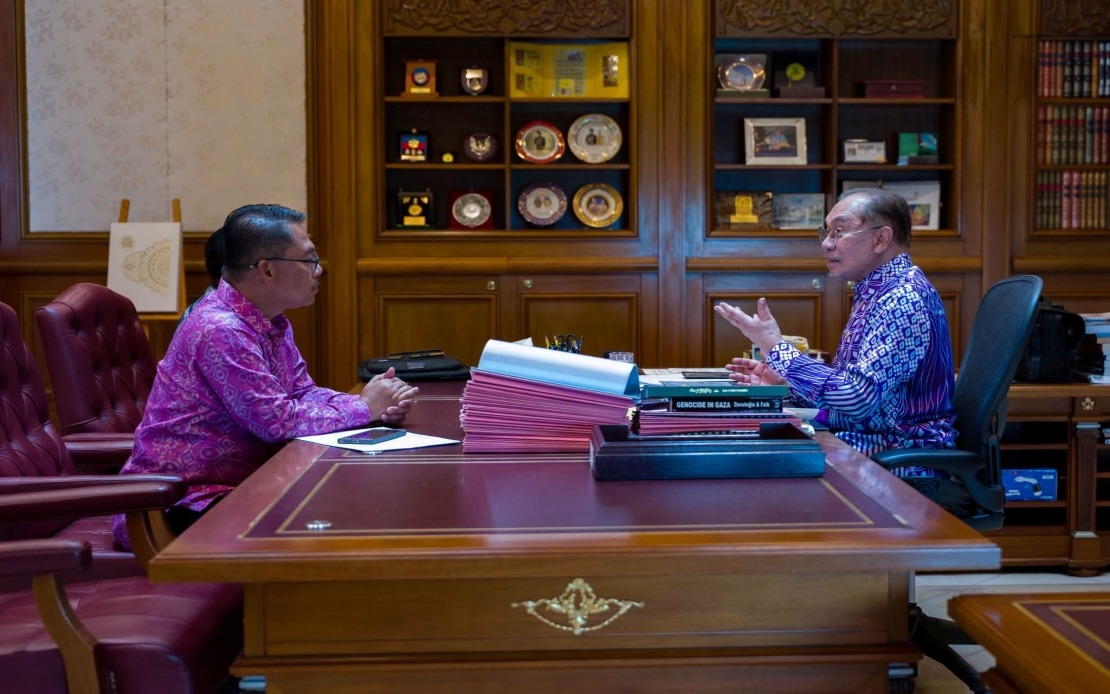
The Malaysian government has committed to strengthening its approach to targeted fuel subsidies across Sabah and Sarawak, pledging to weave community perspectives into refined policy implementation. Datuk Mustapha Sakmud, the Minister in the Prime Minister's Department responsible for these East Malaysian states, announced that ongoing consultations between state authorities, federal agencies, and grassroots representatives will shape the evolution of the subsidy framework going forward.
The announcement reflects growing recognition that the BUDI Diesel initiative, which launched nationwide on July 1, requires careful recalibration to address operational hurdles specific to East Malaysia's geography and demographics. Rural communities in particular have raised concerns about programme accessibility and effectiveness, prompting senior officials to prioritise local input in designing workable solutions that do not diminish living standards across the region.
Prime Minister Datuk Seri Anwar Ibrahim has personally engaged with public concerns regarding implementation difficulties in Sabah, signalling executive-level commitment to the initiative's success. Mustapha praised the Prime Minister for dedicating time to listen directly to community voices despite his demanding schedule, emphasising that the MADANI Government operates under the principle that public opinion carries sacred weight in policymaking.
The BUDI Diesel scheme offers eligible private diesel vehicle owners a baseline allocation of 200 litres monthly at a subsidised rate of RM2.10 per litre. Owners of qualifying sports utility vehicles and pickup trucks can apply for an additional 100 litres per month, contingent on satisfying specified eligibility criteria. The tiered approach aims to provide targeted relief to both essential users and those requiring vehicles for livelihood purposes, while managing fiscal implications.
For Malaysian readers, particularly those in Sabah and Sarawak, the government's openness to refinement carries significant implications. Rural economies across East Malaysia depend heavily on affordable fuel access for agricultural operations, transportation networks, and small business activities. The subsidy mechanism therefore extends beyond personal convenience to underpin economic viability in less urbanised areas, making feedback loops essential for programme credibility and effectiveness.
The consultative approach also signals recognition that one-size-fits-all national policies often misfire in the Malaysian context given the distinct characteristics of Peninsula Malaysia, Sabah, and Sarawak. Logistics, cost structures, market dynamics, and vehicle usage patterns differ substantially across these regions. Embedding local knowledge into subsidy design helps ensure the scheme achieves its dual objectives of affordability and fiscal sustainability without creating unintended distortions.
Stakeholder engagement on this scale typically involves diverse players including state governments, local authorities, transport operators, agricultural associations, small business chambers, and community representatives. Each constituency brings distinct perspectives on subsidy impacts, implementation bottlenecks, and potential improvements. The government's willingness to formally incorporate this feedback suggests it recognises that programme success hinges on buy-in from those implementing and using it at ground level.
The timing of this refinement announcement is noteworthy given that the BUDI Diesel scheme is only weeks into operation. Early-stage recalibration can prevent entrenched problems from becoming systemic failures. Sabah and Sarawak's experience will likely inform adjustments that benefit all states, particularly those with comparable rural geography or infrastructure constraints.
Beyond immediate programme logistics, the government's emphasis on grassroots listening reflects broader governance messaging around the MADANI framework. By publicly validating community concerns and committing to responsive policymaking, the administration positions itself as attentive to citizen welfare even as it navigates complex economic trade-offs inherent in targeted subsidies.
Looking ahead, the refinement process will test whether consultation rhetoric translates into tangible policy adjustments. Communities in Sabah and Sarawak are watching closely to see whether their input produces meaningful changes to application processes, quota allocations, distribution mechanisms, or subsidy rates. Visible responsiveness will strengthen programme legitimacy and public cooperation.
The BUDI Diesel initiative represents a significant fiscal commitment aimed at shielding households and businesses from fuel price volatility. For East Malaysia specifically, where transportation costs cascade through economies heavily dependent on logistics, the subsidy can meaningfully affect competitiveness and living costs. Ensuring the scheme functions equitably across all regions therefore carries strategic economic weight alongside immediate social impact, making the government's commitment to refinement both politically prudent and economically justified.

