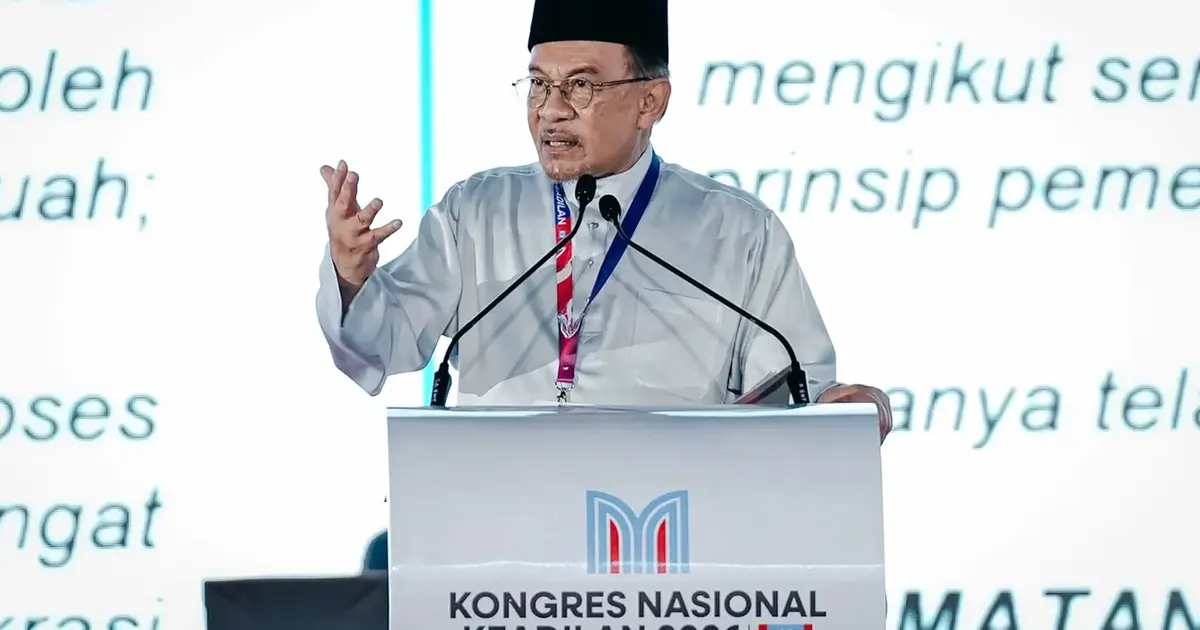
Prime Minister Anwar Ibrahim has indicated that scrutiny of Malaysia's statutory bodies will extend beyond Tabung Haji, with the Federal Land Development Authority (Felda) emerging as the next focus of investigation. Speaking on the matter, Anwar revealed that the Yang di-Pertuan Agong expressed a view that regulatory and accountability reviews should not be confined to the pilgrims' fund alone, signalling broader concerns about governance across state-linked institutions.
The announcement reflects mounting pressure on the government to address systemic issues affecting several large state enterprises. Tabung Haji, which manages savings and pilgrimage funds for millions of Malaysian Muslims, has faced significant criticism over financial mismanagement and governance failures. Rather than treating that institution's problems as an isolated case, the palace and executive leadership have signalled their intent to conduct a more comprehensive evaluation of how Malaysian statutory bodies operate and safeguard public assets.
Felda, which operates one of the world's largest land settlement schemes, has long been beset by operational and administrative challenges. The organisation manages millions of hectares of land and employs thousands of workers across the country. Over recent years, reports have highlighted concerns ranging from financial efficiency to the welfare of settler families who depend on the institution's management of their agricultural livelihoods. For many rural Malaysians, particularly those in settlement areas, Felda's performance directly affects household income and economic security.
The government's decision to initiate a formal examination of Felda carries significant implications for institutional reform across Malaysia's sprawling network of government-linked companies and statutory authorities. These entities collectively control vast financial resources and manage critical services, yet they have often operated with limited public transparency. An investigation into Felda could set a precedent for similar scrutiny of other underperforming state enterprises, potentially triggering cascading reviews across the public sector.
Anwar's statement underscores the administration's commitment to addressing governance deficiencies that have accumulated over decades. Malaysia's statutory bodies manage assets worth billions of ringgit and employ hundreds of thousands of workers. Yet accountability mechanisms have historically been weak, with some institutions shielded from public scrutiny by their statutory status. The Tabung Haji inquiry, which revealed troubling lapses in oversight and decision-making, prompted questions about whether similar problems existed elsewhere in the system.
The royal endorsement carries particular weight in Malaysia's constitutional framework. The Yang di-Pertuan Agong's position that investigations should broaden beyond Tabung Haji suggests institutional-level consensus that governance reform is necessary. This alignment between the palace and the executive branch strengthens the government's political capital to pursue potentially contentious institutional reviews that may reveal uncomfortable truths about past management decisions and individuals responsible for them.
For Felda specifically, an inquiry will likely examine how settlement funds are managed, whether land resources are being utilised efficiently, and whether settlers' interests have been adequately protected. The organisation has faced recurring allegations of misappropriation and poor strategic planning. A formal government investigation could expose details about decision-making processes, identify accountability gaps, and recommend structural reforms to prevent future failures. Such an outcome would represent significant change for an institution that has operated with considerable autonomy.
The timing of this announcement is noteworthy given Malaysia's broader political and economic context. The country faces inflationary pressures and fiscal constraints, making efficient use of public resources increasingly important. Statutory bodies that perform poorly or waste assets drain government capacity to invest in essential services. By committing to investigate these institutions, Anwar's government is signalling that fiscal responsibility and institutional efficiency are policy priorities.
Regional observers note that Malaysia's approach to state enterprise governance will influence how other Southeast Asian governments approach similar challenges. The region has numerous large statutory bodies and government-linked companies that operate across borders and sectors. Malaysia's willingness to conduct transparent, serious inquiries into institutional failures could encourage similar accountability efforts across the region, or alternatively, it could provoke defensiveness if powerful interests feel threatened by scrutiny.
The investigation process itself will require careful management. Establishing independent investigative bodies, protecting whistleblowers, and ensuring findings are acted upon will test the government's institutional capacity. Public confidence in the outcomes will depend on whether investigations appear politically motivated or genuinely driven by governance concerns. For Felda, the stakes are particularly high given the livelihoods of hundreds of thousands of settler families depending on the organisation's effective management.
Looking ahead, the government faces decisions about which other statutory bodies warrant investigation and what timeline is realistic for conducting multiple institutional reviews simultaneously. Resource constraints mean that comprehensive audits of all major state enterprises cannot happen overnight. Prioritisation will be necessary, and the selection process itself may attract scrutiny regarding whether investigations target some institutions more aggressively than others.
The commitment to investigate Felda also raises questions about enforcement mechanisms. If investigations uncover misconduct or mismanagement, what consequences will follow? Will there be legal accountability for individuals involved, restructuring of organisational leadership, or primarily technical reforms to processes and systems? The answers to these questions will determine whether the inquiry represents genuine institutional change or symbolic gesture.
Ultimately, Anwar's pledge to examine Felda demonstrates recognition that Malaysia's statutory bodies require closer oversight and more rigorous governance standards. Whether this investigation becomes a turning point for systematic institutional reform or remains a one-off response to specific crises will depend on political will, resource allocation, and the government's capacity to translate investigative findings into meaningful change.

