Prime Minister Datuk Seri Anwar Ibrahim has moved to address the growing strain on Malaysia's manufacturing sector by directing two key ministries to intensify engagement with industry players struggling with cost pressures stemming from the global supply crisis. The announcement, made via social media on Monday, signals government recognition that manufacturers across multiple sectors are facing acute challenges that threaten the competitiveness of Malaysia's industrial base.
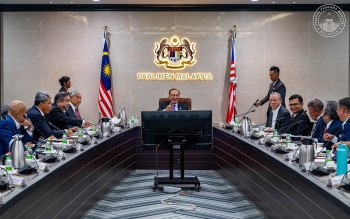
Anwar, who also holds the finance portfolio, revealed that the National Economic Action Council convened earlier in the day to examine measures designed to fortify Malaysia's manufacturing resilience. The timing of this high-level review underscores the urgency with which the government is treating the matter, suggesting that feedback from industry players has reached critical mass. The directive to the Ministry of Investment, Trade and Industry (MITI) and the Ministry of Economy represents a coordinated approach to problem-solving, with both institutions expected to work in tandem to identify and implement relief measures.
The government's focus has homed in specifically on the plastics industry, a sector whose health reverberates across Malaysia's broader industrial ecosystem. This targeted attention reflects understanding that plastics form a critical backbone for numerous downstream industries, from food packaging through to high-value sectors like electrical and electronics manufacturing. The interconnectedness of the plastics supply chain means that pressures in this sector rapidly transmit to dependent industries, creating a cascading effect that can undermine export competitiveness.
Economy Minister Akmal Nasrullah Mohd Nasir elaborated on the sector's economic significance during a public briefing. The plastics industry generated RM62.69 billion in sales during 2025, though this represents a contraction from RM64.78 billion in the previous year, a decline of approximately 3.2 percent. This shrinkage may signal either reduced demand or margin compression driven by the cost pressures Anwar referenced, illustrating the real financial impact rippling through the sector. The year-on-year reduction demands urgent intervention to prevent further deterioration in business conditions.
Market segmentation data reveals the depth of the plastics industry's integration into Malaysia's manufacturing landscape. Packaging applications command 45 percent of the market, followed by the electrical and electronics sector at 29 percent. This distribution means that when plastics manufacturers face mounting costs, the burden inevitably transfers to food packaging producers, E&E component makers, and their downstream customers. The remaining segments—encompassing automotive, medical devices, construction, agriculture and manufactured exports—collectively constitute a significant portion of the market, indicating that supply disruptions affect virtually every major Malaysian industrial category.
The cascading nature of cost pressures in manufacturing networks presents particular challenges for a small, open economy like Malaysia. When input costs rise due to global supply chain disruptions, manufacturers face a difficult choice: absorb the costs and watch margins compress, or pass them along to customers and risk losing competitiveness in export markets. For industries where Malaysia competes globally—such as E&E components and automotive parts—this dilemma can have outsized consequences. A loss of price competitiveness in these sectors could prompt multinational firms to relocate production or source from alternative suppliers, potentially weakening Malaysia's position as a manufacturing hub.
The government's acknowledgement of industry concerns carries political significance as well. By publicly committing MITI and the Economy Ministry to conduct further engagement, Anwar signals that the administration takes manufacturing competitiveness seriously and is prepared to deploy government resources toward solutions. This posture aims to reassure the industrial sector that their difficulties are being heard at the highest levels and that policy responses are forthcoming. Without such reassurance, manufacturers might begin relocating operations or reducing expansion plans, which would have damaging implications for employment and investment inflows.
The directive to formulate solutions that ease cost pressures while maintaining long-term resilience suggests a government mindset focused on structural sustainability rather than short-term fixes. This approach aligns with broader efforts to position Malaysia as a higher-value manufacturing destination capable of withstanding global volatility. Short-term subsidies or price controls might provide immediate relief but could ultimately distort market incentives and delay necessary industry adjustment. The emphasis on resilience-building implies that solutions may include supply chain diversification support, technical assistance, or targeted infrastructure investment.
For Malaysia's manufacturing sector and broader economy, the outcome of these ministerial engagements carries material weight. The manufacturing sector remains a cornerstone of Malaysia's export earnings and employment base, particularly in states like Selangor, Johor and Penang. Any sustained weakness in plastics and downstream industries could reduce foreign direct investment appetite, slow job creation, and pressure the currency. Conversely, effective government-industry collaboration that addresses root causes of cost pressures could stabilize business confidence and support Malaysia's competitive position in regional supply chains.

