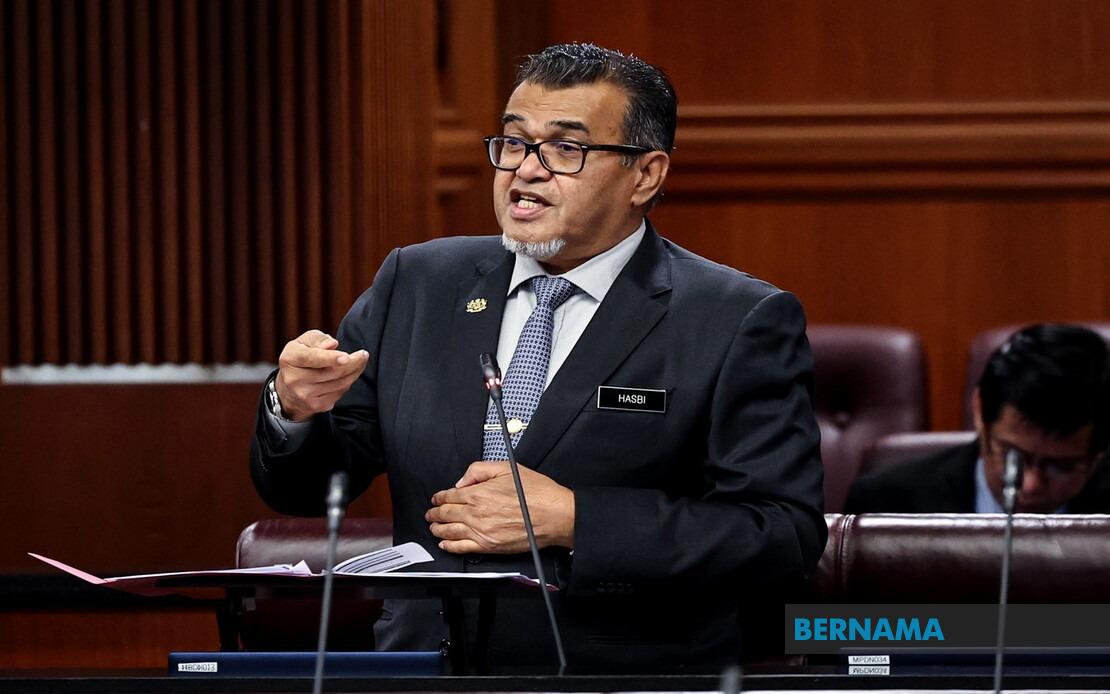
Malaysia's transport authorities are moving to overhaul the legal framework governing railway security, with the Deputy Transport Minister announcing that critical legislative amendments are being finalised to address the persistent problem of trespassing, vandalism, and theft targeting railway infrastructure. Datuk Hasbi Habibollah informed Parliament that these modifications, expected to reach the legislative chamber before year-end, represent a comprehensive response to what officials characterise as inadequate penalties under existing statutes. The push for reform reflects growing frustration within government circles over the weakness of current deterrents, which have proven insufficient in stemming systematic attacks on critical rail assets.
The scope of the cable theft problem has prompted this legislative overhaul. Over the past three years alone, authorities documented 393 separate incidents involving the theft of nearly 20,000 metres of cable, generating losses estimated at RM16.3 million. These figures underscore both the frequency and scale of the criminal activity, suggesting an organised operation rather than isolated opportunistic crimes. The targeting of railway cables carries implications extending beyond mere property loss—damaged electrical and communication systems can compromise rail safety and disrupt service to commuters across the Klang Valley and beyond, making this a public safety concern as much as an economic one.
Current penalties exemplify what lawmakers regard as inadequate deterrence. Trespassing on railway property presently carries fines ranging only between RM500 and RM1,000, a sum that government officials argue fails to discourage the risk-taking behaviour of potential offenders. For cable thieves, whose activities carry serious security implications for train operations and passenger safety, the existing legal arsenal appears equally insufficient. The proposed amendments will substantially increase penalties, particularly targeting those involved in stealing security-related cable infrastructure. By elevating the financial and legal consequences, the government hopes to shift the calculation that currently favours criminal activity.
Beyond legislative measures, authorities are pursuing a multi-pronged strategy that targets the economic incentive structure enabling cable theft to persist. Strategic coordination with the Royal Malaysian Police has intensified, with particular focus on disrupting the downstream market for stolen goods. Officials have identified scrap metal dealers and operators as critical chokepoints in the supply chain—these intermediaries represent the interface between theft and profit. By approaching these businesses directly and establishing protocols to prevent them from purchasing stolen material, authorities aim to sever the connection between crime and financial gain. This approach recognises that potential thieves are rational economic actors; if the stolen goods cannot be easily converted to cash, the incentive to steal diminishes substantially.
Technology is playing an increasingly central role in the government's deterrent strategy. The Railway Assets Corporation has deployed 1,146 units of artificial intelligence-enabled closed-circuit television systems across high-risk locations, representing an investment of RM14 million. These systems represent a significant upgrade from conventional cameras, as AI capabilities enable automated threat detection rather than relying solely on human monitoring. By positioning these systems in areas identified as vulnerable to cable theft, authorities create both a physical deterrent and an investigative tool that can capture evidence of criminal activity in real time. The concentration of these resources on high-risk zones reflects a data-driven approach to security resource allocation.
Aerial surveillance has emerged as a complementary technology for monitoring difficult-to-access locations that conventional ground patrols cannot efficiently cover. Drone operations enable authorities to conduct regular monitoring of railway corridors, particularly in peripheral areas where thieves may believe surveillance is minimal. This approach is particularly valuable in Malaysia's geography, where sections of the rail network traverse terrain that limits vehicle access or visibility from traditional patrol routes. The combination of fixed AI-enabled cameras and mobile drone surveillance creates a more comprehensive security apparatus than either technology alone could provide.
The Auxiliary Police capacity has also been enhanced through operational improvements. Approval for acquisition of twenty scrambler motorcycles provides enforcement personnel with more agile transport suited to the conditions of railway corridors, where standard vehicles may be impractical. These motorcycles enable faster response times to reported incidents and more flexible patrolling patterns across rail infrastructure. Enhanced mobility directly translates to increased visible security presence in high-risk areas, a factor that research suggests contributes to crime prevention through increased perceived risk of apprehension.
The broader context underlying these initiatives reflects growing recognition that railway infrastructure security is essential to Malaysia's transport system integrity. Keretapi Tanah Melayu Berhad and the Railway Assets Corporation serve millions of commuters annually, and disruptions caused by cable theft or sabotage create cascading effects across the regional economy. Businesses depending on reliable rail transport experience delays, while commuters face service interruptions. The government's comprehensive approach acknowledges that no single intervention—legal, technological, or operational—suffices in isolation; rather, a layered strategy combining strengthened laws, market disruption, surveillance, and enhanced enforcement presence offers the best prospect of reducing cable theft and related crimes.
For regional observers, Malaysia's experience with systematic railway asset theft parallels challenges facing other Southeast Asian nations with extensive rail networks. The solutions being pursued—combining legal reform, technology adoption, and interagency coordination—may offer lessons applicable across the region. As Malaysia progresses with these amendments and initiatives, other countries grappling with similar infrastructure security challenges may find instructive value in the outcomes achieved through this integrated approach.

