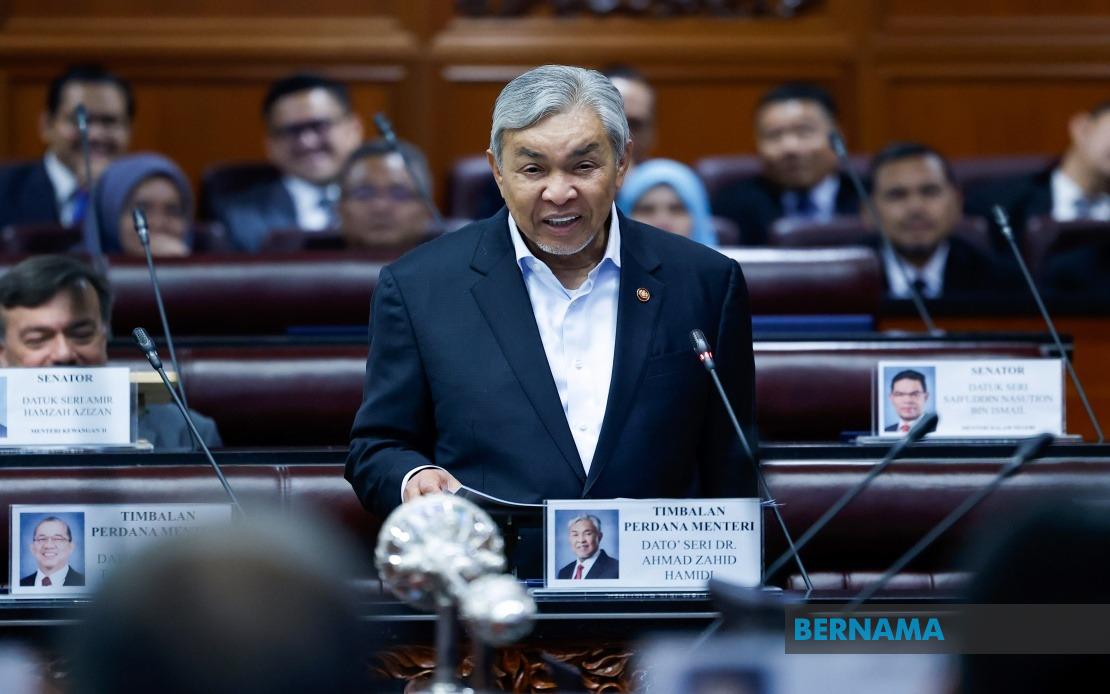
The government is undertaking a comprehensive review of amendments to the Land (Group Settlement Areas) Act 1960 to modernise land administration and address the evolving needs of Federal Land Development Authority (FELDA) settlers and their successors. Deputy Prime Minister Datuk Seri Dr Ahmad Zahid Hamidi confirmed that authorities are evaluating several structural changes, notably proposals to cap the number of registered heirs at two nominees and designate a unified administrative representative, which would streamline inheritance processes and reduce bureaucratic complexity that has long plagued the system.
The reform agenda reflects mounting pressure from younger FELDA beneficiaries seeking greater flexibility in land use. Ahmad Zahid indicated that government proposals under review would permit settlers to develop more than one residential unit on a single lot, provided such development complies with applicable planning regulations, state policies, and gains explicit approval from state and local authorities. This potential liberalisation marks a significant departure from the rigid single-unit framework that has constrained the commercial potential and housing capacity of FELDA land holdings for decades.
For Malaysian policymakers and the estimated 112,000 FELDA settlers nationwide, the proposed amendments carry profound implications. The current land tenure system, established in 1960, was designed for an era of agricultural settlement and family farming. Today's realities differ markedly: second-generation FELDA members face acute housing shortages, rising land values in developing regions, and limited alternative wealth-generation mechanisms. Permitting multiple-unit development could unlock dormant economic potential while enabling young families to remain within or near their ancestral communities rather than migrating to urban centres.
Ahmad Zahid emphasised that the government remains acutely aware of the housing pressures confronting younger Malaysians, including those with FELDA backgrounds. Rather than treating land tenure reform in isolation, the administration is attempting to craft amendments that simultaneously serve the interests of current settlers, their heirs, second-generation FELDA members, state governments which retain residual land authority, and broader national development objectives. This balancing act requires delicate negotiation across multiple stakeholders with competing interests and constitutional constraints.
Land titling remains a critical bottleneck in realising the potential of FELDA settlements. As of the date Ahmad Zahid's response was tabled in Parliament, 109,104 of 112,638 FELDA settlers—approximately 96.86 per cent—had successfully obtained formal land titles. This impressive completion rate represents years of coordinated effort between FELDA, state governments, State Land and Mines Offices, and District Land Offices to convert customary settlement rights into legally defensible ownership. Without formal titles, settlers cannot leverage their land as collateral for loans, sell or gift property with legal certainty, or bequeath holdings to heirs with confidence that courts will recognise the transfer.
The government has committed to completing the remaining land title issuances in staged phases to ensure that every FELDA settler and their legal successors eventually possess unambiguous ownership rights. This phased approach acknowledges resource constraints while prioritising the most pressing cases. For settlers still awaiting titles, the delays create genuine hardship: they cannot fully utilise their assets, face uncertainty in inter-generational transfers, and remain vulnerable to disputes that formal documentation would easily resolve.
Parallel progress is occurring within FELCRA Berhad, a distinct but related entity serving land settlement participants. As of June 2026, FELCRA had distributed land titles for 4,274 of 6,025 house site lots across 43 projects nationwide. The remaining 1,751 lots remain entangled in the State Land and Mines Office titling pipeline, underscoring how land titling challenges persist across multiple settlement schemes. FELCRA's commitment to securing legal ownership rights for all participants echoes FELDA's approach, yet the absolute numbers reveal that thousands of beneficiaries still await formal documentation of property rights that should be routine.
The broader context for these reforms involves Malaysia's evolving rural development strategy. FELDA and FELCRA were pioneered as vehicles for poverty alleviation and inclusive growth, transforming vast tracts of hinterland into productive agricultural zones while distributing assets to rural families. Decades later, many original FELDA communities have become surrounded by urban sprawl, industrial development, and infrastructure corridors. Land that once served primarily agricultural purposes now possesses considerable value for residential, commercial, or mixed-use development. Reforming the 1960s-era legal framework to accommodate this reality is both prudent and overdue.
The proposal to limit heir registration to two nominees addresses a genuine administrative pathology. Under current provisions, when a FELDA settler passes away, their property may technically devolve to numerous heirs through Islamic inheritance law or civil succession rules. Identifying, locating, and obtaining consent from all heirs for any transaction becomes practically impossible, effectively rendering the land unmoveable and unusable. Capping registered heirs at two and appointing a single administrative representative would unblock these deadlocked holdings, allowing families to manage properties, generate income, and plan for succession without the consent of distant relatives scattered across Malaysia or abroad.
From a Southeast Asian perspective, Malaysia's efforts to modernise land tenure in settlement schemes reflect challenges common across the region. Many countries face similar pressures: ageing land laws, incomplete titling, rapid urbanisation encroaching on rural settlements, and younger generations seeking greater economic mobility. How Malaysia navigates these tensions—balancing settler welfare, inter-generational equity, state authority, and development imperatives—may offer lessons or cautionary tales for neighbours grappling with analogous dilemmas.
The parliamentary question from Kamal Ashaari (PN-Kuala Krau) demonstrates that land reform remains a lively political issue, particularly among representatives of constituencies with significant FELDA populations. Constituencies like Kuala Krau have long depended on FELDA settlements as a demographic and economic foundation. When settlers feel neglected or left behind by development, their representatives raise the concern publicly, creating political incentive for the government to demonstrate tangible progress.
Ahmad Zahid's responses indicate that the review process is active and progressing, yet timelines remain nebulous. Policymakers must clear multiple institutional hurdles: drafting precise legislative language, securing state government agreement (since land remains a concurrent matter under the Malaysian constitution), consulting settler representatives and heir associations, and navigating potential opposition from those benefiting from current arrangements. Actual amendments may emerge within months or stretch across years, reflecting the genuine complexity of restructuring rights that affect hundreds of thousands of people and their descendants.
The proposed amendments represent an opportunity to unlock economic potential for FELDA and FELCRA beneficiaries while streamlining administration. Success will depend on careful drafting that protects settler interests while enabling productive land use, efficient title processes, and transparent succession mechanisms. For rural Malaysians whose families have invested generations in these settlements, the reforms could prove transformative—or merely cosmetic, depending on implementation rigour and political will.

