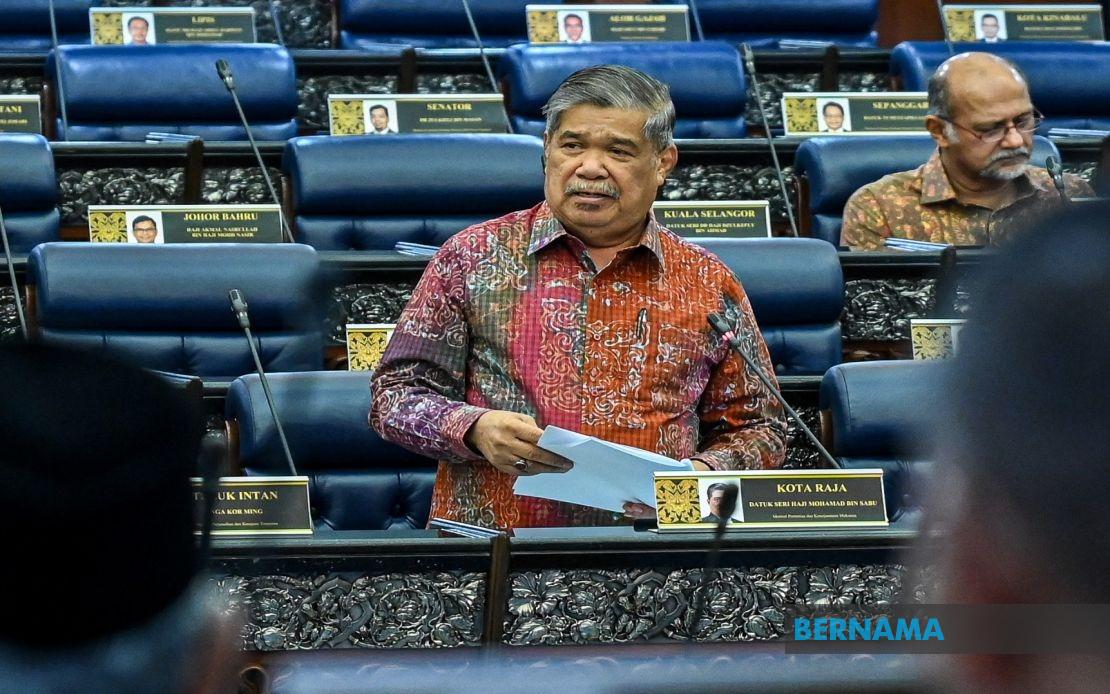
The Malaysian government is marshalling a comprehensive strategy to shield its agricultural sector from the mounting threats posed by El Niño, with Agriculture and Food Security Minister Datuk Seri Mohamad Sabu unveiling a multifaceted approach during parliamentary proceedings. The initiative addresses what has become an increasingly urgent challenge for Southeast Asia's food supply chains, as climatic disruptions threaten regional crop yields and dietary stability across the region.
At the core of Malaysia's response lies a sophisticated approach to water conservation that recognises irrigation as the linchpin of agricultural resilience. The government has committed to deploying advanced monitoring systems across dam networks and catchment zones, underpinned by real-time data collection that allows administrators to respond swiftly to emerging water scarcity. This technological integration extends beyond passive observation into active resource optimisation, with smart irrigation systems and drip irrigation methodologies now being expanded across cultivated areas. Such precision-based approaches represent a marked departure from conventional farming techniques, potentially reducing water consumption by up to 30 percent while maintaining or even enhancing crop productivity in arid conditions.
Parallel to these infrastructure investments, the Malaysian Agricultural Research and Development Institute (MARDI) has intensified its breeding programmes to develop paddy varieties capable of withstanding extended drought periods without sacrificing yield or grain quality. These botanical innovations address a fundamental vulnerability in Malaysia's food system, given that rice remains the staple carbohydrate for the vast majority of the population. The research agenda, which received explicit endorsement during a cabinet-level Food Security Meeting chaired by the Prime Minister, reflects the government's recognition that technological and agronomic solutions must advance in tandem to achieve meaningful climate adaptation.
Cloud seeding operations constitute another dimension of Malaysia's weather intervention strategy, deployed opportunistically when atmospheric conditions prove conducive to artificial precipitation. While such operations remain weather-dependent and unpredictable in their efficacy, they represent an additional tool within the government's adaptive toolkit. Combined with MARDI's drought-resistant breeding work, these interventions signal a governance approach that leverages both traditional meteorological techniques and cutting-edge agricultural science.
The financial scaffolding supporting these interventions demonstrates substantial government commitment, with RM45.24 million allocated during the initial assistance phase to 8,224 rice farmers since 2024. More significantly, cumulative disbursements totalling RM38.53 million have reached 55,058 farming families by mid-2026, covering drought-affected operations across 16,933 hectares primarily concentrated in peninsular Malaysia's northern and eastern regions. These figures underscore the scale of agricultural distress already materialising, with the affected land area alone equivalent to tens of thousands of small farming households. The assistance architecture provides immediate income stabilisation while farmers implement longer-term adaptation strategies, functioning as a crucial bridge during the transition to climate-resilient agricultural methods.
Strategic buffer stockpiling forms another protective layer within Malaysia's food security architecture. The government maintains rice reserves sufficient for approximately six months of national consumption, a strategic reserve that insulates domestic markets from international price volatility and supply disruptions precipitated by weather events. This grain storage strategy, complemented by managed import arrangements that activate when domestic supplies approach critical thresholds, reflects lessons learned from previous regional food crises and represents a deliberate trade-off between storage costs and price stability for consumers.
Expanding domestic rice production through large-scale agricultural development in Sarawak, Pahang, and other regions seeks to reduce Malaysia's structural dependency on rice imports, currently a significant budget item for national food security. Such expansion initiatives must contend with competing land demands for urbanisation, industrial development, and conservation, making cultivation intensification and productivity improvements equally vital. The government's promotion of controlled environment agriculture—encompassing greenhouse cultivation, hydroponics, and precision livestock systems—addresses the underlying climate vulnerability by insulating production from uncontrolled weather variations, though such technologies require substantial upfront capital investment often beyond small-holder farmer capacity.
Beyond the paddy sector, government interventions extend to high-value commodity exports facing their own climate-related challenges. The recent dumping of durian supplies triggering price collapses prompted ministerial commitment to strengthening export infrastructure and market diversification, particularly targeting China's vast interior markets where consumption remains concentrated in major metropolitan centres. Enhancing cold-chain logistics and expediting customs procedures for fresh and frozen fruit exports could unlock significantly higher prices for Malaysian producers while absorbing domestic production surpluses that currently depress local prices. This export-led stabilisation approach acknowledges that Malaysian agriculture increasingly operates within integrated regional and global supply chains, where demand diversification provides crucial economic buffers.
The cumulative effect of these measures—technological deployment, breeding programmes, financial assistance, strategic reserves, production expansion, and export market development—suggests a government response that addresses El Niño impacts across multiple time horizons simultaneously. Short-term farmer support provides immediate relief, while medium-term infrastructure and technological investments build adaptive capacity, and long-term production diversification reduces structural vulnerabilities. For Malaysian policymakers and regional observers, this multidimensional approach offers a template for climate-proofing agricultural systems in a region increasingly vulnerable to extreme weather patterns and climatic volatility.

