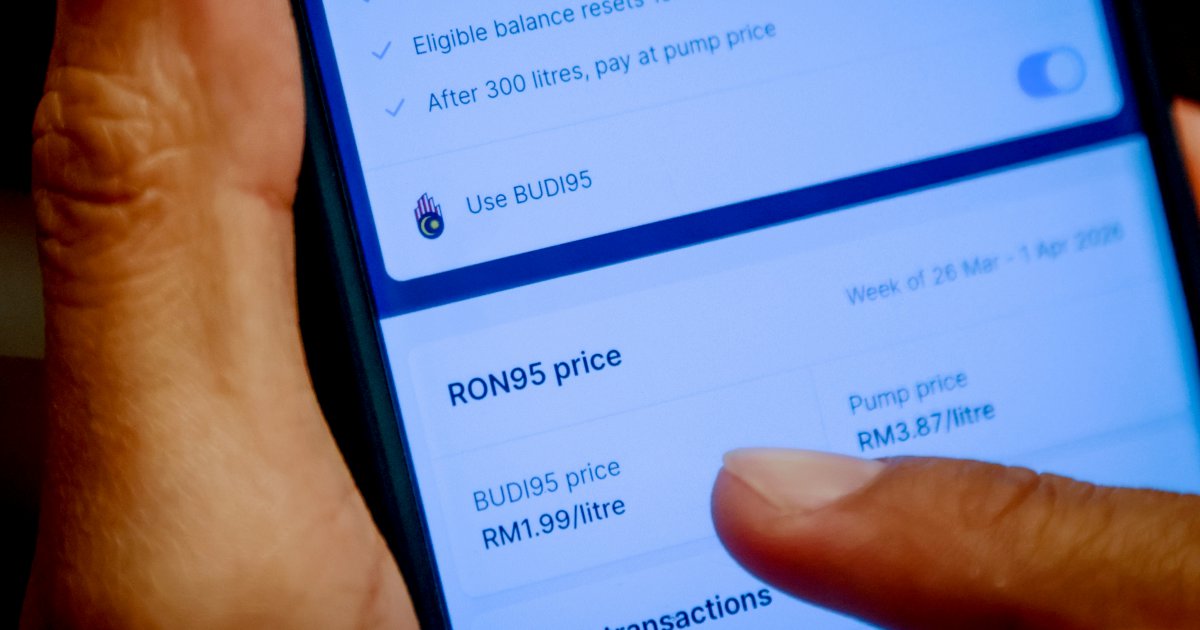
Prime Minister Datuk Seri Anwar Ibrahim has underscored the substantial financial burden the government shoulders each year through fuel subsidy programmes, revealing that between RM40 billion and RM45 billion is channelled annually to insulate Malaysian consumers from the full impact of fluctuating global energy markets. The disclosure, made in Kuala Pilah, puts into stark perspective the scale of state intervention required to maintain affordable petrol and diesel prices at domestic pumps, a policy cornerstone that successive administrations have maintained to preserve purchasing power across the income spectrum.
The magnitude of this subsidy commitment represents a significant allocation from the national budget, equivalent to a substantial portion of Malaysia's total government spending. To contextualise this figure for ordinary Malaysians: the annual fuel subsidy outlay approaches or exceeds the combined budgets of major economic sectors and social programmes, highlighting the political and economic priority the government accords to energy affordability. The cost reflects the gap between what Malaysians actually pay at petrol stations and what global crude oil prices would ordinarily dictate, a mechanism that insulates domestic consumers but simultaneously strains public finances.
The Prime Minister's statement carries implicit messaging about the invisible subsidy architecture that operates behind every fuel purchase. When motorists visit petrol stations, they encounter controlled prices that do not fully reflect international crude benchmarks, a deliberate policy choice that effectively represents an indirect transfer from government coffers to individual consumers. This reality is often overlooked in public discourse about fuel pricing, yet it remains a core economic fact shaping Malaysia's fiscal landscape and the calculus of economic policymaking at the highest levels.
For context, Malaysia's total government expenditure typically ranges in the RM400-500 billion band annually, making the fuel subsidy programme one of the most substantial single-item expenses competing for fiscal resources. This comparison illuminates the trade-offs inherent in subsidy maintenance: the billions committed to keeping pump prices affordable necessarily limit funds available for infrastructure development, healthcare expansion, education improvements, and poverty alleviation initiatives. Policymakers constantly navigate this tension between short-term voter satisfaction through affordable fuel and long-term economic resilience through investment in productive capacity.
The volatility of global crude oil prices has intensified the unpredictability of Malaysia's annual subsidy bill. When international petroleum markets surge, the domestic subsidy burden escalates correspondingly, creating budget pressures that force difficult choices about deficit levels and debt sustainability. Conversely, periods of lower international crude prices reduce the subsidy requirement but also complicate the political narrative around energy costs. This structural vulnerability to external commodity price movements reflects Malaysia's continued dependence on petroleum revenues and fuel-intensive economic activities.
From a Southeast Asian perspective, Malaysia's subsidy approach contrasts with neighbouring economies that have pursued differing strategies. While some nations have gradually withdrawn subsidies or implemented targeted assistance schemes, Malaysia has maintained relatively broad-based fuel subsidies, reflecting distinct political economy considerations and social expectations shaped by decades of subsidised energy. This divergent approach carries implications for regional competitiveness and comparative fiscal sustainability across the Association of Southeast Asian Nations.
The sustainability question looms increasingly large as global energy transitions accelerate and climate considerations reshape energy markets. Long-term fuel subsidies potentially discourage efficiency investments and electric vehicle adoption, creating path dependencies that could complicate Malaysia's energy security as international oil markets evolve. The billions spent annually to maintain current pricing structures represent opportunity costs that constrain investments in alternative energy infrastructure, renewable capacity, and the technological transitions reshaping global energy systems.
The Prime Minister's articulation of subsidy magnitudes also serves a broader public education function, encouraging citizens to comprehend the financial mechanisms underlying apparent fuel price stability. Understanding that RM40-45 billion annually represents genuine government expenditure rather than simply controlled market pricing can shift public discourse around energy policy from entitlement thinking toward recognition of fiscal constraints and policy trade-offs. This educational dimension becomes particularly important as governments contemplate medium-term policy adjustments in response to budgetary pressures.
The subsidy framework also intersects with Malaysia's macroeconomic health and credit rating considerations. International rating agencies scrutinise fiscal deficits and the sustainability of large subsidy programmes when evaluating sovereign creditworthiness. The magnitude of fuel subsidies influences perceptions of government fiscal discipline and long-term economic management, indirectly affecting borrowing costs and investment confidence in Malaysian assets. Maintaining these subsidy levels thus carries consequences extending beyond immediate household energy costs into broader financial stability considerations.
Going forward, the trajectory of fuel subsidy policy will likely attract intensified policy debate as fiscal pressures mount and climate imperatives strengthen. The RM40-45 billion annual commitment represents a constraint on policy flexibility and a fiscal priority that competes with numerous other pressing demands for government resources. Whether Malaysia maintains, modifies, or transitions away from this subsidy model will significantly influence the nation's fiscal trajectory, energy security pathway, and social equity considerations in coming years.

