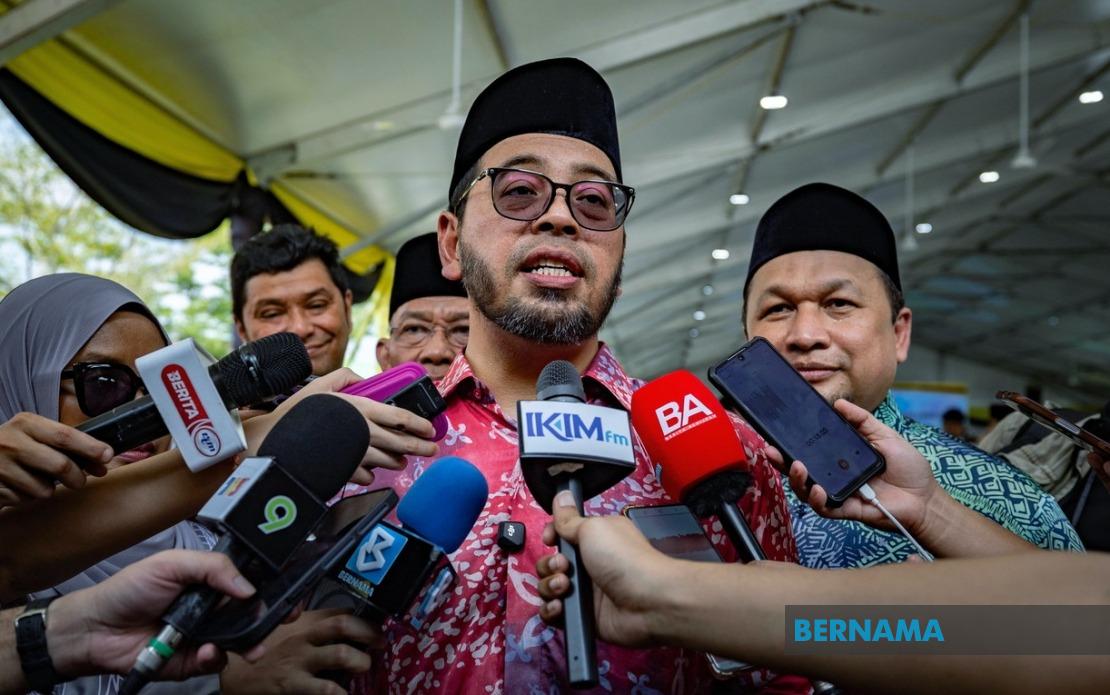
Malaysia's federal government is doubling down on its support for Islamic educational institutions, positioning pondoks and religious schools as indispensable partners in the country's long-term development strategy. Minister Dr Zulkifli Hasan made this declaration at the 2026 Perak Pondok and Religious Schools Gathering (HIPSA) in Chemor, underscoring a philosophical shift in how policymakers measure national progress. Rather than fixating solely on economic indicators and infrastructure expansion, the government now argues that true development must be measured by the calibre of its citizens and their adherence to moral and spiritual values. This represents a significant reframing of the development narrative in a country that has historically prioritised rapid industrialisation and GDP growth.
The gathering, which drew some 3,000 participants including educators, community leaders, and local residents, was officiated by Prime Minister Datuk Seri Anwar Ibrahim and attended by senior government figures including Perak Menteri Besar Datuk Seri Saarani Mohamad and Chief Secretary to the Government Tan Sri Shamsul Azri Abu Bakar. The high-level participation underscores the administration's intent to signal serious commitment to the Islamic education sector, an institution that has historically operated with less fanfare than mainstream public schools but serves as a crucial foundation for religious literacy across Malaysia. Through the Prime Minister's Department (Religious Affairs), the government is institutionalising closer coordination between federal agencies, state governments, and Islamic religious departments to ensure that Islamic education develops in a systematic, quality-driven manner that addresses contemporary challenges.
What distinguishes this approach is its emphasis on structural integration rather than isolated support measures. The government is not simply channelling funds toward religious schools; it is explicitly positioning them within a broader ecosystem of stakeholders. Coordination with State Islamic Religious Departments and Councils, alongside engagement with mainstream educational bodies, suggests an attempt to ensure that Islamic institutions operate within a coherent national framework while retaining their pedagogical independence. This model acknowledges that Islamic schools operate differently from conventional institutions and require tailored policy frameworks that respect their educational philosophy while ensuring accountability and quality standards.
The MADANI Aid Baskets distributed during the event exemplify how the government is translating rhetorical commitment into tangible support. The symbolic handover of aid packages to twelve recipients, representing approximately 250 beneficiaries from surrounding communities, demonstrates that the initiative extends beyond institutional support to address the socioeconomic vulnerabilities of families dependent on Islamic education. This approach recognises that many pondok students come from lower-income backgrounds and that financial barriers can prevent talented children from accessing quality religious education. By coupling institutional support with direct assistance to vulnerable families, the government is attempting to ensure equitable access to Islamic education across socioeconomic strata.
The forum component of HIPSA 2026, titled "The Role of Religious Scholars and Leaders in Nation Building", brought together prominent Islamic intellectuals including Kelantan scholar Sheikh Wazir Che Awang Al-Makki and former Perak mufti Datuk Seri Wan Zahidi Wan Teh. Such gatherings serve multiple functions: they elevate the intellectual stature of Islamic education by showcasing scholarly discourse on development policy, they create platforms for knowledge exchange between religious leaders and government officials, and they signal to the broader Muslim population that Islam and developmental progress are not in tension. For Malaysian readers, this signals a deliberate effort to counter narratives that frame religious conservatism as an obstacle to modernisation, instead positioning Islamic scholarship as a resource for informed policy-making.
The distribution of essential food items to needy families and the provision of mock cheques for pondok institutions represent the government's attempt to address material constraints facing the Islamic education sector. Many pondoks rely on donations and voluntary contributions, leaving them vulnerable to fluctuating funding streams. Sponsorship for student fees and programmes such as the Fast Track Sijil Pelajaran Malaysia (SPM) initiative indicate the government is working to improve access and accelerate pathways for students transitioning from religious education into formal examination systems. This is particularly significant in Malaysia, where religious education has sometimes been seen as a parallel rather than complementary track to mainstream schooling, potentially disadvantaging graduates in the broader labour market.
The invocation of Malaysia MADANI as the overarching framework reveals how this policy sits within the government's broader development vision. MADANI, which prioritises people's well-being and human capital development, positions Islamic education not as a sectoral concern but as central to national prosperity. This framing is especially relevant for Southeast Asia, where many governments struggle to balance religious institution-building with secular developmental imperatives. Malaysia's approach suggests that human capital development—the cultivation of values, ethics, and character alongside skills—requires investment in religious education as a complementary system to vocational and academic training.
Yayasan Dakwah Islamiah Malaysia (YADIM), the implementing organisation, serves as the operational intermediary between government policy and ground-level implementation. By routing support through this Islamic foundation, the government ensures that its engagement with religious institutions carries cultural legitimacy and demonstrates awareness of how Islamic governance structures function. This is more sophisticated than direct state provision of services; it represents a partnership model that respects the autonomy and institutional character of Islamic organisations while ensuring government resources reach intended beneficiaries. For policymakers across Southeast Asia, this model offers a template for how secular governments can support religious education without appearing to subordinate it or strip it of its distinctive mission.
The emphasis on KAFA teachers—Islamic Quranic education instructors operating in public schools—within the support framework indicates government recognition that Islamic education extends beyond pondoks and madrasahs into mainstream institutions. KAFA operates within the public school system, serving students alongside conventional curricula. By providing support and professional development to KAFA teachers, the government acknowledges that integration of Islamic values into public education requires investment in qualified educators who can navigate both religious and secular pedagogical contexts. This reflects a nuanced understanding that Malaysia's Muslim-majority but multi-religious society requires sophisticated approaches to embedding religious values within inclusive educational frameworks.
For Malaysian readers, particularly those in Muslim-majority communities who value religious education, this policy affirmation carries symbolic weight. It signals that the government does not view religious education as peripheral to national development but rather as foundational. Parents considering whether to enrol children in pondoks or religious schools have received assurance that such institutions enjoy government backing and are part of the formal development architecture. Conversely, the emphasis on quality, structure, and relevance to "current needs" also suggests the government expects these institutions to evolve and demonstrate accountability, not operate in isolation from broader educational standards.
The timing of HIPSA 2026, in the lead-up to the next electoral cycle, also warrants consideration. Government investment in religious education institutions is politically significant in Malaysia, where religious credentials and demonstrated support for Islamic causes carry electoral weight. However, the substantive framing—focusing on values, human capital, and structured partnership—suggests this is not merely symbolic posturing but reflects genuine policy conviction. The involvement of Prime Minister Anwar Ibrahim, himself an Islamic intellectual with credentials spanning both secular governance and Islamic scholarship, lends authenticity to the government's claims of balancing modernisation with religious values.
Looking forward, the success of this initiative will depend on whether government commitments translate into sustained funding, regulatory clarity, and genuine institutional partnership. Malaysian policymakers face the ongoing challenge of ensuring that religious education remains academically rigorous, financially sustainable, and socially relevant while preserving the spiritual formation that is its distinctive mission. The HIPSA gathering represents a step toward recognising and supporting this balance, but implementation will ultimately determine whether rhetoric translates into meaningful transformation of the Islamic education landscape in Malaysia.

