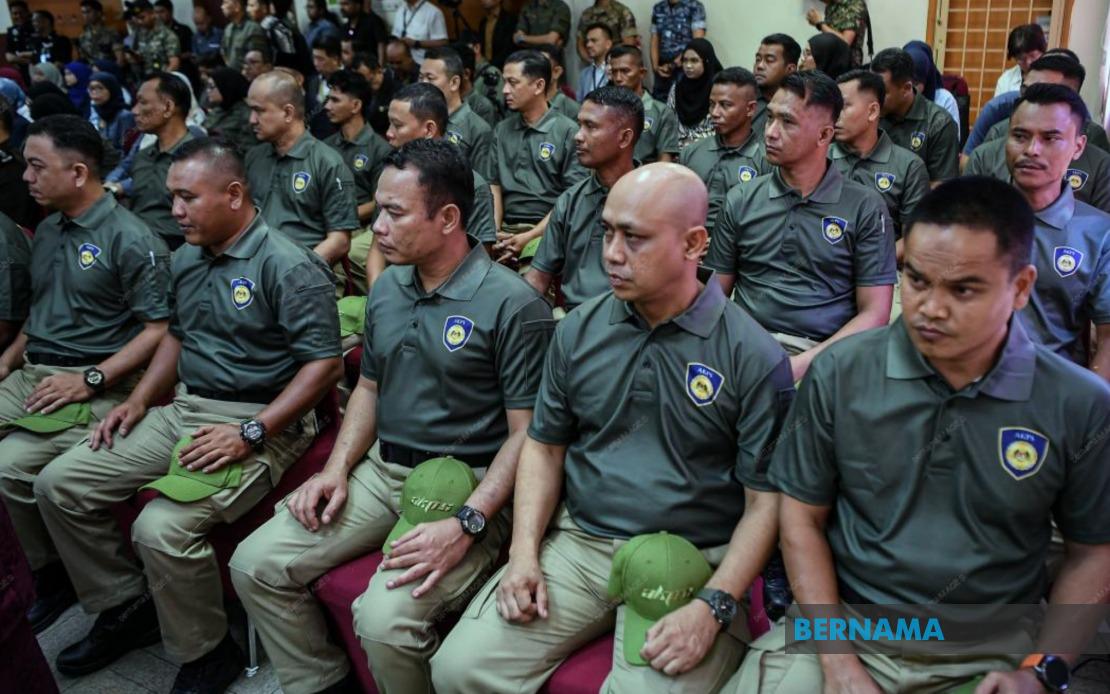
The government has provided formal assurances that the 8,403 personnel of the Border Control and Protection Agency (AKPS) will maintain their welfare entitlements and career prospects as the organisation undergoes a structural realignment under the Public Service Department framework beginning July 1. Deputy Home Minister Datuk Seri Dr Shamsul Anuar Nasarah made the commitment during parliamentary proceedings, responding to concerns about the stability of the nation's enforcement infrastructure and the protection of thousands of civil servants affected by this administrative change.
The transition addresses a structural complexity that has characterised AKPS operations since its establishment. The agency was formed through the consolidation of multiple enforcement bodies, creating an institutional framework where staff were originally positioned through secondment arrangements from their respective parent departments. This interim arrangement, while functional, created uncertainty about long-term career progression and benefits protection. The shift to a unified service scheme under the Public Service Department framework is intended to provide greater clarity and permanence to the organisation's personnel structure.
Under the new arrangements, officers retain significant autonomy over their future placement. Those choosing to remain within their original service schemes at their home agencies will experience no disruption to their promotion timelines, seniority calculations, retirement benefits, or welfare provisions. This safeguard is particularly significant for officers who may prefer to maintain institutional continuity or face family circumstances that make transfers impractical. The government's position reflects recognition that forcing complete institutional consolidation without voluntary participation could destabilise critical enforcement operations.
For those who do not elect to transfer to the new AKPS scheme, interim placement arrangements will be managed by the Public Service Department in coordination with the affected agencies. Officers may be returned to their original departments, where placement into available positions will be determined by their respective heads of service according to operational requirements and vacancy availability. This phased approach provides flexibility while maintaining operational capacity across the border control apparatus.
The AKPS operates across 122 entry points nationwide, controlling the movement of people and goods at ports, airports, and land borders. This extensive responsibility makes the agency critical to Malaysia's sovereignty and security framework. As of June 19, the agency had filled 6,824 of its 8,403 authorised positions, leaving 1,579 vacancies that represent approximately 19 percent of its authorised strength. This staffing gap underscores the urgency of maintaining stability during the transition period, as enforcement operations cannot tolerate significant capacity loss.
The government has introduced financial incentives to encourage acceptance of AKPS appointments under the new scheme. Officers transferring to AKPS positions receive an annual salary increment (KGT) addition and a RM200 service incentive, designed to offset the administrative complexity of institutional transfer and recognise the demanding nature of border security work. These incentives acknowledge that frontline enforcement positions at entry points involve irregular hours, high stress, and exposure to security risks that warrant additional compensation beyond standard civil service scales.
The vacancy filling process is being pursued through collaborative effort involving AKPS management, the Home Ministry, the Public Service Department, and the original parent agencies. This coordinated approach reflects the complexity of recruiting and deploying qualified personnel across such dispersed operational footprint. The coordination between multiple government bodies also signals institutional commitment to successful completion of the transition without operational disruption. However, filling remaining vacancies progressively rather than immediately suggests either recruitment pipeline constraints or deliberate phasing to avoid excessive disruption.
The transition has implications extending beyond AKPS itself. Malaysia's broader enforcement ecosystem, including customs, immigration, and police units operating at entry points, depends on effective border control coordination. Any instability at AKPS could create gaps in coverage that sophisticated smuggling operations or security threats could exploit. The government's emphasis on protecting officer welfare reflects understanding that demoralisation or mass departures could compromise border security capacity during a critical consolidation period.
For Malaysian civil servants generally, the AKPS transition establishes a precedent for managing institutional mergers while protecting individual employee rights. As government agencies increasingly consolidate to improve efficiency, the framework applied to AKPS—protecting career progression, enabling voluntary participation, and providing financial incentives—offers a model potentially applicable to other sectors. However, the success of this approach depends on genuine implementation of these safeguards rather than hollow assurances.
The parliamentary commitment to personnel protection also reflects political sensitivity around enforcement workforce morale. Border officers operate in high-risk environments with limited public visibility; their concerns about career security could generate internal friction affecting operational effectiveness. By providing public parliamentary assurance of benefit protection, the government has created a formal record that can be referenced if subsequent implementation falls short of stated intentions.
For those affected officers, the immediate practical question involves individual decision-making about whether to accept AKPS appointment under the new scheme or remain with original departments. This choice carries long-term implications for career trajectory, deployment location, and institutional environment. Officers in remote border locations may view the new scheme as an exit opportunity, while those in well-established positions might prefer maintaining existing arrangements. The government's flexibility on these choices reflects recognition that effective border operations require genuinely committed personnel rather than reluctantly transferred staff.
The July 1 implementation date provides limited time for officers to evaluate options and make final decisions, potentially creating rushed choices made without full consideration of long-term consequences. The government may need to extend decision-making timelines or provide additional guidance to ensure officers make informed choices rather than defaulting to whichever option requires minimal action. The success of the transition will ultimately depend not on parliamentary assurances but on consistent, transparent application of the stated principles throughout the implementation process.

