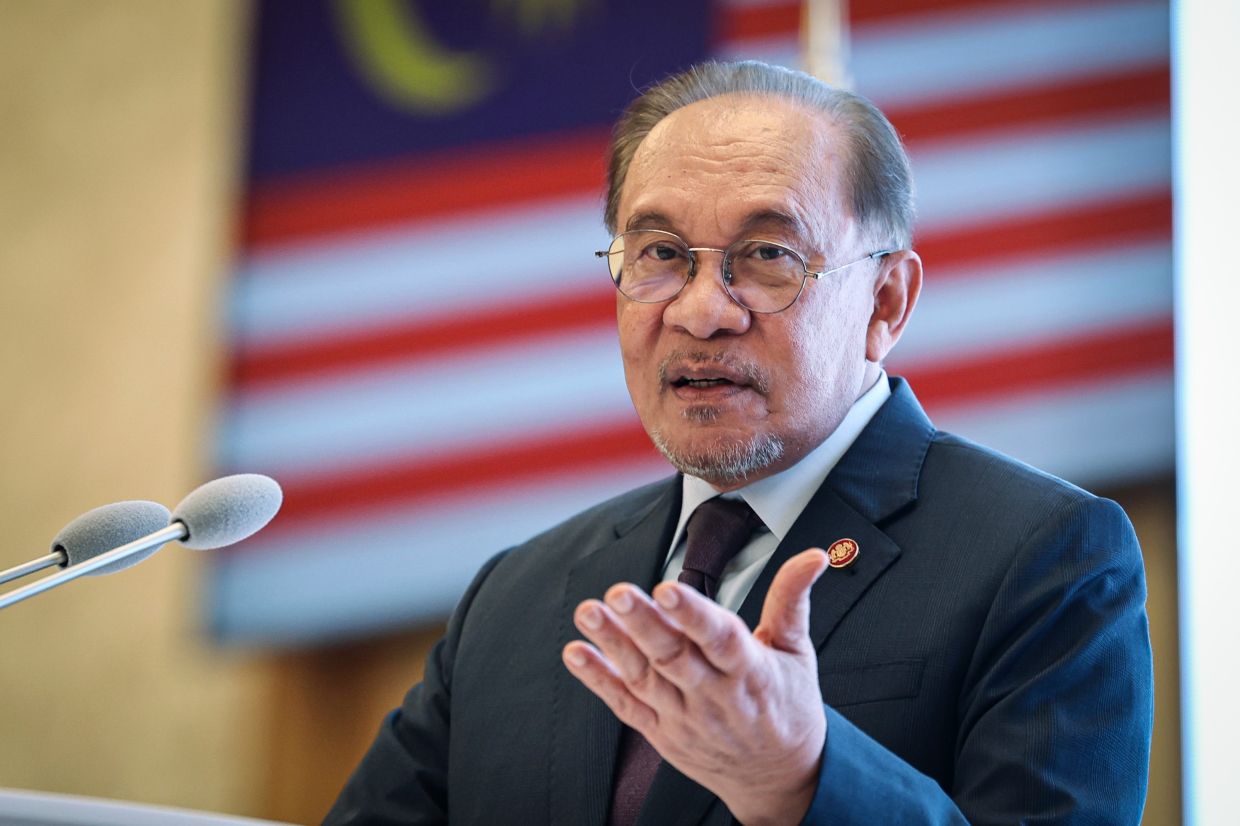
Prime Minister Datuk Seri Anwar Ibrahim has signalled the government's readiness to examine proposals for combining certain characteristics of the Goods and Services Tax (GST) with Malaysia's existing Sales and Service Tax (SST) system in order to construct a more equitable tax structure. Speaking at the conclusion of the Budget 2027 engagement session in Putrajaya, Anwar, who doubles as Finance Minister, stressed that any such review would serve to strengthen the nation's taxation apparatus while preserving the foundational principles underpinning the current SST framework. The announcement comes as the government continues deliberating the direction of fiscal policy ahead of the budget's parliamentary presentation on October 9.
The government's cautious openness to exploring hybrid tax features reflects an ongoing tension between fiscal efficiency and social equity in Malaysia's tax policy debates. Anwar made explicit that whilst certain operational elements from the GST model might merit examination, the administration would not entertain a wholesale shift towards a broad-based consumption tax that would impose obligations on the entire population. This distinction underscores a fundamental philosophical disagreement with the GST approach that has characterised Anwar's public positioning on taxation matters throughout his tenure in the Finance Ministry. The careful language employed—acknowledging academic and technical merit whilst rejecting the core architecture—suggests policymakers are attempting to balance competing pressures from economists advocating for efficiency gains against political considerations regarding electoral constituencies and lower-income voters.
Anwar's reiteration of his opposition to GST centred on the mechanism's universality, a characteristic he views as incompatible with Malaysia's contemporary socioeconomic conditions. The prime minister articulated concern that a tax system touching all residents, including those previously beyond the tax net, represents an unacceptable burden given existing cost-of-living pressures affecting ordinary Malaysians. By framing GST as inherently regressive—a tax on citizens rather than targeting specific transactions or income brackets—Anwar positioned the SST alternative as the more defensible policy within a context of household financial strain. This rhetorical positioning aligns with Malaysia MADANI's broader development framework, which emphasises inclusive growth and protecting vulnerable populations from additional fiscal shocks.
The distinction between SST and GST merits clarification for readers navigating Malaysia's tax policy landscape. The Sales and Service Tax, implemented in 2015 following the previous government's GST repeal, applies targeted levies at specific points in the supply chain and on designated services, allowing for exemptions on essential goods like food and medicines. The GST, by contrast, functions as a value-added tax encompassing the entire consumption economy with fewer categorical exemptions. This structural difference proves critical: SST's selectivity enables policymakers to shield essentials from taxation, whereas GST's comprehensiveness necessarily captures all goods and services, making it mathematically difficult to shield lower-income households from cumulative effects. Anwar's emphasis that he will not compromise on avoiding a tax affecting the entire population directly reflects this technical reality.
The government's willingness to study hybrid elements suggests pragmatic recognition that pure SST architecture may contain inefficiencies warranting attention. Economists have long noted that SST's selective application creates compliance complexities and potential avoidance mechanisms, whereas GST's uniform structure eliminates certain distortions. By indicating openness to adopting specific GST features—possibly including improved administrative mechanisms or clearer definitional frameworks—within the SST envelope, the government may be attempting to capture efficiency gains without embracing GST's problematic universality. Such an approach would require sophisticated design to avoid inadvertently widening the tax base whilst improving collection mechanisms.
The timing of this announcement, emerging during Budget 2027 consultations, reflects broader fiscal pressures confronting the Malaysian government. Revenue requirements for funding expanded social programmes, infrastructure development, and servicing obligations necessitate continuous examination of the tax system's adequacy and efficiency. The engagement session itself, attended by Finance Minister II Datuk Seri Amir Hamzah Azizan, Deputy Finance Minister Liew Chin Tong, Treasury secretary-general Tan Sri Johan Mahmood Merican, Bank Negara Malaysia Governor Datuk Seri Abdul Rasheed Ghaffour, and representatives from industry associations and civil society, demonstrates the administration's consultative approach to major fiscal decisions. This inclusive deliberation process acknowledges that taxation constitutes a matter of broad social concern extending beyond technocratic circles.
Regionally, Malaysia's taxation debates carry implications for Southeast Asian peers navigating similar policy questions. Several countries in the region have adopted or contemplated GST-equivalent systems as part of broader tax modernisation efforts, whilst others have maintained selective consumption taxes emphasising equity considerations. Malaysia's experience thus furnishes an instructive case study regarding the political economy of tax reform in lower-middle-income contexts where cost-of-living concerns resonate powerfully with electorates. The government's articulated commitment to progressivity whilst rejecting universality appeals to a particular political constituency and development philosophy that prioritises protecting the economically vulnerable from additional fiscal obligations.
The practical challenge facing policymakers involves identifying which GST elements warrant adaptation without compromising SST's protective structure. Potential candidates might include enhanced digital tracking systems for improved compliance, clearer categorisation frameworks reducing interpretive disputes, or refined definitional standards delineating taxable from non-taxable transactions. However, introducing such features requires careful calibration lest they inadvertently expand the effective tax base or burden lower-income consumers disproportionately. The government's study process will presumably involve Treasury officials, revenue authorities, and external advisors examining international experiences with hybrid approaches and assessing applicability to Malaysia's particular institutional and socioeconomic context.
Anwar's explicit rejection of any tax broadly affecting the entire population establishes a political boundary that constrains the scope of feasible reform. This boundary reflects not merely ideological preference but also practical governance considerations: the administration, having pledged Malaysia MADANI's inclusionary approach during the previous election, faces political costs from perceived betrayals of lower-income voter interests through regressive fiscal measures. Consequently, even technically superior solutions remain politically infeasible if they violate this established parameter. Such constraints characterise democratic governance, where fiscal decisions ultimately rest upon negotiated settlements between competing interests rather than purely technocratic optimisation.
The Budget 2027 parliamentary presentation on October 9 will reveal the tangible outcomes of these consultative processes and the government's definitive fiscal positioning for the coming financial year. Whether the study of hybrid tax elements produces concrete legislative proposals or remains exploratory remains uncertain, but Anwar's statements establish clear parameters: any modifications will occur within the SST framework, will preserve protections for essential goods and vulnerable populations, and will reject broad-based taxation affecting all citizens. This commitment, repeatedly emphasised, functions as a binding political promise constraining the fiscal autonomy of Treasury officials and economic policymakers whose professional instincts might otherwise favour more comprehensive tax architecture.

