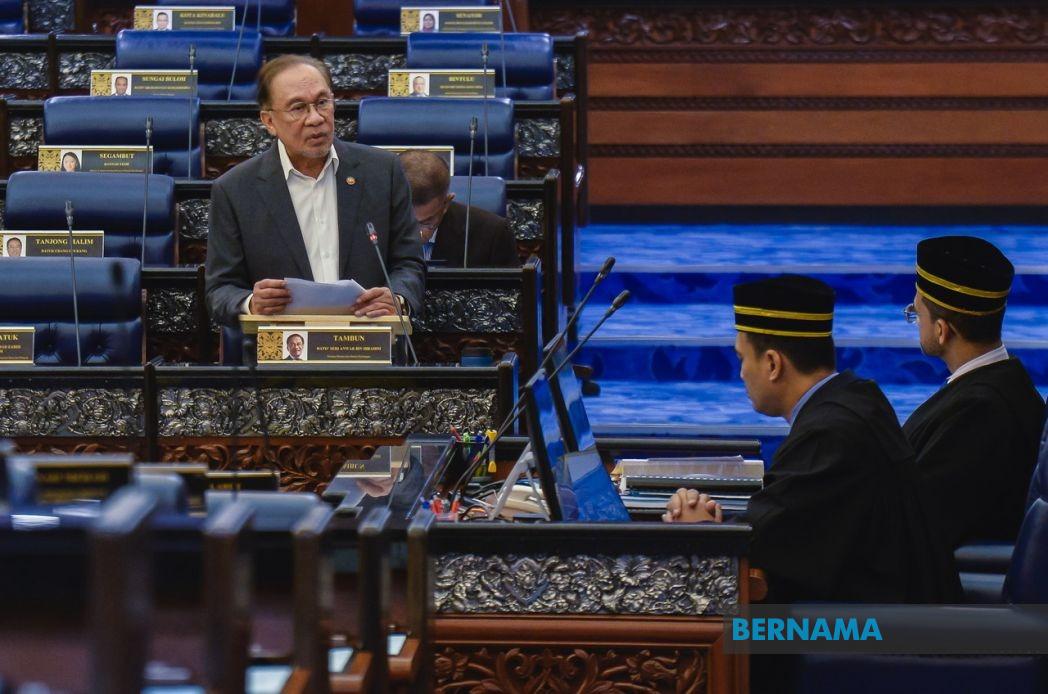
Prime Minister Datuk Seri Anwar Ibrahim has moved to dispel concerns about restrictions on activities in Federal Land Development Authority settlements, making clear during parliamentary proceedings that the government maintains an open-door approach to programmes organised at the community level. Speaking in the Dewan Rakyat, Anwar emphasised that state governments and other entities retain full freedom to host events within FELDA communities, provided such gatherings do not leverage federal resources or administrative structures for electoral purposes. This clarification comes amid suggestions that certain activities have faced obstacles, a narrative the Prime Minister sought to counter directly.
The distinction the government seeks to draw centres on a critical separation between the holding of programmes themselves and the mechanisms deployed to support them. Anwar explained that while menteri besars and state administrations can freely organise events and undertake development work such as issuing land titles in FELDA areas, they must scrupulously comply with electoral legislation governing the deployment of state and federal apparatus. The clarification underscores a nuanced position: the ban, if one exists, does not apply to gatherings or initiatives promoted by state governments but rather to the misuse of official infrastructure, personnel, or resources as instruments of political campaigning. This framing allows the federal government to maintain electoral integrity safeguards while preserving space for legitimate community engagement.
The Prime Minister specifically addressed allegations regarding the cancellation of the FELDA Settlers' Day programme scheduled for Kluang in Johor on June 20 and 21, rejecting claims that he had issued directives to halt the event. His categorical denial suggests that questions surrounding the fate of the gathering may stem from misunderstandings about the scope of government restrictions or from logistical challenges unrelated to a blanket ban on FELDA activities. By clarifying his position in parliament before Datuk Seri Hamzah Zainudin of PN-Larut, Anwar sought to place the matter on the legislative record, signalling that his administration does not view FELDA communities as off-limits for government engagement or state-sponsored initiatives.
Underlying the Prime Minister's remarks is an implicit acknowledgement that FELDA settlements have historically experienced administrative neglect, a concern that colours the current government's approach to these communities. Anwar suggested that previous administrations had left many FELDA areas underdeveloped, a characterisation that frames his government's interventions as corrective measures rather than restrictive ones. By repositioning the narrative around support and expansion of services, the Prime Minister attempts to redefine the government's relationship with FELDA communities as one of active investment and rehabilitation. This rhetorical move transforms potential criticism about limitations on activities into a broader policy agenda centred on ameliorating conditions in these settlements.
The government's development initiatives targeting FELDA communities reflect an attempt to translate policy rhetoric into tangible improvements. The establishment of dialysis centres in settlements represents a healthcare-focused intervention aimed at addressing medical infrastructure gaps in rural areas where such services may be scarce or inaccessible. Simultaneously, the expansion of development facilities through federal agencies signals a commitment to broader infrastructure enhancements, suggesting that the government intends to modernise FELDA communities through systemic upgrades rather than ad-hoc assistance. Deputy Prime Minister Datuk Seri Dr Ahmad Zahid Hamidi's involvement in spearheading these initiatives alongside the Prime Minister underscores the administration's prioritisation of FELDA welfare within its broader development framework.
FELDA settlements occupy a distinctive position within Malaysia's political economy, representing a carefully curated voting bloc with historical ties to the ruling establishment. These communities, initially established as development projects to settle indigenous Malays in agricultural pursuits, have evolved into political constituencies of considerable significance, particularly in peninsular Malaysia. The concentration of Malay-Muslim populations within FELDA areas has historically made them receptive to UMNO-led administrations, though this loyalty has faced erosion in recent years as demographic changes and economic pressures have altered settlement demographics and aspirations. The government's efforts to reinvigorate facilities and services in these communities can be understood partly as an attempt to reinvigorate political support among voters who may feel disconnected from development narratives that emphasise urban and metropolitan growth.
The regulatory framework governing the use of government machinery for electoral purposes remains a contentious issue across Malaysian politics, with different stakeholders holding divergent interpretations of where legitimate administrative action ends and improper campaign activity begins. By articulating his position on FELDA programme restrictions with such precision, Anwar endeavours to establish a clear demarcation line that allows development work and community engagement to proceed while simultaneously maintaining safeguards against the weaponisation of state resources for political gain. This legalistic approach reflects the government's broader emphasis on institutional reform and adherence to electoral regulations, themes that have featured prominently in the MADANI administration's self-presentation since assuming office. However, the fine distinction between permissible state action and impermissible campaign activity often proves murky in practice, leaving room for ongoing disputes about whether particular initiatives cross ethical or legal boundaries.
The timing of Anwar's parliamentary clarification carries significance within the broader political calendar and the government's relationship with FELDA constituencies. By proactively addressing concerns about programme restrictions, the Prime Minister signals responsiveness to constituency grievances while simultaneously asserting government authority to enforce electoral regulations. This dual messaging reflects the delicate balance that governing coalitions must strike between maintaining institutional credibility and nurturing political support among key voter blocs. For FELDA residents and state governments contemplating community initiatives, the clarification provides reassurance that bureaucratic obstacles need not impede grassroots organising, though it simultaneously reinforces the principle that official resources remain off-limits for campaign purposes.
The implications of this stance extend beyond FELDA communities to encompass broader questions about the boundaries of permissible political activity during electoral cycles. Malaysia's experience with contested interpretations of election law suggests that clarifications delivered in parliament, while valuable for establishing official policy positions, may not entirely resolve ground-level disputes about the propriety of particular initiatives. State governments and community organisers will likely continue to navigate ambiguity in determining which activities fall comfortably within permitted bounds and which risk scrutiny from electoral authorities. The MADANI government's emphasis on regulatory clarity thus represents an ongoing project rather than a settled matter, one that will require sustained engagement with state counterparts and community leaders to translate abstract principles into consistent administrative practice.
Looking forward, the government's commitment to FELDA development suggests that these communities will feature prominently in the administration's constituency-building and resource allocation strategies. The expansion of healthcare and infrastructure facilities signals an understanding that rural FELDA populations have legitimate grievances about development disparities relative to urban areas, grievances that demand substantive policy responses rather than purely rhetorical acknowledgement. Whether such investments succeed in rebuilding political support among FELDA voters will depend partly on implementation effectiveness and partly on broader economic conditions affecting rural communities. The clarification about programme restrictions, viewed in this context, represents one element within a larger effort to recalibrate the government's relationship with these strategically important constituencies.

