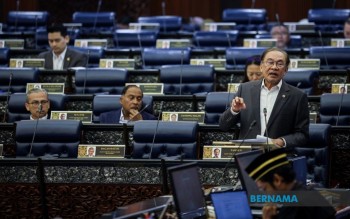
The government has rolled out a comprehensive e-Invoice Voluntary Declaration Programme extending through the end of 2027, representing a significant policy shift aimed at reducing the regulatory load on businesses navigating Malaysia's increasingly digital tax environment. Prime Minister Datuk Seri Anwar Ibrahim, speaking during parliamentary question time, framed the initiative as part of the MADANI administration's broader commitment to supporting the business sector during a period of global economic uncertainty, with particular emphasis on the micro, small and medium enterprise segment that forms the backbone of the country's economy.
What distinguishes this programme from conventional tax administration is the absence of penalties for voluntary corrections and declarations made during the extended window. The Inland Revenue Board of Malaysia will not impose sanctions on businesses that identify discrepancies or make updates to their e-invoice submissions during this period, a departure from standard income tax enforcement procedures that typically carries consequences for late filings or amendments. This approach reflects recognition that smaller operators often struggle with the technical and administrative complexities of electronic invoicing systems, particularly those operating across multiple locations or with limited in-house compliance expertise.
The timing of this announcement reflects ongoing concerns within Malaysia's business community regarding the cumulative weight of regulatory compliance. Small and medium enterprises have consistently raised concerns about the costs—both financial and administrative—associated with implementing new systems and procedures, particularly when multiple government agencies introduce requirements simultaneously. By suspending penalties and creating a amnesty-like environment, the government is attempting to lower barriers to proper e-invoice adoption without sacrificing revenue collection or transparency objectives.
Alongside the voluntary declaration scheme, the administration has introduced accelerated tax incentives designed to sweeten the compliance picture. Businesses can now claim full capital allowance on eligible expenses related to e-invoice implementation within a single financial year, rather than spreading deductions across multiple years. This compressed timeline provides immediate tax relief to companies investing in the necessary infrastructure, software licenses, and staff training required to meet e-invoicing standards, effectively subsidizing the transition through the tax system.
The government explicitly positioned these measures as acknowledgment of MSME sector challenges, addressing parliamentary concerns raised by Lee Chuan How regarding how policymakers are responding to business difficulties in the current global landscape. The response reflects a deliberate policy calculus: that supporting business compliance capacity today generates better long-term revenue outcomes than enforcing rigid deadlines that push marginal operators into the informal economy or provoke mass non-compliance.
These initiatives build upon earlier decisions that have progressively eased the e-invoice implementation burden. In December 2025, the government had already raised the income threshold for e-invoice exemption from RM500,000 to RM1 million annually, effectively removing over one million small taxpayers from the requirement altogether. That adjustment recognized that the smallest operators typically lack the administrative infrastructure to manage electronic invoicing efficiently, and that the compliance costs could exceed the revenue benefits of mandatory implementation at lower scales.
The cumulative effect of these policy layers—the higher exemption threshold combined with the voluntary declaration programme and accelerated capital allowances—suggests a government attempting to balance multiple objectives simultaneously. There is pressure to modernize Malaysia's tax administration and close compliance gaps that digital systems can address, while also recognizing that aggressive enforcement timelines risk damaging business confidence and pushing economic activity toward less transparent channels.
For Southeast Asian observers, Malaysia's approach offers insight into how middle-income countries balance digitalization ambitions with small business realities. Countries across the region face similar tensions as they implement e-invoicing and other digital tax measures. The Malaysian approach suggests that providing extended compliance windows, penalty relief, and incentive support may be more effective than rigid enforcement, particularly in emerging economies where digital literacy and system maturity vary significantly across business size categories.
The extended timeline through December 2027 also reflects practical implementation realities. Rolling out mandatory e-invoicing across millions of businesses simultaneously creates massive administrative challenges for tax authorities and taxpayers alike. By creating a gradual voluntary transition pathway with incentives, the government can monitor system performance, identify technical problems, and adjust requirements based on real-world implementation experience before enforcement becomes strict.
For Malaysian businesses, particularly those in e-commerce, retail, manufacturing, and services sectors that rely on high transaction volumes, the voluntary declaration option provides strategic planning flexibility. Companies can audit their historical invoicing practices, identify any gaps or inconsistencies, and make corrections during the amnesty period without facing penalties that could affect their tax compliance ratings or credit relationships with financial institutions.
The parliamentary context for this announcement matters as well. The question from an Ipoh Timor representative reflected broader backbench concerns about government support for business survival, suggesting that MSME advocacy remains politically salient. By announcing these measures during formal question time rather than through routine regulatory channels, the government signaled that supporting business compliance capacity is a priority messaging point, reinforcing the MADANI government's positioning as responsive to constituent concerns about economic pressures.
Moving forward, the success of these measures will depend on effective communication and technical support reaching businesses that most need assistance. Tax authorities and business associations will need to conduct outreach explaining the voluntary programme's mechanics, deadline implications, and specific claim procedures for capital allowances. Without clear guidance, even penalty-free initiatives risk underutilization among businesses that are most compliance-challenged and could benefit most from the support.
The 2027 endpoint for the voluntary declaration scheme also establishes a policy endpoint, after which stricter enforcement expectations would presumably apply. This creates both opportunity and implicit pressure: businesses have three years to achieve compliance status with support, but eventually mandatory requirements become absolute. How effectively companies use this window will partly determine whether future digital tax administration in Malaysia proceeds smoothly or generates significant friction and resistance.

