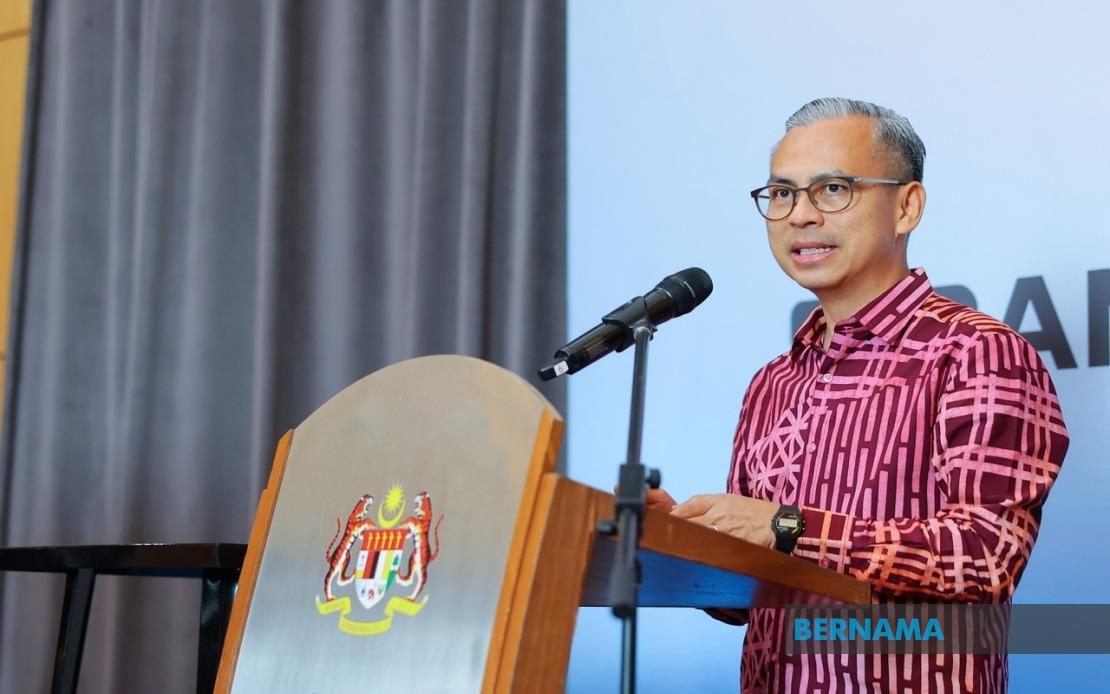
In response to the escalating wave of cybercriminal activity targeting Malaysians, the government has moved to establish a dedicated cross-agency task force aimed at dismantling organised online fraud networks. Communications Minister Datuk Fahmi Fadzil announced the formation of the special working committee and technical group on June 18, following deliberations at a Cabinet retreat where senior ministers assessed the growing threat posed by digital scams to the public. The initiative represents a significant shift towards coordinated enforcement, with the first meeting of the newly formed committee scheduled to convene shortly and bringing under one umbrella the collective resources of government ministries, regulatory agencies, and federal departments.
The scope of this collaborative effort extends beyond traditional law enforcement boundaries to encompass stakeholders across the private sector. For the first time in Malaysia's approach to combating cybercrime, the financial services industry, telecommunications providers, and major technology platforms including social media companies will sit alongside government representatives to devise and execute anti-scam strategies. This unprecedented level of private sector participation reflects the growing recognition that online fraud operations often exploit infrastructure and services provided by banks, telecoms and digital platforms, making their involvement essential for identifying vulnerabilities and implementing protective measures at the source.
Communications Minister Fahmi explained that the multi-faceted approach targets three critical dimensions of the scam problem: enforcement action against perpetrators, refinement of existing legislation to close legal loopholes, and enhancement of investigative capabilities to trace transnational fraud rings. By integrating efforts across enforcement agencies with the technical expertise of platform operators and financial institutions, the government aims to create a more responsive system capable of detecting emerging fraud methodologies and disrupting them before they cause widespread harm. This represents a departure from siloed departmental responses, instead leveraging shared intelligence and coordinated action to outpace criminal adaptation.
The government anticipates several tangible outcomes from this initiative in the near term, though officials have declined to enumerate specific measures publicly. Fahmi was deliberately circumspect about operational details, acknowledging that scammers themselves monitor official announcements to adjust their tactics. This strategic opacity serves a dual purpose: preventing criminals from gaming the system while preserving the element of surprise that enforcement agencies require to mount effective raids and investigations. The minister's candor about this tension between transparency and operational security speaks to the sophisticated nature of modern online fraud, where criminal networks employ sizeable technical teams to anticipate and circumvent government responses.
To illustrate the potential effectiveness of coordinated action, the Communications Minister pointed to the government's prior success in establishing a similar cross-agency framework to tackle child sexual exploitation crimes. That initiative produced demonstrable results through a series of focused special operations, suggesting that the institutional model being applied to online scams has proven utility. The demonstrated track record provides reasonable confidence that applying the same collaborative methodology to fraud could yield comparable disruption of criminal enterprises, though scam networks typically operate with greater geographical dispersal and technological sophistication than localised exploitation rings.
The timing of this committee's establishment reflects mounting public pressure on authorities to address the financial and emotional toll of online scams on Malaysian households and businesses. Reports of victims losing substantial sums to investment schemes, loan frauds, and romance scams have proliferated in recent months, generating concern among senior government officials about the erosion of public confidence in digital financial services. The cabinet-level attention to this issue signals that policymakers now view online fraud not merely as a law enforcement problem but as a governance challenge affecting economic participation and social trust in digital platforms.
Involving telecommunications companies directly in the anti-scam framework addresses a critical bottleneck in current enforcement efforts. Scammers rely on phone calls, text messages, and mobile-based applications to contact victims and facilitate fraudulent transactions, making telco operators positioned to identify suspicious patterns and block malicious traffic before it reaches consumers. Banks similarly hold real-time transaction data that could reveal fraud networks' cash movement patterns, enabling investigators to trace money flows and identify receiver accounts controlled by criminal syndicates. By formalising this intelligence-sharing relationship through the committee structure, the government seeks to accelerate the feedback loop between law enforcement agencies and commercial entities.
Social media platforms face particular scrutiny in this framework, as scammers have increasingly weaponised these networks for recruitment, victim targeting, and credential phishing. These companies possess algorithmic tools capable of detecting networks of coordinated inauthentic accounts promoting fraudulent schemes, yet previously lacked formal coordination with Malaysian authorities regarding deployment of such capabilities against domestic fraud. The committee mechanism establishes protocols through which platform operators can flag suspicious activity to investigators and provide evidentiary material for prosecutions, bridging a gap that has historically allowed scam networks to operate with relative impunity on these services.
For Malaysian consumers and businesses navigating the digital economy, the committee's establishment carries implications for both immediate fraud prevention and longer-term platform accountability. Coordinated pressure from government agencies and business regulators may accelerate implementation of stricter identity verification requirements, transaction monitoring, and account security features on financial platforms and social media. However, the effectiveness of these measures ultimately depends on the committee's capacity to translate policy coordination into concrete operational improvements, a challenge that has hampered previous cross-agency initiatives in Malaysian governance. The coming months will test whether bureaucratic coordination can match the agility and decentralisation of criminal networks operating across borders and jurisdictions.
The involvement of major technology companies in the anti-scam committee also raises questions about data privacy, terms of service compliance, and the potential for mission creep beyond fraud prevention. Commercial platforms may leverage anti-scam initiatives to implement broader content moderation and user surveillance, ostensibly in service of security but with implications for civil liberties and user freedom. Malaysian policymakers and civil society will need to monitor whether the committee establishes guardrails preventing the security agenda from expanding into areas of legitimate online activity and political expression. The balance between combating criminal fraud and protecting users' digital rights remains unresolved in the current institutional design.
Regionally, Malaysia's establishment of this coordinated task force may influence approaches adopted by neighbouring Southeast Asian nations facing similar scam epidemics. Singapore, Indonesia, and Thailand have each experienced explosive growth in online fraud, suggesting potential value in cross-border mechanisms through which committees like Malaysia's could share intelligence and coordinate enforcement against international scam networks. The ASEAN framework currently lacks robust mechanisms for member states to jointly investigate transnational cybercrime, a shortcoming that successful national coordination might highlight and eventually prompt multilateral responses addressing the borderless nature of digital fraud.

