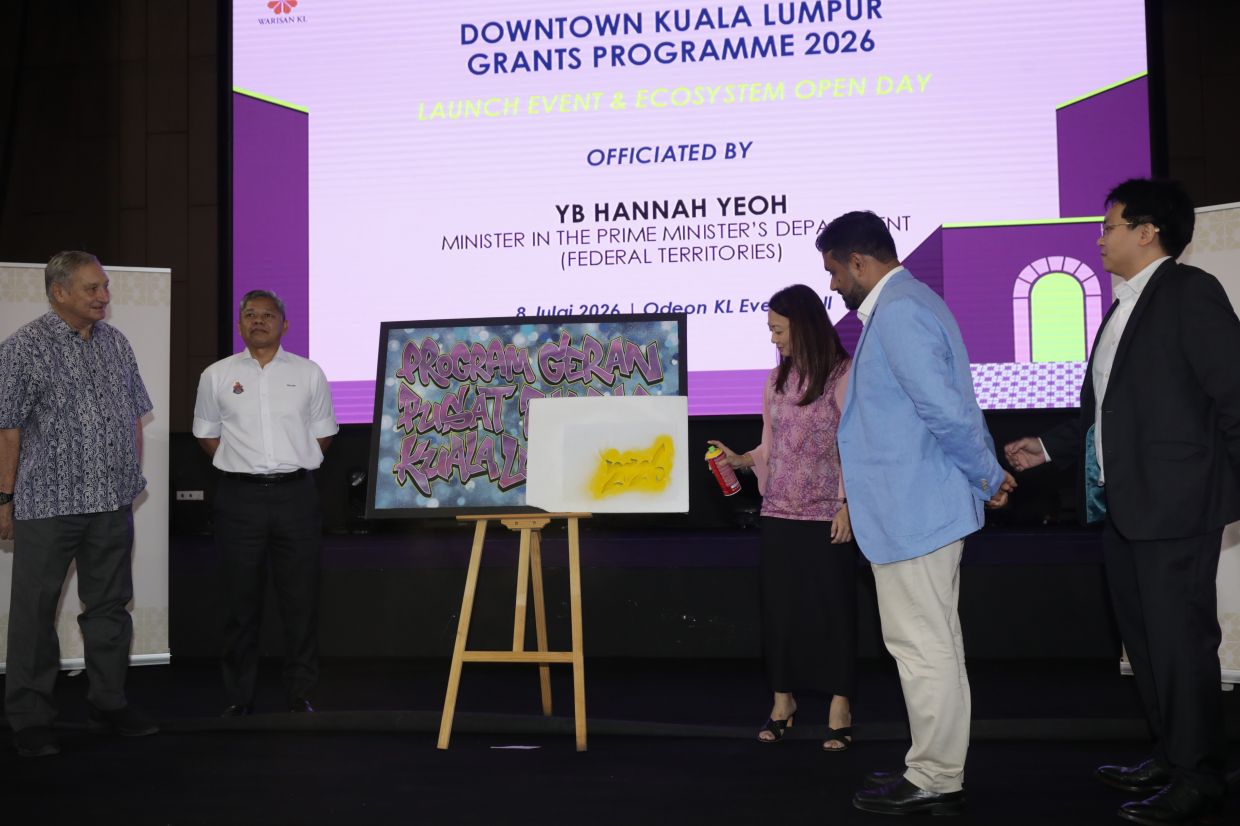
The Malaysian government has committed RM1 million towards revitalising Downtown Kuala Lumpur, channelling the funds through the Downtown Kuala Lumpur Grants Programme 2026, an initiative launched this week at ODEON Kuala Lumpur by Hannah Yeoh, Minister in the Prime Minister's Department (Federal Territories). The programme, which originated in 2020 under the stewardship of placemaking organisation Think City in collaboration with the Finance Ministry, represents an ongoing commitment to urban renewal in the nation's capital. Individual grants will range from RM30,000 to RM100,000, providing meaningful support for grassroots and community-led initiatives aimed at breathing fresh life into the city's core district.
At the heart of this funding mechanism lies a recognition that urban revitalisation cannot succeed through top-down government mandates alone. Minister Yeoh articulated this philosophy clearly during the launch, emphasising that transformative ideas typically originate from citizens with genuine attachment to their neighbourhoods rather than from government bureaucracies. This approach aligns with global best practices in urban development, where community engagement and stakeholder participation have proven essential to creating sustainable and culturally resonant public spaces. The government's role, as framed by Yeoh, is to catalyse these grassroots initiatives by providing financial resources, facilitating partnerships, and creating an enabling environment for local creativity to flourish.
The programme's breadth extends across six distinct thematic areas, each addressing different dimensions of urban vitality. The Museum and Gallery Network category supports cultural institutions and exhibition spaces that contribute to the city's artistic ecosystem. Placemaking and Space Rejuvenation focuses on physical interventions that transform underutilised or neglected areas into vibrant community gathering spaces. Cultural Activation and Creative Content encompasses events, performances, and content creation that enliven public spaces and engage residents. The Creative Business Seeding initiative targets entrepreneurs in the creative industries, providing capital for new ventures. Community Engagement and Capacity Building prioritises programmes that strengthen local social cohesion and develop resident skills. Finally, Digitalisation and Innovation encourages technology-enabled solutions that enhance urban experiences. Projects based directly in Downtown Kuala Lumpur receive prioritisation, though the programme welcomes applications from any stakeholder with a demonstrated commitment to the district's future.
The timeline for participation reflects a structured but accessible process designed to accommodate diverse applicant types. Applications remain open until August 21, providing nearly two months for interested parties—ranging from formal organisations and social enterprises to community groups and cultural practitioners—to develop and submit proposals. Once selected, successful projects will move into implementation between November 2026 and June 2027, creating an eight-month window for initiatives to be executed and evaluated. This phased approach allows sufficient time for due diligence, project planning, and community consultation while maintaining momentum toward tangible urban improvements.
The revitalisation of Downtown Kuala Lumpur carries particular significance for Malaysia's positioning as a regional economic and cultural centre. The area encompasses the historic core of the capital, including important heritage sites, business districts, and residential communities. In recent years, like many inner cities across Southeast Asia, Downtown KL has faced challenges including building vacancy, pedestrian safety concerns, and a perception of decline relative to newer commercial hubs. Revitalisation efforts can reverse this trajectory by attracting investment, creating employment, enhancing public safety through increased foot traffic, and strengthening the social fabric that makes neighbourhoods liveable.
The involvement of key stakeholders underscores institutional commitment to the programme's success. Kuala Lumpur Mayor Datuk Seri Fadlun Mak Ujud's presence at the launch reflects municipal government alignment with the initiative. Think City Managing Director Datuk Hamdan Abdul Majeed brings operational expertise, having shepherded the programme since its 2020 inception. This multi-level governance structure—spanning federal, municipal, and private sector actors—creates accountability and ensures that funded projects address both government priorities and genuine community needs.
For Malaysian civil society, entrepreneurs, and community organisations, this programme represents a tangible opportunity to shape the urban environment. Unlike traditional government procurement processes, grants-based funding mechanisms often favour innovation and creativity over bureaucratic complexity, potentially enabling smaller organisations and grassroots initiatives to access public resources. The emphasis on sustainability—with Minister Yeoh explicitly calling for projects with lasting impact beyond the grant period—suggests that quick-fix cosmetic improvements will be screened out in favour of interventions creating durable value.
Regionally, Malaysia's approach offers lessons for other Southeast Asian cities grappling with urban renewal. Many capitals across the region face similar pressures of inner-city decline, gentrification tensions, and the challenge of balancing heritage conservation with contemporary vibrancy. By channelling resources through a community-centric grants mechanism rather than large-scale redevelopment projects, Malaysia demonstrates an alternative approach that privileges local agency and cultural authenticity. This model may resonate particularly with smaller Southeast Asian cities seeking revitalisation strategies that avoid displacement and community disruption.
The financial commitment, while modest at RM1 million total, signals proportionate investment aligned with the grants-based structure. The per-project ceiling of RM100,000 indicates that funded initiatives will be locally scaled rather than citywide transformations, creating distributed impact across multiple discrete projects and communities. This dispersed approach may ultimately prove more resilient than concentrated spending, as it builds a network of improved spaces and strengthened community capacity throughout the downtown area.
Prospective applicants are encouraged by Minister Yeoh to begin their proposal development by identifying places within their communities that they personally care about, rather than pursuing grants opportunistically. This guidance reflects a philosophy that sustainable urban change emerges from genuine civic investment and attachment. The invitation to all stakeholders with a stake in Downtown Kuala Lumpur's future—whether residents, business owners, cultural practitioners, or social enterprises—creates an unusually inclusive application environment. Such openness potentially generates unexpected and innovative proposals that might not emerge from conventional government-directed planning processes.
The timing of the programme's expansion through the 2026 cycle reflects continuing government commitment to downtown revitalisation even as Malaysia navigates broader economic and political transitions. Maintaining investment in urban centres during uncertain periods demonstrates confidence in the nation's metropolitan future and recognition that liveable cities constitute foundational infrastructure for economic competitiveness and social stability. As applications open and the deadline approaches, the quality and diversity of proposals will reveal community appetite for participating in shaping Kuala Lumpur's urban trajectory.

