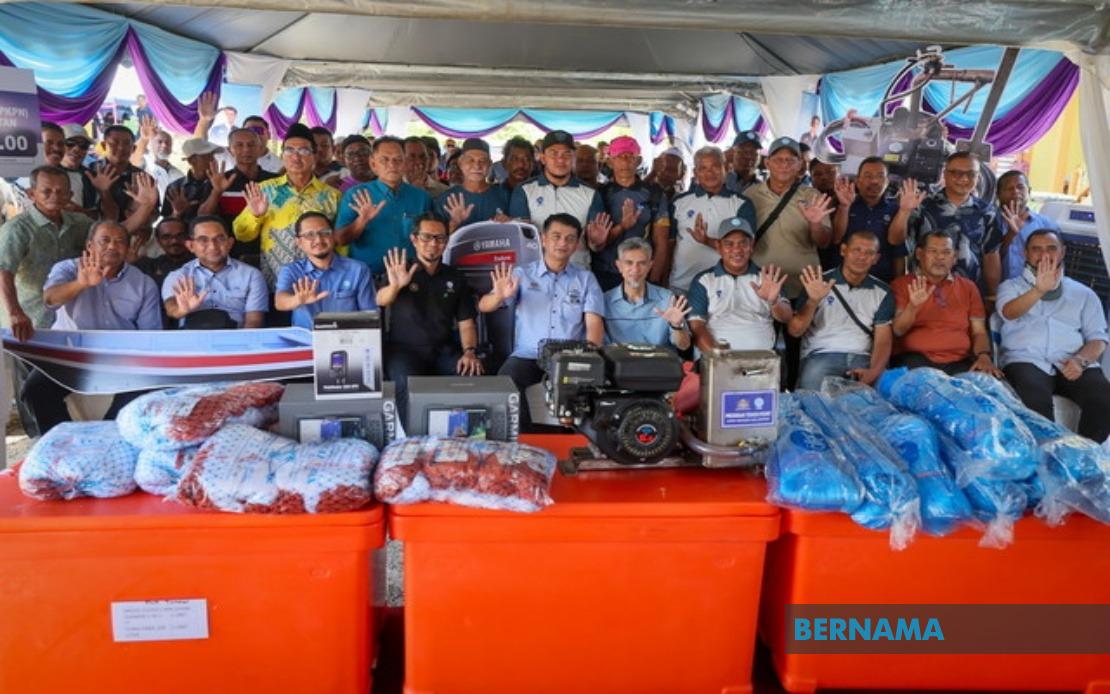
The Malaysian government has committed RM10 million in 2024 towards the Special Fishermen Housing Project (PKPN) as part of a broader initiative to elevate living conditions within the fishing community across the country. According to Muhammad Faiz Fadzil, chairman of the Fisheries Development Authority of Malaysia (LKIM), the agency is implementing this allocation through a two-pronged strategy that addresses both immediate housing repairs and longer-term residential development for eligible fishermen. The announcement came during an engagement session with Kelantan's fishing sector, underscoring the government's focus on regional consultation before rolling out nationwide programmes.
The financial breakdown reveals a deliberate prioritisation of repair work over new construction. More than RM6.8 million has been directed towards rehabilitating 344 existing homes belonging to fishermen across Malaysia, with the remainder—exceeding RM3.1 million—channelled into building 36 new residential units. This emphasis on repairs reflects the practical reality that many fishing families occupy ageing structures requiring urgent intervention to meet basic living standards. The housing repair initiative has already achieved approximately 80 per cent completion, with officials anticipating full delivery by late August or September. Construction of new dwellings, meanwhile, faces a more protracted timeline due to complications surrounding land tenure and inheritance disputes, a persistent challenge in rural fishing communities where property documentation often remains informal or disputed.
Differential funding levels reveal the government's sensitivity to regional economic disparities within Malaysia. Peninsular Malaysian beneficiaries receive RM84,000 per new housing unit, while fishermen in Sabah and Sarawak qualify for RM95,000 per unit—a 13 per cent premium reflecting higher construction costs in East Malaysia. Repair allocations are capped at RM20,000 per property nationwide. In Kelantan specifically, total PKPN funding reaches RM388,000, indicating the state's substantial fishing population and the government's commitment to this critical economic sector in the northeast. These precise figures suggest a well-calibrated programme rather than ad-hoc distribution, though questions remain about whether allocations match actual housing need across different coastal regions.
Beyond bricks and mortar, the government's housing initiative sits within a larger strategic reorientation of Malaysia's fisheries sector. Muhammad Faiz articulated a fundamental shift in policy philosophy: moving fishermen away from dependence on conventional marine capture fishing toward controlled aquaculture operations. This represents recognition of an uncomfortable reality facing maritime economies across Southeast Asia—that natural fish stocks are experiencing sustained pressure from overfishing, climate change, and environmental degradation. Even subsidised fuel costs cannot indefinitely shield fishermen from the economic squeeze created by shrinking catches and rising operational expenses. The government has identified 2030 as a critical milestone, targeting that aquaculture should generate 40 per cent of national fish production by that date.
To catalyse this sectoral transition, LKIM has allocated RM400,000 to Kelantan's State Fishermen's Association (PENEKA) for a tank-based prawn farming initiative. This represents more than symbolic investment—prawn aquaculture in controlled environments offers several advantages over traditional fishing, including predictable yields, reduced fuel dependency, and potential for premium pricing in domestic and export markets. The initiative is designed not as a one-off Kelantan project but as a template for replication across other coastal states, suggesting the government views aquaculture development as essential infrastructure for long-term fishing community resilience. The decision to channel funding through established fisheries associations rather than individual operators also indicates preference for collective risk-sharing and knowledge transfer within these communities.
The broader context for these policies involves Malaysia's positioning within the Southeast Asian fishing economy and global seafood trade dynamics. As a maritime nation with significant fish protein consumption, Malaysia faces competing pressures—domestic demand for affordable fish, growing aquaculture competition from Thailand and Vietnam, and environmental sustainability imperatives. Fishermen who transition successfully to tank farming or other aquaculture models gain insulation from volatile international prices and climate-driven stock fluctuations. However, the transition poses real challenges: aquaculture requires capital investment, technical knowledge, land access, and often involves environmental trade-offs such as water quality management and disease control.
The housing component of this package cannot be dismissed as merely supportive infrastructure. Improved living conditions for fishing families generate multiplier effects throughout coastal communities—better health outcomes, enhanced school attendance, and increased household purchasing power that strengthens local merchants and service providers. In Kelantan and other fishing-dependent regions, housing quality often reflects historical underinvestment in rural areas, and addressing this gap carries both economic and symbolic significance. A fisherman with secure, dignified housing is more likely to invest in skills development and business expansion than one managing daily housing precarity. The government's willingness to allocate substantial capital here reflects awareness that sectoral transformation requires foundation-building at the household level.
Implementation challenges remain evident from LKIM's own acknowledgments. Land ownership complexities, particularly in rural areas where inheritance customs may diverge from formal property law, represent significant friction points in new housing construction. Similarly, coordinating repair work across 344 separate properties nationwide requires robust logistics and quality assurance mechanisms. The stated 80 per cent completion rate for repairs suggests either front-loading of easier projects or genuine momentum, though verification of work quality would be necessary to assess true programme success. Delays in new construction completion, attributed to tenure issues, hint at deeper structural problems in Malaysian land administration that transcend fisheries policy.
For Malaysian readers and policymakers monitoring sectoral development, this allocation signals sustained government commitment to protecting fishing communities economically and socially at a moment of significant structural change. The simultaneous investment in housing and aquaculture transition reflects sophisticated understanding that livelihood transformation cannot succeed amid housing insecurity or social instability. Whether RM10 million annually proves sufficient for nationwide impact remains an open question, particularly given the scale of housing need in maritime regions and the capital-intensive nature of aquaculture development. Observers should monitor implementation progress through 2024 and watch closely for evidence that fishermen are actually adopting aquaculture at rates consistent with 2030 targets.

