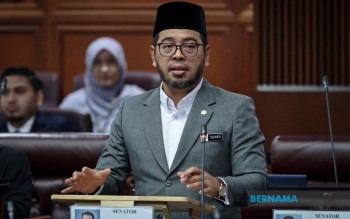
The government has committed a bailout exceeding RM10 billion to rescue Tabung Haji (TH) from a deepening financial crisis rooted in mismanagement and embezzlement within the institution. During a special sitting of the Dewan Rakyat, Dr Zulkifli Hasan, Minister in the Prime Minister's Department (Religious Affairs), clarified that the intervention was designed to restore the pilgrimage fund's financial viability rather than to acquire control of its assets. The scale of the rescue underscores the severity of TH's predicament when the Pakatan Harapan government inherited the troubled institution.
The financial deterioration at TH had become acute by the fourth quarter of 2018, when the deficit gap between its liabilities and assets ballooned beyond RM10 billion. This widening chasm left decision-makers with a compressed timeline—merely three months to devise and implement a solution before the institution faced complete insolvency. The urgency of the situation forced the government's hand, as allowing TH to collapse would have devastated millions of Malaysian pilgrims who depend on the fund to finance their hajj journeys. The bailout thus represented not merely a financial intervention but a safeguard for a crucial religious and social institution serving a significant portion of the Muslim population.
Dr Zulkifli stressed that the restructuring plan accompanying the bailout prioritized restoring TH to a solvent footing and ensuring its long-term viability rather than stripping it of assets for government benefit. This distinction carries particular importance given misinformation circulated by what he termed "irresponsible parties" claiming that assets had been sold to non-Muslims or foreign entities. Such narratives, whether deliberate fabrications or rooted in misunderstanding, risked inflaming public sentiment and undermining confidence in the government's stewardship of religious institutions.
Clarity on asset ownership proved essential to countering these claims. The assets in question are held by Urusharta Jamaah, a wholly-owned subsidiary of the Minister of Finance Incorporated, meaning they remain under domestic, governmental stewardship rather than external private hands. This arrangement ensures that TH's substantial property and investment portfolio—accumulated over decades as pilgrims contributed to their hajj savings—remains within the public sector and fundamentally tied to the institution's recovery.
The root causes of TH's catastrophic financial position trace back to systematic failures in governance and accountability within the organization. Years of mismanagement allowed operational inefficiencies and poor investment decisions to accumulate unchecked, while embezzlement schemes drained resources directly from the fund. These failures reflected broader governance weaknesses in how the institution was overseen, supervised, and audited during earlier administrations. The Royal Commission of Inquiry into TH's collapse had documented these problems in detail, providing evidence for the bailout decision and establishing a factual foundation for understanding how a pillar of Islamic finance in Malaysia had deteriorated so dramatically.
For Malaysian pilgrims, the implications of TH's near-collapse were profound and immediate. Hundreds of thousands of Muslims depend on TH's services to fulfill the Fifth Pillar of Islam, and the institution's insolvency would have created logistical chaos and financial hardship across communities nationwide. The bailout therefore served a dual purpose: it preserved a critical financial service while protecting the religious aspirations and investments of millions of Malaysian citizens whose life savings and cultural heritage were bound up in the fund.
The restructuring effort also carried significant implications for the broader Malaysian financial system and public sector management. TH's implosion exposed vulnerabilities in institutional oversight and the potential for mismanagement within entities managing substantial public resources. The rescue operation thus prompted wider reflection on governance standards, accountability mechanisms, and the strengthening of regulatory frameworks affecting similarly positioned institutions across the government and quasi-public sectors.
From a regional perspective, TH's situation reflected challenges common to Islamic financial institutions in Southeast Asia, where rapid asset accumulation and complex investment strategies sometimes outpaced the development of governance infrastructure. The Malaysian government's decisive intervention and willingness to commit massive resources to restoration signaled confidence in TH's fundamental importance despite its operational failures. This contrasted with alternative approaches that might have permitted partial or complete privatization, which could have jeopardized the institution's religious and social character.
The financial restructuring plan incorporated mechanisms designed to prevent recurrence of the circumstances that precipitated the crisis. Enhanced oversight, improved transparency in investment decisions, and stronger internal control systems formed part of the recovery framework. These measures aimed to restore public confidence in TH's management while creating institutional guardrails against future misappropriation or negligence.
Looking forward, the success of TH's recovery depends on sustained commitment to governance reform and rigorous implementation of restructuring measures. The institution's revival carries significance extending beyond its immediate beneficiaries, representing a test case for how Malaysian authorities manage the rescue and rehabilitation of critical public institutions facing existential financial challenges. As TH gradually returns to financial stability through careful management of its assets and liabilities, the lessons learned will likely inform approaches to governance and institutional oversight across Malaysia's public sector.

