Malaysia's government has committed to comprehensive structural overhauls at Lembaga Tabung Haji (TH) aimed at preventing a recurrence of the financial turmoil that nearly devastated the Islamic pilgrimage savings institution. This determination emerged during an extended parliamentary session where lawmakers grappled with the fallout from years of mismanagement and troubled investments that exposed the nation's largest Shariah-compliant savings fund to existential risk.
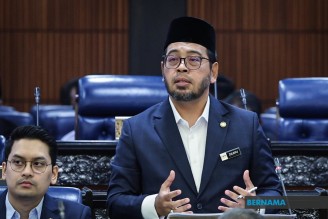
The reform agenda centres on amendments to the Tabung Haji Act 1955, to be implemented in accordance with findings from the Royal Commission of Inquiry (RCI), whose 211-page report became public in late July. Minister in the Prime Minister's Department (Religious Affairs) Dr Zulkifli Hasan disclosed that a task force comprising TH chairman Tan Sri Abdul Rashid Hussain, Bank Negara Governor Datuk Seri Abdul Rasheed Ghaffour, and Securities Commission chairman Datuk Mohammad Faiz Azmi has been tasked with examining the inquiry's recommendations and charting a path forward. The task force's preliminary proposal represents a significant recalibration of TH's governance architecture.
Under the proposed framework, the Securities Commission will assume regulatory authority over TH's fund management and investment activities, while religious affairs matters—including pilgrimage operations—will remain under the Minister's purview. This bifurcated approach seeks to preserve TH's institutional integrity whilst subjecting its financial operations to external professional oversight. The recommendations are pending Cabinet approval, suggesting the government recognises the gravity of reform and intends to expedite implementation through formal channels.
The scale of TH's predicament underscores why such decisive action proves necessary. Losses reached approximately RM13 billion, while panic withdrawals threatened to trigger liabilities of roughly RM74.5 billion in 2018 had the government not intervened. Finance Minister II Datuk Seri Amir Hamzah Azizan disclosed that seven of fourteen troubled investments suffered complete losses, whilst TH's exposure to Putrajaya Perdana Bhd inadvertently entangled the institution with the notorious 1Malaysia Development Bhd scandal. These figures illuminate the cascading failures of governance and investment oversight that characterised the problematic 2014-2020 period examined by the RCI.
The legislative amendments will introduce concrete safeguards designed to eliminate recurring vulnerabilities. Act 535 will be revised to legally prohibit serving politicians from board membership, a critical measure addressing conflict-of-interest concerns that plagued previous administrations. Investment decisions will be subjected to Securities Commission scrutiny, whilst profit distributions—known as hibah—will be anchored to audited financial accounts rather than inflated projections. Every TH decision will henceforth be evaluated against a single criterion: the interests of the Islamic community.
Parliamentary discussion revealed broader systemic concerns about Malaysia's non-bank financial sector supervision architecture. Aminolhuda Hassan of Sri Gading proposed establishing a unified regulator encompassing major institutions including the Employees Provident Fund, Permodalan Nasional Bhd, Retirement Fund Incorporated, the Armed Forces Fund Board, and TH itself. This suggestion highlights a critical governance gap: Malaysia currently lacks a single authority wielding comprehensive prudential supervision and systemic risk assessment powers across the non-bank financial landscape, a deficiency that contributed to TH's regulatory blindspots.
Bentong MP Young Syefura Othman raised concerns about TH's structural revenue vulnerabilities, noting that income from UJSB sukuk represented nearly 26 per cent of annual earnings according to RCI findings. This heavy reliance on a single income stream creates dangerous concentration risk, a concern the government must address through diversification strategies to ensure TH's long-term financial stability and independence from volatile funding sources.
The RCI's investigation, initiated in 2021 with members appointed in January 2022 and the report formally presented to the Yang di-Pertuan Agong in August 2022, identified 25 specific recommendations for institutional improvement. By late July, TH had already implemented 75 per cent of these recommendations, suggesting responsiveness to reform imperatives even before formal government endorsement. This proactive stance demonstrates institutional recognition that fundamental transformation proved essential for credibility restoration.
The government's approach reflects no attempt to obscure uncomfortable truths. Finance Minister Amir Hamzah explicitly stated that all findings, however painful, would be disclosed transparently. Moreover, accountability mechanisms will be enforced without political favouritism, with comprehensive investigations prosecuting those deemed responsible. This commitment to consequences without preferential treatment represents a departure from historical patterns of governance vulnerability and suggests serious intent to establish new institutional standards.
For Malaysian Muslims managing hajj savings, these reforms carry profound implications. TH has historically served as a trusted vehicle for channelling religious obligation through financial discipline, with its near-collapse representing both institutional and communal trauma. The proposed structural changes—particularly Securities Commission oversight and political board restrictions—aim to restore confidence through demonstrable professionalisation of governance. Yet success ultimately depends on consistent implementation and sustained political will to resist future temptations toward expedient shortcuts in fiduciary responsibility.
Regionally, TH's travails underscore how Islamic financial institutions require governance frameworks matching their retail deposit base's expectations and religious significance. Southeast Asia's expanding Islamic finance sector must absorb these lessons about the dangers of insufficient regulatory separation, excessive political entanglement, and concentrated investment portfolios lacking rigorous independent oversight. Malaysia's reform blueprint, despite its origins in crisis, may offer valuable governance templates for other Muslim-majority nations building their own Islamic financial infrastructure.

