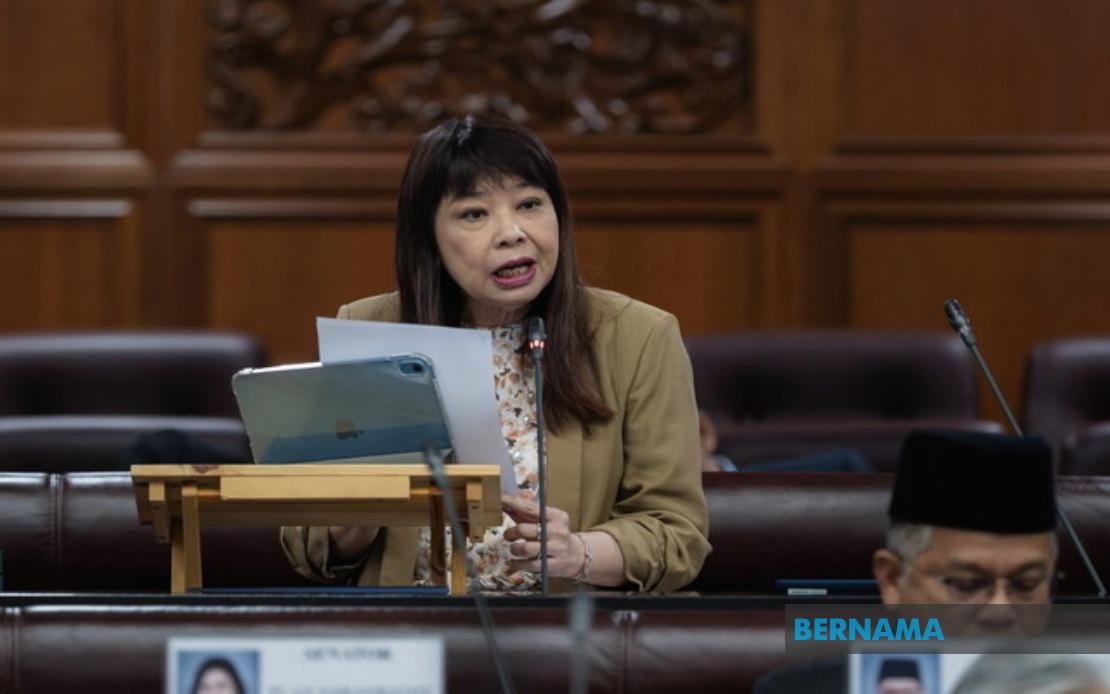
The Malaysian government is examining a proposal to establish a Domestic Violence Offenders Registry that would systematically track and monitor individuals convicted of repeat domestic violence offences, according to Deputy Women, Family and Community Development Minister Lim Hui Ying. The proposal, which represents a potential shift in how authorities approach recidivist offenders in Malaysia, is being developed jointly by the Women, Family and Community Development Ministry (KPWKM), the Royal Malaysia Police (PDRM), and the judiciary as part of broader efforts to prevent patterns of repeated abuse within households.
The initiative addresses a significant gap in Malaysia's domestic violence prevention infrastructure. Currently, the country lacks comprehensive mechanisms to reliably record and monitor offenders who commit multiple infractions across different jurisdictions, making it difficult for enforcement agencies to identify and intervene with serial perpetrators before they harm new victims. By creating a centralised registry, authorities would gain visibility into offenders' histories, enabling more informed decisions during bail hearings, sentencing, and victim protection assessments. This data-driven approach could transform how the justice system processes domestic violence cases from largely reactive interventions into a more preventative framework.
The joint inter-agency effort underscores recognition that effectively combating domestic violence requires coordination beyond any single institution. Police need access to historical records to assess risk during investigations. Courts require this information when determining appropriate penalties and protection measures. Social welfare agencies benefit from knowing when perpetrators are released into communities, allowing them to offer targeted support to at-risk victims. The consultation among these three pillars of the criminal justice system suggests authorities are developing a sophisticated model rather than implementing a simplistic registry.
Malaysia's current lack of accurate data on repeat offenders represents a blind spot in policy formulation and resource allocation. Without knowing how many individuals commit domestic violence multiple times, or at what intervals, government agencies cannot accurately estimate the scale of recidivism or design interventions tailored to this population. The registry proposal directly responds to this evidence gap, creating infrastructure for systematic data collection that will improve future policy decisions. Understanding patterns in repeat offences—whether they cluster within particular demographics, time periods, or circumstances—would enable more targeted prevention and rehabilitation efforts.
The proposal's development comes alongside increased government investment in victim support infrastructure. The Women, Family and Community Development Ministry has allocated RM2.1 million during the current financial year specifically for upgrading more than twenty government-operated shelters for domestic violence victims throughout Malaysia. These facilities provide critical temporary refuge for individuals fleeing abusive situations, and improving their safety, functionality, and readiness ensures they can effectively serve vulnerable populations. The dual focus on both offender monitoring and victim protection reflects a comprehensive strategy addressing the issue from multiple angles.
Malaysia's shelter network currently comprises forty-three approved facilities operating under the Domestic Violence Act 1994 (Act 521), with thirty-nine managed by government and four operated by non-governmental organisations. While this infrastructure is substantial, the upgrades signal recognition that existing facilities require modernisation to meet contemporary safety standards and service delivery expectations. Adequately resourced shelters with secure, functional environments demonstrate government commitment to protecting abuse survivors during their most vulnerable period of separation from perpetrators.
Beyond physical shelter infrastructure, the Social Welfare Department (JKM) provides multiple legal protection mechanisms designed to offer immediate safeguards. Emergency Protection Orders (EPOs) can be issued within two hours for cases requiring urgent intervention, providing rapid court-ordered protection without lengthy procedural delays. The faster issuance timeline acknowledges that domestic violence situations often escalate quickly, and victims need protection that operates at crisis speed rather than normal bureaucratic pace. Complementing emergency orders, the department assists victims in obtaining Interim Protection Orders (IPOs) and Protection Orders (POs) through standard court processes, creating a tiered system responsive to different urgency levels.
The proposed registry must navigate complex questions about data privacy, accuracy, and fairness. Maintaining records of offenders raises concerns about rehabilitation opportunities and reintegration into society. The system must distinguish clearly between accusations, convictions, and repeat patterns, ensuring entries reflect only confirmed offences to prevent false or exaggerated categorisation of individuals. Access protocols will determine who can consult the registry—whether victim advocates, judges, police, social workers, or potentially the public—with significant implications for how effectively the system prevents repeat abuse versus creating stigmatisation that may paradoxically increase recidivism risk.
For Malaysian victims and advocates, a functional offenders registry could substantially improve safety outcomes. When victims seek protection orders or consider reconciliation, knowledge of a partner's abuse history provides critical context for risk assessment. Judges deciding bail conditions or sentencing can factor documented patterns into their decisions. New or returning partners of known offenders could theoretically access information enabling informed relationship decisions, though such transparency raises additional privacy considerations requiring careful policy design. The registry thus represents a powerful tool with significant implications extending beyond criminal justice into intimate relationships and community safety.
Regionally, Malaysia's consideration of a domestic violence offenders registry reflects international trends in violence prevention infrastructure. Other countries have implemented similar systems with varying success, and Malaysia's development of this proposal demonstrates engagement with global best practices. However, direct transplantation of foreign models often fails due to differences in legal systems, judicial cultures, and data management capacity. Malaysia's inter-agency approach suggests authorities are thoughtfully adapting international experience to local context rather than simply replicating external models.
The timeline for establishing the registry remains uncertain, with the government currently in the study phase rather than implementation. This deliberate pace, while potentially frustrating to advocates seeking immediate action, provides opportunity for careful policy design that balances victim protection with individual rights. Consultation with victim advocacy groups, legal experts, civil society organisations, and affected communities could refine the proposal before implementation. The quality of this foundational work will substantially determine whether the registry ultimately enhances safety or creates unintended consequences.
For Malaysian stakeholders invested in reducing domestic violence, this proposal represents progress toward more sophisticated, data-informed governance of the issue. Combined with expanded shelter capacity and streamlined protection order procedures, a functional offenders registry could create an ecosystem better positioned to interrupt cycles of repeated abuse. The government's commitment to studying and developing this mechanism, whilst simultaneously investing in victim infrastructure, signals sustained attention to domestic violence as a policy priority warranting sustained resource commitment and institutional coordination.

