The Malaysian government is taking a data-driven approach to one of the nation's most persistent economic challenges: the widening gap in living costs between urban and rural communities. Rather than applying a one-size-fits-all policy response, officials are now grounding their cost-of-living interventions in detailed analysis from the PAKW framework, a comprehensive basic living expenditure model developed by the Department of Statistics Malaysia. This shift signals a recognition that household spending realities differ dramatically depending on geography, and that effective governance requires understanding these nuances before deploying resources.
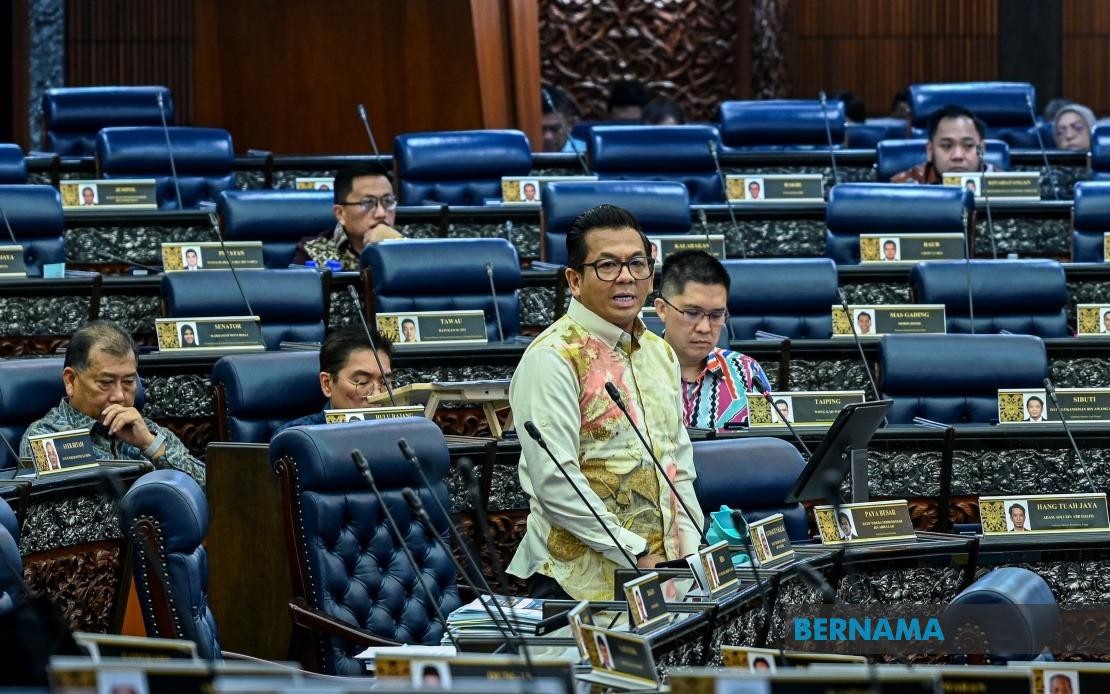
During a parliamentary question-and-answer session, Deputy Economy Minister Datuk Mohd Shahar Abdullah presented concrete figures illustrating why such targeted approaches matter. The disparity is striking: Kuala Lumpur residents require RM5,639 monthly to meet basic living expenses, a figure that stands 33 percent higher than Kelantan's RM4,254 baseline and 25 percent above Sabah's RM4,511 threshold. These are not marginal differences that policy makers can overlook. They represent fundamental variations in how Malaysians experience affordability, shaped by differences in housing costs, transportation expenses, food prices, and access to services. A policy calibrated for urban dwellers without accounting for rural purchasing power could inadvertently worsen inequality rather than ameliorate it.
The PAKW framework itself represents a methodological shift in how Malaysia approaches economic policy formulation. By making the myPAKW.dosm.gov.my calculator publicly available, the government has moved beyond opaque policy-making toward transparency that allows individual Malaysians to understand their own spending patterns and how these compare against government baselines. This democratisation of data serves multiple purposes: it grounds public discourse in empirical reality, it allows households to benchmark their situations, and it creates accountability for policy makers by making the data underlying interventions widely accessible. Citizens can now verify whether government assessments of living costs align with their lived experiences.
Mohd Shahar's emphasis on the link between spending patterns and underlying drivers—affordability, needs, and wants—points to a deeper policy philosophy. Government interventions cannot simply inject money into the system without understanding why spending patterns differ in the first place. Urban areas typically face higher housing costs due to land scarcity and demand concentration, while rural regions may struggle with limited service provision and higher transportation costs for goods. Addressing these structural differences requires different policy levers. What works to control inflation in Kuala Lumpur may prove ineffective in remote Kelantan, where supply chain dynamics and local market structures operate differently.
The government's response strategy incorporates two complementary pillars: income enhancement and periodic recalibration of poverty benchmarks. Training programmes designed to boost earning potential sit at the core of this approach, recognising that the most sustainable solution to cost-of-living pressures involves increasing household incomes rather than merely managing prices downward. By embedding these initiatives within the Five-Year Malaysia Plans and revising them twice per planning cycle, officials aim to ensure that income policies evolve alongside economic conditions rather than calcifying into outdated programmes. This represents a shift from static to dynamic policy-making, where frameworks are treated as living documents requiring continuous adjustment.
The trajectory of the Poverty Line Income illustrates the magnitude of wage adjustment the government claims to have achieved. The national PLI nearly tripled from RM980 in 2016 to RM2,705 in 2024—an increase of 176 percent over eight years. While such figures merit independent verification regarding whether wages have kept pace with inflation, they indicate the government's intention to substantially redefine what constitutes subsistence living. For Malaysian households, this recalibration carries practical implications: it alters eligibility thresholds for social assistance programmes, changes the benchmark against which economic progress is measured, and potentially shifts political expectations about what minimum living standards should be.
For regional observers, Malaysia's approach offers instructive lessons in addressing an endemic Southeast Asian challenge. Countries across the region grapple with similar urban-rural divides in economic opportunity and cost structures. Thailand, Indonesia, and the Philippines all confront tensions between metropolitan centres and peripheral regions, where spending requirements differ substantially. Malaysia's attempt to institutionalise this understanding through the PAKW framework and its integration into Five-Year Plans represents one model for bringing granular economic data into formal policy architecture, rather than treating such disparities as afterthoughts to centralised planning.
However, several questions linger about implementation depth and effectiveness. Does data availability translate into policy precision, or do political considerations still override evidence-based targeting? Are the training programmes sufficiently funded and accessible to rural populations that might benefit most? The gap between statistical recognition and on-the-ground programme delivery often proves the crucial test for any policy framework. Rural Malaysians may find little comfort in knowing that government planners acknowledge their lower PAKW baseline if interventions fail to materialise at scale or remain inaccessible due to infrastructure limitations.
The reliance on spending pattern analysis also raises questions about causality and agency. The PAKW approach assumes that understanding what households spend on is sufficient for designing interventions, yet it may obscure the structural constraints driving those patterns. A family in a remote district might spend heavily on transportation not through choice but through necessity—schools and hospitals are simply distant. Addressing this requires investment in rural infrastructure, not merely acknowledgment of the spending pattern. Similarly, urban households may spend more on rent because of housing undersupply, a structural problem that income support alone cannot resolve.
Looking forward, the effectiveness of Malaysia's PAKW-based approach will hinge on whether government agencies translate data insights into concrete policy actions that reach vulnerable populations. The framework provides the diagnostic tools; implementation determines whether it becomes a genuine instrument for reducing regional inequality or merely an elaborate statistical exercise that masks policy shortcomings. For Malaysian households—whether in Kuala Lumpur, Kelantan, or Sabah—the real test will be whether their actual cost of living trajectories shift in response to government interventions informed by this data.

