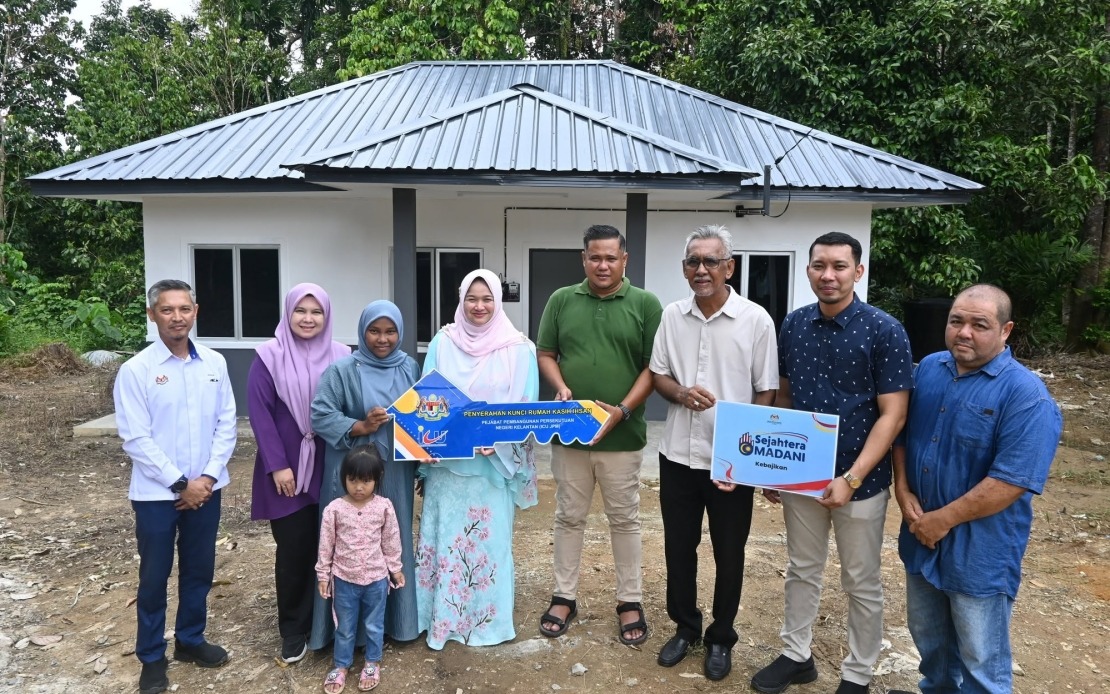
Prime Minister Datuk Seri Anwar Ibrahim's administration has taken another step in its commitment to lifting living standards across rural Malaysia by distributing Rumah Kasih Ihsan housing units in Jeli, Kelantan. The initiative, overseen by the Kelantan Implementation Coordination Unit (ICU) under the Prime Minister's Department (JPM), represents a tangible effort to translate government policy into concrete improvements in people's daily lives, particularly for those in economically disadvantaged areas.
The Rumah Kasih Ihsan programme reflects a deliberate policy shift towards understanding social welfare not merely as charity dispensation but as foundational infrastructure for human dignity and economic opportunity. When policymakers frame housing within this broader context, they acknowledge an essential truth often overlooked in development discourse: that secure shelter directly influences educational attainment, health outcomes, employment prospects, and psychological well-being. For families living in substandard housing, the provision of a safe and comfortable dwelling removes a significant barrier to participation in the broader economy and society.
The handover ceremony in Jeli involved two distinct recipients, each representing different stages of the housing intervention process. Yusof Mohamed Nawawi from Kampung Renyut received formal acceptance of a new house construction project, marking the beginning of his transition to improved living conditions. Meanwhile, Shamsul Bahri Che Musa's new home was already completed and ready for occupancy, demonstrating the programme's capacity to deliver results at varying speeds depending on individual circumstances. This flexibility in implementation suggests the ICU recognises that housing solutions must be tailored to specific community needs rather than applied uniformly across all cases.
Dr Wan Nur Ibtisam Wan Ismail, the Kelantan ICU JPM director, presided over the formal transfer, underscoring the coordination between federal and state-level administrative structures necessary to execute such programmes effectively. The PMX Coordination Team's involvement indicates this initiative operates within a broader framework of government modernisation and inter-agency collaboration. For Malaysian readers familiar with bureaucratic challenges in rural administration, this multi-tiered approach suggests genuine institutional commitment rather than ad-hoc benevolence.
Beyond the structural delivery of housing units, the government distributed food baskets to both recipients, a gesture that acknowledges the interconnected nature of household welfare. Families transitioning to new homes often face financial strain from associated costs, and supplementary food assistance provides immediate relief while occupants adjust to changed circumstances. This holistic approach distinguishes the programme from purely construction-focused interventions that might neglect the immediate practical needs of vulnerable households during transition periods.
The Kelantan ICU's philosophical framing of the initiative warrants attention for what it reveals about changing attitudes toward development in Malaysia. Officials emphasised that genuine development cannot be measured solely through infrastructure statistics or GDP contributions, but must be evaluated by tangible improvements in citizens' lived experiences. This represents a departure from earlier development paradigms that often prioritised quantifiable outputs over qualitative human outcomes, reflecting international shifts toward human-centred development indicators.
For Kelantan specifically, the Rumah Kasih Ihsan programme addresses a longstanding challenge in rural housing quality. The state has historically struggled with housing standards, particularly in agriculturally dependent communities where incomes remain volatile and access to formal credit for home improvement remains limited. By intervening directly, the government bypasses market failures that typically leave poorer households trapped in substandard accommodation. The psychological dimensions of improved housing—increased confidence, dignity, and hope—may prove equally important as the physical shelter itself, particularly in communities where generational poverty has reinforced fatalism about life prospects.
The programme's expansion to Kelantan aligns with broader national commitments to regional equity. Malaysia's wealth distribution has historically concentrated in urban centres and states with advanced manufacturing or services sectors. Rural and agriculturally dependent states face persistent challenges in attracting investment and generating local employment, creating cycles where young people emigrate and community vitality declines. Housing initiatives targeting vulnerable populations in these regions serve multiple functions: they demonstrate commitment to inclusive growth, strengthen social cohesion, and potentially help stabilise rural populations by improving basic living conditions.
From a regional perspective, Malaysia's approach to social housing provision offers insights relevant to other Southeast Asian nations grappling with informal settlements and housing shortages. While several ASEAN members have experimented with public housing programmes, sustained commitment combined with coordination between central government, state authorities, and local communities remains inconsistent. Malaysia's structured approach through dedicated ICUs and coordination teams provides a model worthy of regional attention, particularly for countries seeking to address housing deficits without resorting to large-scale displacement or inadequately planned urban relocation schemes.
The Rumah Kasih Ihsan initiative also intersects with broader conversations about the social contract in Malaysia. By demonstrating tangible government responsiveness to housing insecurity, the programme reinforces public confidence in state institutions and their capacity to address citizen needs. In an era of declining institutional trust observed across many democracies, such visible delivery of promised services carries political and social significance beyond the immediate beneficiaries. Residents in other communities witnessing successful implementation may anticipate similar support, creating expectations that drive future policy expansion.
Looking forward, the sustainability and scalability of such programmes depend on consistent resource allocation and protection from political fluctuations. Housing initiatives require multi-year planning horizons and sustained funding, characteristics not always aligned with electoral cycles or changing political priorities. The involvement of dedicated institutional structures like the Kelantan ICU suggests efforts to insulate implementation from such volatility, though questions about long-term funding security and expansion timelines remain pertinent considerations for policymakers and beneficiary communities alike.

