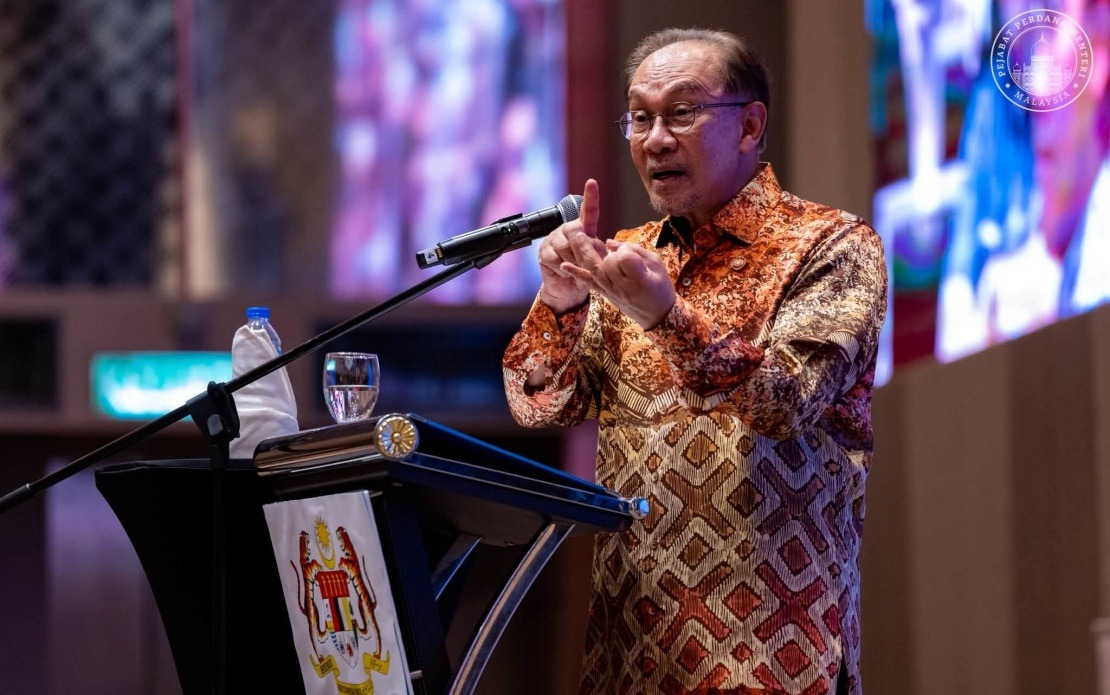
Prime Minister Datuk Seri Anwar Ibrahim has reaffirmed his administration's dedication to supporting Malaysia's young population as they contend with an increasingly intricate landscape of social, economic, and political challenges. The commitment was announced following direct engagement with youth representatives at the "Temu Anwar" session and the inaugural ceremony of the 2026 International Youth Assembly (HAMKA) held in Klang, Selangor on Tuesday. Speaking through a social media address, the Prime Minister underscored that within the government's existing resources and constraints, officials would endeavour to provide meaningful assistance to young Malaysians grappling with diverse difficulties.
The Prime Minister's statement reflects a broader effort by the current administration to maintain dialogue channels with younger demographics, a crucial constituency as Malaysia navigates economic transitions and social transformation. Young Malaysians increasingly face multifaceted pressures ranging from employment uncertainties and housing affordability to mental health concerns and navigating polarised public discourse. The government's positioning of youth engagement as a priority suggests recognition that without sustained attention to generational needs, social cohesion and economic dynamism could be undermined in coming years.
Anwar's remarks also carried an implicit commentary on contemporary societal divisions. He observed that while differing perspectives and intellectual debate characterise the modern world young people inhabit, such discourse must be grounded in reasoned argument, factual knowledge, and civility rather than emotionalism, animosity, or factional loyalty. This framing appears directed at younger Malaysians navigating increasingly polarised online spaces and political environments where sensationalism frequently overwhelms substantive discussion. The emphasis on "knowledge, arguments, and manners" suggests the government recognises that youth attitudes toward civic engagement and democratic participation are being shaped by the quality of public conversation they encounter.
The HAMKA assembly itself carries historical resonance within Malaysia's intellectual and educational traditions. The event's nomenclature deliberately invokes Abdul Malik Karim Amrullah, the revered cleric, scholar, and literary figure whose intellectual contributions shaped Southeast Asian Islamic thought during the twentieth century. Amrullah's legacy encompasses not merely theological scholarship but equally his role as an advocate for modernist Islamic interpretation, education reform, and the cultivation of critical thinking among young Muslims. By naming the assembly after this towering intellectual figure, organisers signal aspirations that contemporary youth will embody similar commitments to rigorous thought, courageous expression, and intellectual integrity.
The Prime Minister's reflection on Amrullah's influence highlighted several characteristics he evidently considers vital for modern Malaysian youth development. Amrullah's reputation as a "lion of the podium" and "warrior of the pen" underscores the importance of eloquent advocacy and written expression as tools for social progress and idea dissemination. His emphasis on imparting knowledge and fostering intellectual courage suggests the government recognises that young Malaysians must be equipped not merely with technical skills for employment but equally with critical faculties and moral confidence to engage substantively with societal challenges. The invocation of this historical figure implicitly positions intellectual development and ethical formation as central to youth policy objectives.
The "Temu Anwar" session format, featuring direct Prime Ministerial engagement with youth representatives, reflects contemporary political communication strategies wherein senior leaders seek to maintain accessibility and responsiveness to younger demographics. Such forums provide opportunities for young Malaysians to articulate concerns directly to policymakers while simultaneously offering political leadership insights into emerging youth preoccupations and sentiment. For a government seeking to sustain legitimacy across generational lines, such interactive platforms serve both substantive policy development and symbolic functions, demonstrating commitment to intergenerational dialogue and inclusive governance.
However, the Prime Minister's acknowledgment that assistance would occur "within available capacity" merits scrutiny from a policy perspective. Malaysia faces significant fiscal constraints following years of elevated public debt and budgetary pressures exacerbated by pandemic-related expenditures. This qualification suggests that while political will may exist to address youth challenges comprehensively, material resources available for expanded programmes or initiatives remain limited. Young Malaysians facing employment difficulties, educational barriers, or housing obstacles may reasonably question whether rhetorical commitment translates into substantive resource allocation when competing priorities claim government funding.
The broader context of youth policy in Southeast Asia suggests Malaysia's situation reflects regional patterns. Across the ASEAN sphere, governments grapple with demographic dividends converting toward demographic challenges, with youth unemployment, underemployment, and skills mismatches creating social pressures. Digital connectivity has simultaneously enabled youth political mobilisation while exposing younger populations to global consciousness of inequality, climate risks, and limited social mobility. Governments that fail to demonstrably address youth concerns risk erosion of institutional legitimacy and potential radicalisation of generational cohorts toward political alternatives.
The Prime Minister's emphasis on intellectual discourse guided by "knowledge, arguments, and manners" also reflects concerns about digital-age polarisation affecting Malaysian youth. Social media platforms have become primary information sources and civic engagement spaces for younger demographics, yet these environments frequently amplify divisive content and enable rapid spread of misinformation. Efforts to cultivate in young Malaysians the capacity for reasoned debate and epistemic discernment represent important but challenging policy objectives requiring sustained educational and cultural investment.
Moving forward, observers will assess whether the government's expressed commitment translates into concrete policy innovations addressing identified youth challenges. Potential areas for substantive intervention might include employment creation through skills development programmes, housing assistance schemes targeted at first-time buyers, mental health service expansion, and educational curriculum reform emphasising critical thinking and digital literacy. The HAMKA assembly itself could serve as platform for articulating more specific policy frameworks rather than remaining at the level of aspirational rhetoric about supporting youth generally.
The implicit acknowledgment that Malaysia's young people navigate "increasingly complex" circumstances represents honest assessment of contemporary realities. Whether through economic transformation, climate imperatives, geopolitical shifts, or technological disruption, the environment young Malaysians inhabit differs markedly from previous generations' experience. Effective governance responses require moving beyond symbolic youth engagement toward substantive policy architecture addressing documented barriers to youth flourishing, opportunity, and social contribution. The government's current positioning creates expectations that subsequent actions will demonstrate commitment matching the rhetoric articulated at the HAMKA assembly opening.

