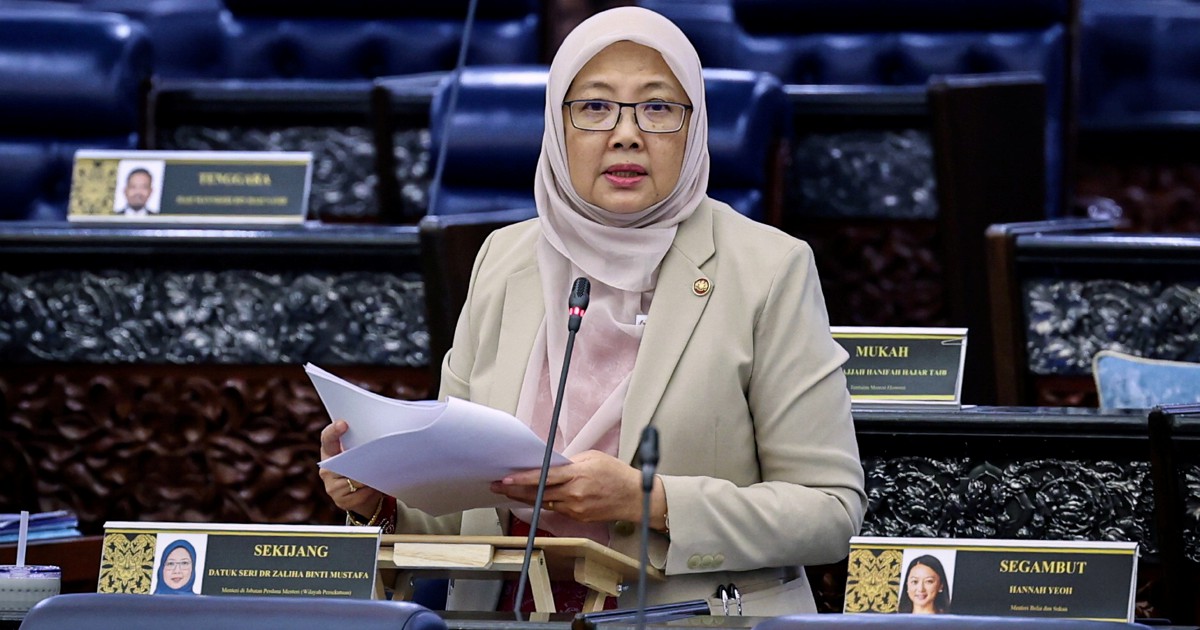
The Government Backbenchers Club has publicly rebuked Perikatan Nasional legislators for abandoning the Dewan Rakyat during a specially convened session to discuss the Royal Commission of Inquiry findings into Lembaga Tabung Haji, with club chairman Datuk Dr Zaliha Mustafa leading the criticism over what she characterized as a failure of parliamentary duty.
The RCI report into Malaysia's largest pilgrimage savings fund represents a critical examination of governance at an institution entrusted with hundreds of billions of ringgit belonging to millions of Malaysian Muslims. The inquiry, which examined various aspects of Tabung Haji's operations and management, carries significant implications for public trust in the pilgrimage financing system and raises broader questions about institutional oversight in Malaysia's financial ecosystem. The parliamentary debate was organised specifically to allow legislators to respond to the commission's findings and recommendations, making the withdrawal particularly noteworthy from a governance perspective.
For the Government Backbenchers Club, which represents ruling coalition MPs on the backbenches and often serves as a barometer of government unity, the PN departure symbolised more than a routine parliamentary absence. Dr Zaliha's condemnation reflects deeper concerns within government circles about opposition commitment to addressing systemic failures that the RCI may have identified. Her stance indicates that government MPs view engagement with inquiries into public institution mismanagement as a non-negotiable aspect of parliamentary responsibility, regardless of partisan considerations.
The timing of the walkout carries additional significance, occurring as Malaysia continues grappling with restoring confidence in major statutory bodies. The Tabung Haji institution serves approximately 11 million members and manages funds intended for one of Islam's Five Pillars, making any governance lapses particularly sensitive from religious, economic, and social perspectives. Public scrutiny of such institutions has intensified in recent years, with Malaysians increasingly demanding transparency and accountability from bodies managing national assets.
PN's decision to depart the chamber during this discussion likely reflects broader coalition disagreements over how accountability mechanisms should function in Parliament. Opposition parties have sometimes boycotted proceedings to protest against what they perceive as unfair parliamentary practices or to signal disagreement with government policies. However, abstaining from debates on institutional governance reports poses a different calculus, as it may be interpreted by the public as unwillingness to engage with concerns affecting ordinary Malaysian citizens directly.
The contrast between government and opposition approaches to the RCI debate underscores the polarised nature of contemporary Malaysian politics, where even matters of institutional reform can become entangled in coalition rivalry. Government MPs appear determined to use the parliamentary forum to demonstrate their commitment to examining and addressing any shortcomings within Tabung Haji, positioning themselves as champions of public accountability. This strategic positioning matters, particularly among Muslim voters who comprise the predominant membership of the pilgrimage savings scheme.
Dr Zaliha's public rebuke through the Government Backbenchers Club carries weight because the organization typically operates with some independence from executive direction, suggesting that criticism reflects genuine backbench sentiment rather than mere government messaging. When government MPs themselves criticise opposition counterparts, it often resonates more powerfully than similar statements from the executive branch, as it implies concern among fellow parliamentarians about legislative standards and decorum.
The incident also raises questions about the broader effectiveness of parliamentary inquiries and RCI reports when significant portions of the legislature decline to participate in subsequent debates. If opposition parties systematically avoid engaging with findings and recommendations from independent inquiries, the utility of such mechanisms diminishes considerably. The public expects Parliament to serve as a forum where evidence-based criticisms of institutions are thoroughly examined and where corrective measures can be proposed and debated transparently.
From a regional perspective, Malaysia's approach to parliamentary accountability and institutional governance carries symbolic importance. Southeast Asian democracies face ongoing challenges in maintaining public trust in state institutions, with many citizens expressing skepticism about whether inquiries and parliamentary debates actually translate into meaningful reform. When opposition parties opt out of such proceedings, it reinforces perceptions that institutional accountability remains hostage to political calculation rather than genuine commitment to public interest.
The Tabung Haji situation illuminates tensions between partisan political interests and the broader governance imperatives that transcend coalition boundaries. Millions of ordinary Malaysians have contributed to the fund over decades with expectations that their savings would be prudently managed and protected. When parliamentary debates about institutional failings become occasions for political grandstanding or strategic absence, it inevitably erodes faith in democratic institutions themselves.
Looking forward, the government appears intent on using the RCI debate as an opportunity to demonstrate responsiveness to institutional concerns and to position the ruling coalition as advocates for reform and transparency. Whether the PN's absence ultimately damages its standing with stakeholders concerned about Tabung Haji governance may depend on how effectively the government communicates its commitment to implementing recommended changes and how comprehensively those changes address the underlying issues the RCI identified.
The broader question remains whether Malaysian Parliament can evolve towards a model where institutional governance matters transcend party lines, allowing legislators from all coalitions to engage substantively with evidence about public sector performance without viewing such engagement through a purely adversarial lens. The Tabung Haji debate represents a test case for whether Parliament can function as an effective accountability mechanism or whether it remains primarily an arena for coalition posturing.

