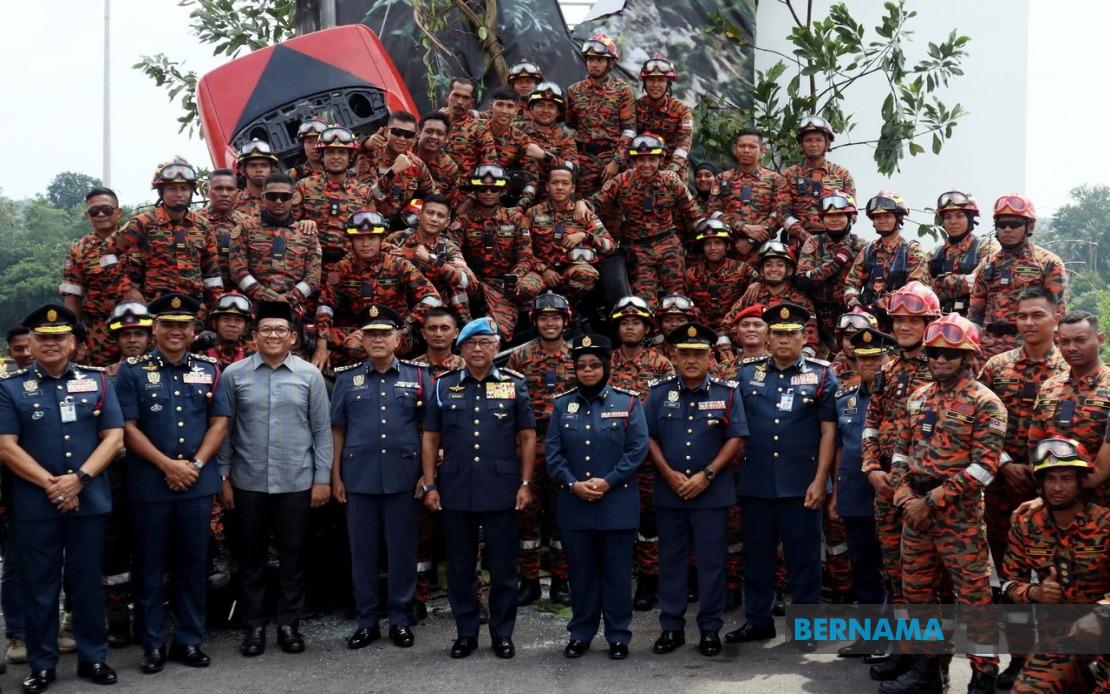
The Malaysian government has greenlit an annual allocation of RM278.9 million in development funding directed towards the Malaysian Fire and Rescue Department (JBPM), enabling the implementation of 86 distinct projects throughout the country as part of the First Rolling Plan under the 13th Malaysia Plan (13MP). The portfolio encompasses a balanced mix of 27 newly initiated projects alongside 59 continuing initiatives scheduled for delivery this year, reflecting a comprehensive approach to expanding and strengthening emergency response infrastructure across the nation.
Datuk Aiman Athirah Sabu, the Housing and Local Government deputy minister, disclosed these details during a notable event in Pahang, where she highlighted the government's sustained commitment to modernising fire and rescue operations. The allocation demonstrates a strategic effort to address capacity gaps and enhance service delivery standards in communities nationwide, particularly those in regions where emergency response capabilities require reinforcement. The decision underscores recognition that investing in rescue infrastructure directly translates to improved public safety outcomes and faster emergency response times.
Pahang emerges as a particular focus area within the current planning cycle, with seven facility projects at various implementation stages across the state. These endeavours, initiated under both the 12th Malaysia Plan and the 13MP's first rolling phase, encompass diverse infrastructure needs ranging from new station acquisitions to substantial renovation programmes. The Gohtong Jaya Fire and Rescue Station building acquisition, alongside new construction efforts such as the Benta and Tioman stations with accompanying staff quarters, represent capital-intensive initiatives designed to position the state with modern operational facilities.
Complementing these new facilities, the government is simultaneously executing significant upgrades across existing infrastructure throughout Pahang. The Bentong and Kuantan stations are undergoing comprehensive refurbishment, while Triang station faces reconstruction to meet contemporary operational standards. Additionally, preliminary groundwork has commenced for the Tanjung Lumpur station, indicating a pipeline of future capacity additions aimed at achieving more equitable geographic coverage. This dual strategy—acquiring new assets whilst revitalising established infrastructure—reflects a pragmatic approach to maximising the impact of limited capital resources.
A centrepiece of Pahang's development programme is the newly inaugurated Sungai Lembing Fire and Rescue Station, constructed at a cost of RM6 million across a seven-hectare site. The facility commenced full operational status on February 15, positioning itself as the 29th fire and rescue station within Pahang's network. The station's strategic location enables it to serve approximately 15,000 residents throughout Sungai Lembing and its surrounding communities, addressing what was previously a critical service coverage gap in this heritage mining town and its periphery.
Beyond its primary emergency response functions, Datuk Aiman Athirah emphasised the station's expanded role as a multi-purpose community facility. The vision extends beyond reactive firefighting and rescue operations to encompass proactive community engagement through educational programmes, skills training, and public awareness initiatives targeting civilian lifesaving capabilities. This concept of fire and rescue stations functioning as integrated community safety hubs reflects evolving thinking about emergency services' social responsibilities and their potential to create broader public health and safety dividends.
The timing of the Sungai Lembing station's development aligns strategically with broader economic revitalisation efforts aimed at transforming the town into a premier heritage tourism destination. Datuk Mohd Shahar Abdullah, the Deputy Economy Minister and Paya Besar Member of Parliament, articulated this connection during the station's opening, emphasizing that emergency preparedness constitutes a foundational element of sustainable community development. Without robust safety infrastructure, even ambitious heritage conservation and tourism initiatives risk undermining public confidence and economic viability.
Sungai Lembing's renaissance programme encompasses multiple interconnected initiatives designed to restore the town's historical significance and economic vitality following decades of post-mining transition. The PCCL Cinema restoration project resurrects a cultural landmark, whilst ecotourism development and digital museum construction create contemporary attractions leveraging the town's unique mining heritage. Critically, the upgrading of the Sungai Lembing Tunnel—historically crucial to mining operations—connects these heritage narratives with modern infrastructure requirements. These initiatives collectively serve the ambitious objective of securing UNESCO World Heritage Site designation, which would provide international recognition and tourism validation.
Datuk Mohd Shahar explicitly linked the fire and rescue station to this broader developmental narrative, positioning emergency infrastructure not merely as a public service utility but as an essential component of creating a safe, modern, and prosperous community image. From an investor and tourist perspective, communities perceived as well-equipped for emergencies project greater stability and reliability. The station thus contributes meaningfully to Sungai Lembing's positioning as an attractive destination for both leisure visitors and potential heritage-focused businesses.
The Sultan of Pahang Al-Sultan Abdullah Ri'ayatuddin Al-Mustafa Billah Shah's presence at the inauguration ceremony underscored the project's regional significance and royal patronage, lending formal authority and visibility to the government's emergency services development agenda. The participation of Pahang Menteri Besar Datuk Seri Wan Rosdy Wan Ismail and State Legislative Assembly Speaker Datuk Seri Mohd Sharkar Shamsuddin further highlighted the multi-level governmental coordination required to advance such infrastructure initiatives successfully.
For Malaysian readers and particularly those in Pahang and comparable rural or heritage-focused communities, this allocation signals sustained government commitment to ensuring that emergency service standards need not lag behind urban centres. The RM278.9 million annual commitment, whilst significant in absolute terms, must be contextualised against the nation's total development expenditure, suggesting that fire and rescue infrastructure improvements remain a consistent but necessarily prioritised component of broader public service modernisation efforts.
The 13MP's approach to fire and rescue development, as exemplified through this allocation and Sungai Lembing's emergence, reflects a maturing recognition that emergency services constitute critical public goods deserving strategic planning and adequate resource allocation. As Malaysia continues urbanising and diversifying its economy towards tourism and heritage sectors, the reliability of emergency response systems becomes increasingly consequential for both public safety outcomes and economic competitiveness in attracting investment and visitors.

