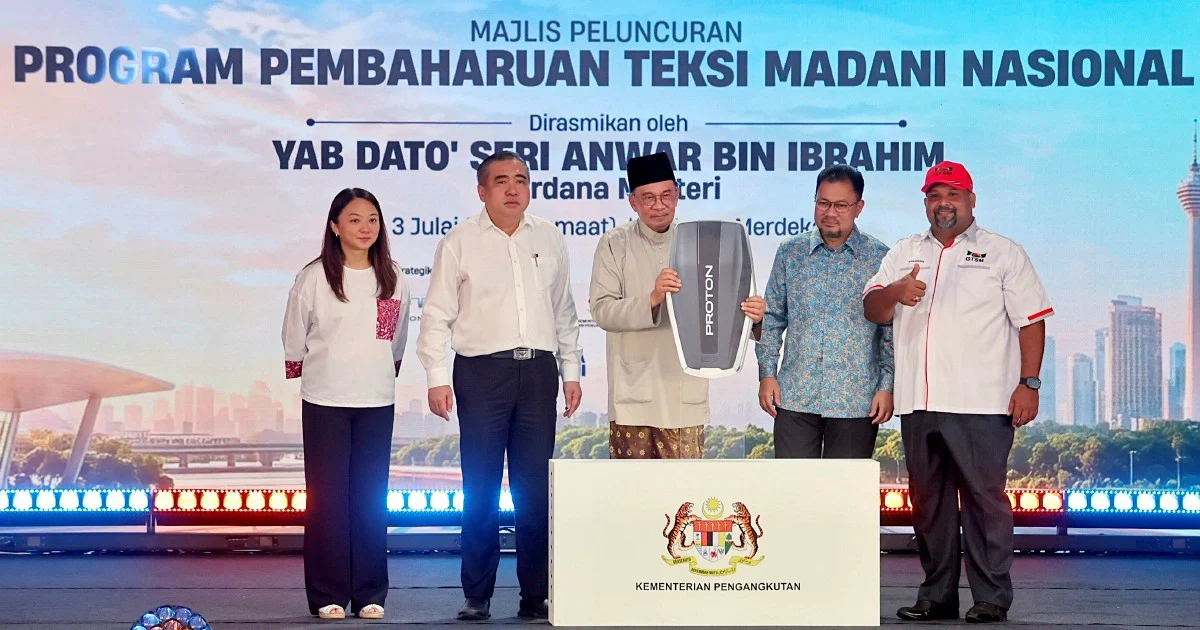
Prime Minister Datuk Seri Anwar Ibrahim has announced that the federal government is committing an additional RM10 million towards a matching grant programme aimed at facilitating the replacement of ageing taxis across the country. The funding injection represents a significant step in the administration's broader strategy to modernise Malaysia's public transportation infrastructure while simultaneously supporting the livelihoods of thousands of taxi drivers who depend on their vehicles for income.
The matching grant arrangement works by pairing government contributions with funds contributed by participating taxi operators themselves, effectively doubling the financial resources available for vehicle replacement initiatives. This co-investment model encourages operator participation while distributing the financial burden more equitably between the public sector and private stakeholders in the transportation industry. The structure ensures that drivers with some capacity to save or secure financing have a pathway to upgrade their vehicles without bearing the entire cost unilaterally.
Replacing Malaysia's ageing taxi fleet addresses multiple policy objectives simultaneously. Many vehicles still in operation have accumulated substantial mileage and require increasingly frequent maintenance, driving up operational costs for drivers while simultaneously increasing emissions and reducing fuel efficiency. The shift toward newer vehicles equipped with modern safety features, better air conditioning systems, and improved fuel economy benefits both operators through reduced running expenses and passengers through enhanced comfort and safety standards.
The transportation sector has long faced challenges related to vehicle age and condition. Taxis operating in major urban centres like Kuala Lumpur often contend with bumper-to-bumper traffic, which accelerates wear and tear on mechanical components and increases fuel consumption. Newer vehicles with advanced engine management systems and aerodynamic improvements can help mitigate these challenges, reducing the environmental footprint of the country's taxi fleet while simultaneously improving the economic viability of individual operators.
Since the COVID-19 pandemic devastated the tourism and transportation sectors, many taxi drivers have struggled with reduced passenger volumes and income instability. The replacement scheme provides a critical lifeline for operators seeking to remain competitive and viable in an increasingly challenging market. By reducing barriers to vehicle acquisition, the government is effectively supporting income stability for drivers who constitute a significant portion of Malaysia's working class.
The timing of this announcement reflects broader policy priorities within the Anwar Ibrahim administration, which has emphasised both urban development and support for small to medium-sized entrepreneurs. Taxi operators, whilst individually operating their businesses, collectively form a substantial economic sector that employs tens of thousands and provides an essential service to millions of daily commuters across Malaysian cities.
Transport economists have long noted that the availability of financing and capital assistance significantly influences fleet modernisation rates. Without government intervention through matching grants or similar mechanisms, replacement cycles stretch considerably longer, as individual operators lack access to affordable financing. The RM10 million allocation, therefore, potentially triggers a wave of vehicle upgrades that would otherwise take significantly longer to materialise through market forces alone.
The matching grant model also incentivises transparency and accountability. Operators must demonstrate their own financial commitment and meet specified eligibility criteria to access government funds, creating a screening mechanism that helps ensure resources reach genuinely committed participants. This approach contrasts with universal subsidies, which can sometimes attract participants with limited intention to follow through on vehicle replacement.
Regional implications extend beyond the immediate taxi sector. As Malaysia's transportation infrastructure modernises, it enhances the country's competitive position in attracting business travellers and tourists who expect convenient, reliable, and comfortable ground transportation options. Visitor perceptions of local transportation quality influence broader tourism competitiveness, making fleet modernisation a subtle but meaningful contributor to economic attractiveness.
Looking forward, the success of this scheme will likely be measured through tracking the number of vehicles actually replaced, the timeline of replacements, and improvements in safety records and customer satisfaction metrics. Data from early implementation phases will inform whether the RM10 million allocation proves sufficient or whether additional tranches of funding become necessary to achieve meaningful fleet-wide modernisation.
For individual taxi drivers, the scheme represents a genuine opportunity to upgrade their primary business asset without incurring catastrophic debt burdens. Many operators have expressed desire to modernise their fleets but have been constrained by capital limitations and challenging credit conditions. The matching grant programme effectively bridges this gap, making vehicle replacement economically feasible for drivers who might otherwise remain locked into older vehicles indefinitely.
As the scheme rolls out, collaboration between transport ministry officials, financing institutions, and taxi operator associations will be critical in smoothing implementation and ensuring the process remains accessible to eligible participants. Clear communication regarding application procedures, timeline requirements, and disbursement mechanisms will determine whether the initiative achieves its full potential in catalysing meaningful fleet renewal across Malaysia's taxi industry.

