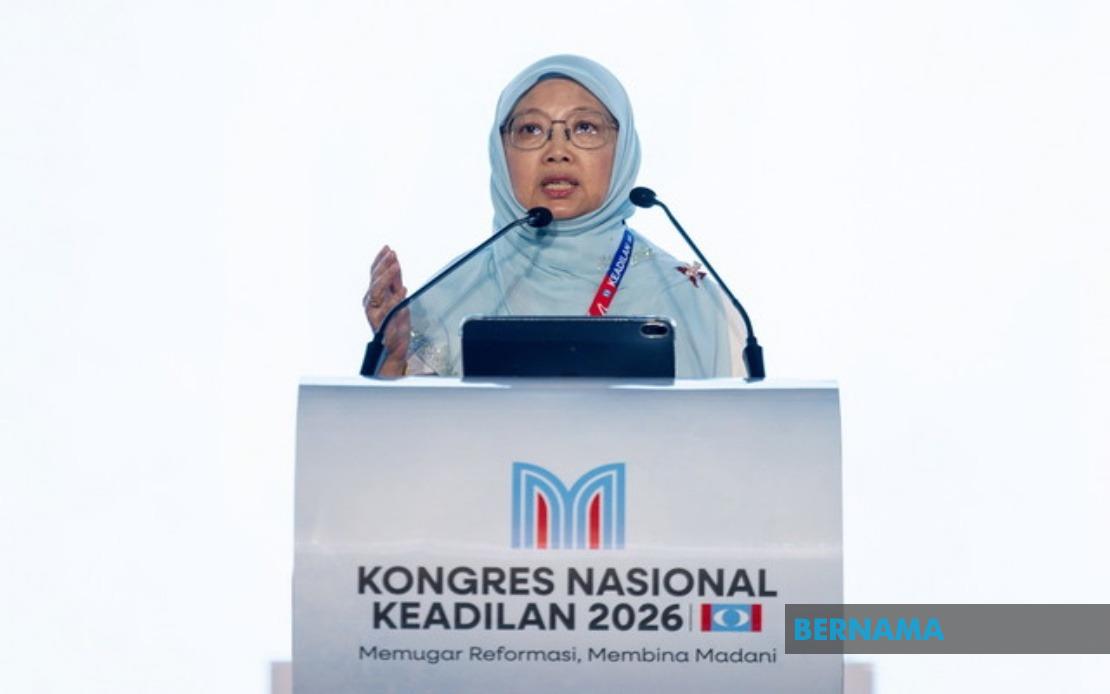
The struggle for reform in Malaysia has always been about far more than securing power for its own sake, according to PKR vice president Datuk Seri Dr Zaliha Mustafa, who warned that the party's greatest challenge now lies in translating decades of activism into concrete systemic change. Speaking at the PKR 2026 National Congress in Melaka on August 16, Zaliha reframed the party's entire narrative around governance transformation rather than mere electoral success, signalling that the coming years will test whether PKR can genuinely reshape how Malaysia is administered.
For nearly three decades, PKR and its reformasi movement have campaigned under the banner of institutional renewal and democratic revitalisation. Yet Zaliha's remarks indicate a subtle but crucial shift in emphasis: the party leadership is now acutely aware that controlling government is merely the beginning, not the culmination, of reform. She questioned whether the movement's fundamental objective could ever have been reduced to simply deciding "who sits in the government seat," insisting instead that the true ambition must be to alter the mechanics and culture of governance itself. This distinction matters enormously for Malaysian politics, as it suggests PKR recognises that electoral victory without institutional substantiation risks rendering the reform agenda hollow.
The responsibility now resting on PKR's shoulders encompasses several interrelated domains. Strengthening institutions and governance structures must occur alongside rigorous efforts to combat corruption and abuse of power—areas where Malaysia's track record has historically been contested. Zaliha also emphasised that justice and its benefits must be extended equitably across all societal strata, a commitment that requires both policy changes and cultural reorientation within government machinery. For Malaysian citizens, this framing carries particular significance given decades of concerns about bureaucratic capture, selective accountability, and governance frameworks that often appear to serve privileged interests. The test will be whether PKR can deliver measurable improvements in these areas or whether the gap between reformist rhetoric and administrative reality will persist.
Crucially, Zaliha called for internal party discipline and the courage to critique and correct weaknesses from within PKR's own ranks. This acknowledgement that reform movements can themselves become corrupted or compromised represents a degree of institutional self-awareness that some observers have found wanting in Malaysian politics. It suggests a recognition that reform is not a destination but an ongoing process requiring constant vigilance and course correction. For Malaysian voters who have grown cynical about political promises, this emphasis on internal accountability offers at least a rhetorical commitment to something beyond the traditional political cycle.
Yet Zaliha also stressed that reform must be calibrated and sequenced strategically rather than pursued with revolutionary speed. Drawing on the historical example of Khalifah Umar Abdul Aziz—referenced in PKR president Datuk Seri Anwar Ibrahim's opening congress remarks—she argued that sustainable change requires distinguishing between immediate reforms and those demanding time, negotiation, and careful preparation. This gradualist approach is pragmatically sound but potentially risky politically. Opposition critics and reform-minded activists may interpret such caution as dilution, particularly if PKR's record over the coming years shows limited tangible progress on flagship reform commitments.
The distinction between slowness and delay, caution and loss of courage, is one that Zaliha attempted to clarify in her address. She contended that methodical implementation need not signal abandonment of reform goals, provided the party maintains unwavering clarity about its direction and priorities. For Malaysian politics, this raises important questions about PKR's internal consensus on reform sequencing. If the party cannot articulate clearly to its members and supporters which changes are immediate, which are medium-term, and which are long-term, the gradualist approach risks appearing arbitrary or opportunistic.
Zaliha identified another critical challenge: communicating government achievements and policy rationale to the broader public. She recognised that implementing policies without successfully explaining them to citizens represents a form of political failure, as public perception and understanding determine whether reforms gain the popular legitimacy necessary for longevity. This is particularly pertinent in Malaysia's fractured media landscape, where government messaging competes with multiple independent, partisan, and alternative information sources. The party must ensure that its communication architecture is sufficiently modern, accessible, and responsive to resonate with voters across age groups and digital literacy levels.
The strategic importance of controlling narrative in the social media environment cannot be overstated in Malaysia's current political context. Zaliha explicitly warned against ceding this space to opposition forces, recognising that digital platforms have become battlegrounds where perceptions of governance competence are formed and contested. For a reform-oriented government, losing the narrative war on social media could undermine legitimacy despite actual policy achievements, while conversely, skilled communication could amplify the perception of progress even where implementation remains incomplete.
Zaliha articulated a subtle but significant insight: numerical and policy victories do not guarantee public acceptance if the government fails to win the emotional and psychological alignment of citizens. This recognition speaks to Malaysian voters' deeper frustrations with governance—not merely policy deficiencies but a sense that the political system does not reflect their values or prioritise their concerns. Building public "feeling" requires not just policy delivery but cultural and emotional connection, something that cannot be manufactured through conventional government relations strategies alone.
The PKR leadership's framing at the national congress reflects growing maturity in how reform-oriented parties understand governance in practice. Rather than presenting power-taking as the culmination of struggle, the party is repositioning itself for a potentially lengthy period of contested implementation where every decision will be scrutinised against the promises of the reformasi movement. This creates both vulnerability and opportunity: vulnerability because reform parties are perpetually vulnerable to accusations of betrayal or compromise, but opportunity because genuine improvements in governance, transparency, and accountability—if achieved—could fundamentally reshape Malaysian political expectations.
For regional observers, PKR's experience is instructive. Throughout Southeast Asia, reform movements have frequently struggled to translate protest momentum into constructive governance. Malaysia's case will partly determine whether reform-oriented movements across the region can overcome the gap between agitation and administration, between critique and construction. The next electoral cycle and Zaliha's emphasis on PKR's willingness to police itself internally will largely determine whether the party's 27-year struggle culminates in substantive institutional change or becomes another chapter in the region's pattern of unfulfilled political transitions.

