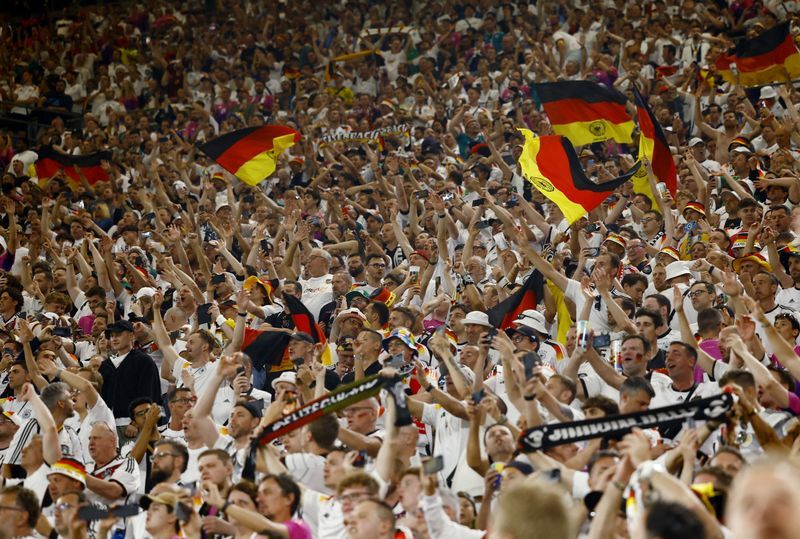
German law enforcement launched coordinated search operations across the country on Wednesday targeting the headquarters of the Deutsche Fußball-Bund (DFB), the nation's soccer governing body, according to reports from Bild newspaper. The raids form part of a broader investigation into alleged misconduct surrounding the allocation of tickets and hospitality packages during the 2024 European Championship, which took place across ten German cities earlier this year.
The investigation has focused on multiple individuals including at least one German national and one French national suspected of involvement in the irregular distribution of match tickets and related benefits. Authorities in Bochum and the North Rhine-Westphalia state criminal office confirmed that searches were being executed at multiple locations throughout Germany, though their official statement did not specifically reference the DFB premises.
At the heart of the inquiry lies an alleged scheme involving the unauthorized distribution of several thousand tickets alongside hotel accommodation and hospitality privileges to individuals with preferred access. These arrangements are believed to have occurred in the lead-up to the tournament, suggesting a systematic approach to allocating premium access that may have circumvented official ticketing procedures.
One particularly notable case concerns a municipal employee from Gelsenkirchen, one of the ten host cities for the tournament, who stands accused of improperly receiving tickets, transportation arrangements, and hotel accommodations valued at approximately €2,400. This figure alone highlights the substantial benefits that may have been distributed through unofficial channels, raising questions about the scale of the broader operation.
For Southeast Asian readers and Malaysia's sports governance sector, this scandal carries important lessons about the risks of inadequate oversight in major sporting events. Hosting international tournaments requires robust systems to prevent corruption and unauthorized ticket distribution, issues that become increasingly critical as nations position themselves to bid for major competitions. The investigation demonstrates that even well-established football associations in developed nations can face serious accountability challenges when internal controls prove insufficient.
The prosecutorial authorities have characterized their investigation as concerning "unauthorized advantages, including a visit to an international football match," a deliberately broad framing that suggests the inquiry may extend beyond simple ticket fraud to encompass wider hospitality violations and potential bribery-related offenses. This prosecutorial language indicates that investigators suspect something more elaborate than straightforward ticket scalping.
The DFB has yet to provide a substantive response to these allegations, with the association declining immediate comment when approached by journalists. Similarly, the Union of European Football Associations (UEFA), which oversaw the Euro 2024 tournament, did not respond promptly to requests for clarification. This silence may reflect the sensitivity of the situation or ongoing legal considerations around public statements during an active investigation.
Prosecutors in Bochum maintained strict confidentiality regarding further details of the case, adhering to German legal procedures that typically restrict public disclosure during preliminary investigation phases. This approach protects the rights of individuals under investigation while also preventing premature judgments in the court of public opinion.
The timing of these raids, occurring in early July following the conclusion of Euro 2024, suggests that initial complaints or suspicious activity reports may have emerged during or immediately after the tournament itself. The interval between the event and the formal searches indicates that investigators required time to gather preliminary evidence and secure appropriate judicial authorization for the raids.
This case reflects broader concerns about ticket distribution corruption in major sporting events, a persistent challenge that has plagued previous tournaments including World Cups and Olympics. The sophistication of such schemes often involves collusion between event organizers, government officials, and intermediaries who exploit their positions to secure scarce resources for resale or personal benefit.
For the German football community and UEFA's governance reputation, the investigation carries significant implications. The 2024 European Championship was widely regarded as a successful tournament from a sporting perspective, but this scandal threatens to overshadow those achievements with questions about administrative integrity. The incident may prompt UEFA and national associations across Europe to review their ticketing protocols and implement stronger verification procedures.
The investigation's focus on hotel invitations alongside ticket distribution suggests a coordinated hospitality scheme rather than isolated incidents. Such comprehensive arrangements indicate that beneficiaries received complete packages including accommodations, which requires coordination across multiple service providers and typically points toward organized rather than spontaneous misconduct.
As German authorities continue their investigation, the outcomes may establish important precedents for how similar cases are handled internationally. Malaysia and other nations aspiring to host major football tournaments should monitor this case's resolution closely, as it will likely influence FIFA and UEFA requirements for ticketing transparency and anti-corruption measures in future tournament host agreements. The scandal underscores that institutional credibility depends not merely on successful event delivery, but on demonstrable commitment to fair distribution and transparent governance throughout the organizational process.

