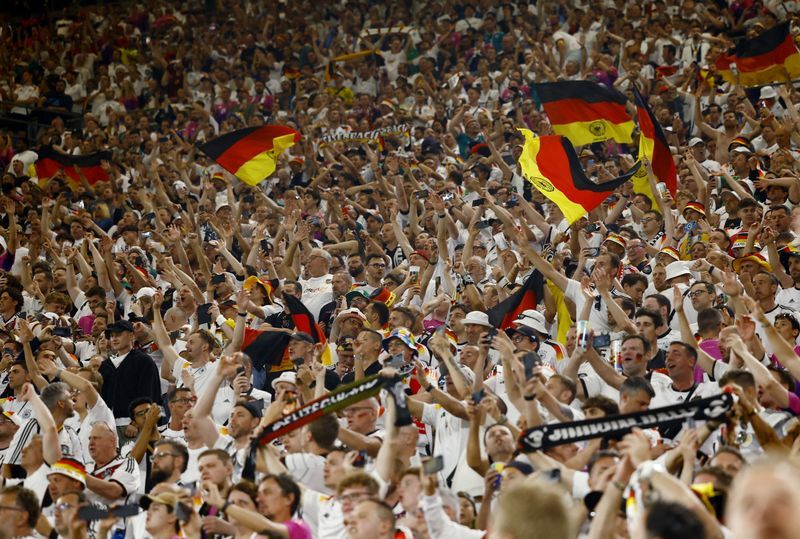
German authorities have initiated a series of coordinated investigations targeting the Deutsche Fussball-Bund, the nation's football governing body, over suspected irregularities in how tickets for the Euro 2024 championship were allocated to the public and affiliated parties. The sweeping operation, which unfolded across multiple locations throughout Germany on Wednesday, represents a significant development in scrutinizing administrative practices surrounding one of Europe's largest sporting events.
According to reporting by Bild, the newspaper with the widest circulation in Germany, investigators have focused their attention on potential violations in the ticketing process. The DFB's headquarters became a focal point of the investigation, with authorities executing search warrants at the organization's offices as part of what appears to be a broader inquiry into how match tickets were distributed during the championship tournament held across German venues earlier this summer.
The investigation has already identified multiple suspects across national lines. Among those under investigation are individuals with German nationality alongside a French national, according to Bild's account of the probe. The involvement of foreign nationals in the inquiry suggests the alleged misconduct may extend beyond isolated domestic irregularities, potentially implicating networks that operated across borders during the tournament organization phase.
While official statements from police and prosecutorial authorities confirmed that searches were being conducted at several sites within Germany, those formal declarations notably refrained from specifically naming the DFB in their public communications. This discrepancy between media reporting and official statements reflects the sensitive nature of investigating a major sports organization whose international standing bears implications for German football's reputation globally.
The timing of these raids comes as significant scrutiny has fallen on how major sporting events manage their ticketing systems, with concerns about fair access, secondary market manipulation, and potential corruption in allocation processes becoming increasingly prominent across European football. The Euro 2024 tournament, which concluded just days before these investigations became public, drew unprecedented attention to administrative transparency in sports governance.
For Malaysian observers and Southeast Asian football enthusiasts, this development carries relevance beyond German domestic matters. The investigation underscores how football's governing structures, even at the continental level involving Europe's most prestigious competitions, remain vulnerable to administrative irregularities. It demonstrates that institutional oversight and accountability mechanisms, regardless of an organization's size or prominence, require vigilant enforcement by independent authorities.
The DFB's predicament also highlights broader conversations about how national sports bodies balance commercial pressures, stakeholder interests, and public accountability when managing resources like ticket allocation. With football commanding enormous commercial value and passionate fan bases expecting equitable access, any perception of preferential treatment or corruption can undermine institutional legitimacy and fan trust in established organizations.
Investigations of this magnitude typically unfold gradually, with authorities gathering documentary evidence, conducting interviews, and potentially pursuing charges based on findings. The multi-location nature of the searches suggests a coordinated approach targeting multiple suspects and potential evidence repositories, indicating prosecutors view the alleged violations as sufficiently serious to warrant comprehensive investigative resources.
The broader context matters considerably here. Euro 2024 represented a major investment by German hosts, with enormous logistical coordination required across dozens of venues and cities. Ticket distribution, while seemingly administrative, involves significant resources and legitimate business interests, creating environments where various parties might seek improper advantages. Whether through direct corruption, nepotistic allocation, or systematic irregularities, such deviations from transparent procedures warrant rigorous investigation.
For the DFB specifically, these investigations arrive during a period when the organization has faced scrutiny over governance matters in preceding years. The raids represent a concrete demonstration that even prominent institutions answerable to sporting bodies face legal accountability when suspected misconduct emerges. The willingness of German law enforcement to investigate the DFB directly sends a signal about institutional independence in pursuing investigations wherever evidence leads.
The case also reflects evolving European attitudes toward organizational transparency. Unlike previous decades when administrative matters within sports organizations received minimal external scrutiny, contemporary governance increasingly incorporates public oversight, media accountability, and prosecutorial engagement. This shift, while occasionally contentious, has established important precedents for holding organizations responsible to broader standards.
As these investigations progress, the focus will likely extend to identifying specific violations, determining individual culpability, and potentially recovering benefits improperly distributed through irregular ticket allocation. The eventual outcomes could influence how major sporting organizations approach future ticketing processes, potentially strengthening procedures to prevent similar irregularities.

