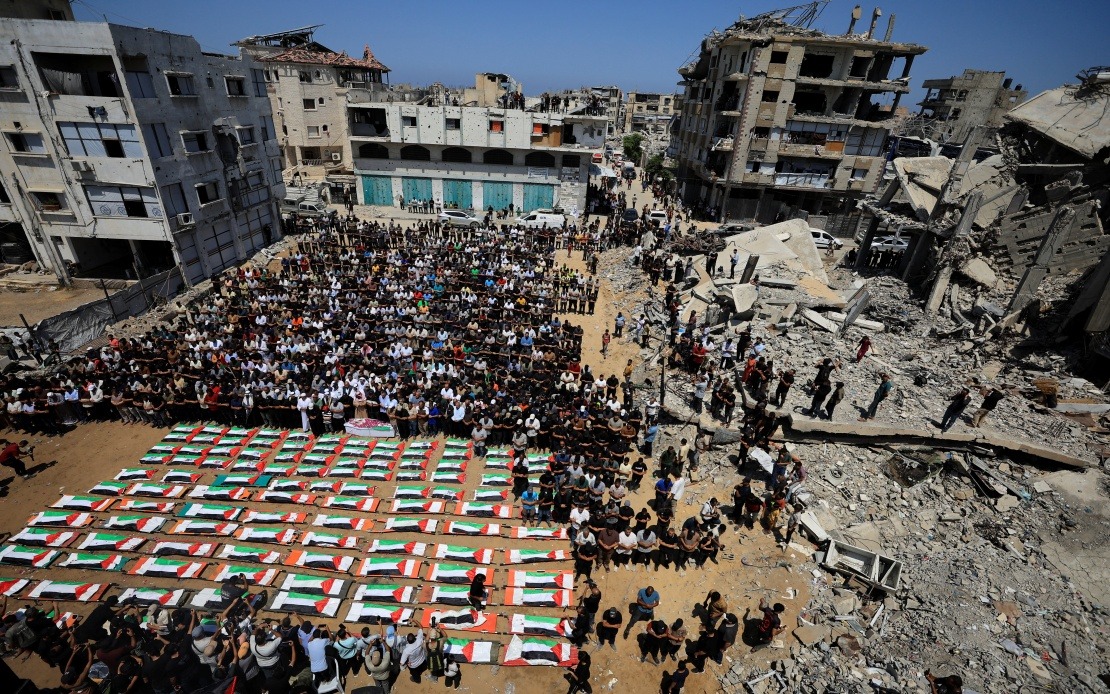
The fragile hopes of Gazans rest on the outcome of second-phase ceasefire negotiations that have repeatedly promised relief but delivered only fresh disappointment. For Saeed Helles, a 55-year-old father of five, the stakes could not be higher: his 13-year-old daughter Saja is battling cancer and desperately needs to leave Gaza for specialised treatment unavailable in the territory. When mediators proposed a second phase to the ceasefire agreement and Hamas accepted it, Helles and countless others saw a genuine opportunity for the conflict to wind down, border crossings to reopen, and medical evacuations to resume. Yet within days, conflicting statements about implementation have shattered that optimism, leaving families like his in a torturous holding pattern where every delay directly threatens lives.
The humanitarian implications of these negotiating stumbles extend far beyond individual cases. According to Mohammed Abu Nada, medical director of the Gaza Cancer Centre, approximately 11,000 cancer patients face severe medicine shortages, whilst roughly 4,000 patients with medical referrals remain trapped in Gaza due to persistent restrictions at border crossings. Most starkly, Abu Nada reported that about three cancer patients die every day for lack of adequate treatment—a grim arithmetic that underscores how geopolitical deadlock translates into preventable deaths. The medical director warned that further delays at the crossings would catastrophically deepen an already severe humanitarian crisis, essentially holding the health system hostage to negotiating positions.
The latest complication emerged when the so-called US-led Board of Peace announced that discussions between Nickolay Mladenov, its high representative for Gaza, and Israeli Prime Minister Benjamin Netanyahu had produced a significant disagreement. Israel stated that its forces would withdraw beyond the "Yellow Line" only after a comprehensive decommissioning process was completed, including the dismantling of light and heavy weapons and tunnels. This conditionality creates a chicken-and-egg scenario that fundamentally alters the timeline and sequencing of the agreement. Hamas, meanwhile, has insisted that progress on the second phase—including discussions on heavy weapons—depends on Israel halting its military operations entirely, fully implementing the first phase, and withdrawing from Gaza Strip territory. These positions appear irreconcilable without significant compromise from both sides.
For those waiting outside the negotiating halls, the mechanics of these disputes matter less than their consequences. Mariam Qudaih, 46, was displaced from eastern Khan Younis in southern Gaza and represents the hundreds of thousands longing to return home. She had reassured her four children that the second phase might finally allow them to go back, even if their home had been reduced to rubble. The children had begun excitedly discussing what returning would mean, anchoring their psychological recovery to the promise of returning to their land. Now, as negotiations stall, Qudaih confronts the soul-crushing task of explaining to her children that the return she promised has receded once more into uncertainty. She describes the experience as a cruel oscillation: each time news of negotiating progress emerges, hope surges and families begin making concrete preparations; then new developments collapse those hopes, forcing everyone back to the beginning. The emotional toll of this repeated cycle—a form of collective psychological trauma layered atop displacement and loss—cannot be quantified but is deeply corrosive to social cohesion.
The structural problem, according to Gaza-based political analyst Mustafa Ibrahim, is that the latest formulation has fundamentally shifted the balance of leverage. By linking Israeli withdrawal to the completion of disarmament, the current framework gives Israel substantially greater control over the timing of implementing the second phase. Ibrahim noted that this linkage raises serious questions about whether the mediators' original roadmap remains viable or whether the agreement has been effectively rewritten in a way that favours the stronger party's interests. The fact that military operations are continuing even as diplomacy proceeds creates an additional layer of distrust: Palestinians struggle to believe in negotiated agreements when violence persists in parallel, suggesting that the ground situation may ultimately be settled by force rather than negotiation.
The impact on vulnerable populations amplifies these concerns. Saeed Helles captures the desperate calculus facing parents in his situation: medical treatment cannot be rescheduled around diplomatic timelines, and every day of delay demonstrably reduces his daughter's chances of recovery. Saja remains hospitalised in Gaza City, clutching a small doll while undergoing treatment, while her family's ability to move her for better care depends entirely on border crossings reopening—a development that remains hostage to negotiations over weapons decommissioning and strategic withdrawal. For Helles, Hamas's "responsible and positive" approach to the mediators' proposals counts for little if Israeli conditions make implementation impossible or indefinitely delayed.
The broader regional context makes this situation particularly significant for Southeast Asian observers. The Gaza ceasefire has implications that extend well beyond the immediate parties; the region's own complex negotiations over maritime boundaries, weapons capability, and strategic withdrawal sometimes parallel the structural dilemmas playing out in Gaza. The tendency of one party to use disarmament processes as leverage for broader concessions, or to condition military withdrawal on verification procedures that extend implementation indefinitely, represents a recurring challenge in conflict resolution. How this crisis is ultimately resolved—whether through genuine compromise, external pressure, or renewed violence—will inform regional calculations about the viability of negotiated settlements to other disputes.
For now, Gaza waits in a holding pattern that grows more untenable each week. The human cost accumulates silently: cancer patients dying for want of medicine, displaced families living in uncertainty, and children oscillating between hope and despair. Helles and Qudaih represent thousands whose futures depend not on their own efforts or resilience but on whether distant negotiators can find common ground. The second phase of the ceasefire was supposed to represent an exit from this cycle; instead, it has become a gateway to deeper disappointment, proof that agreeing a ceasefire in principle offers no guarantee of implementing it in practice. Until both parties demonstrate willingness to move beyond their current positions, Gazans will continue waiting—and dying—in limbo.

