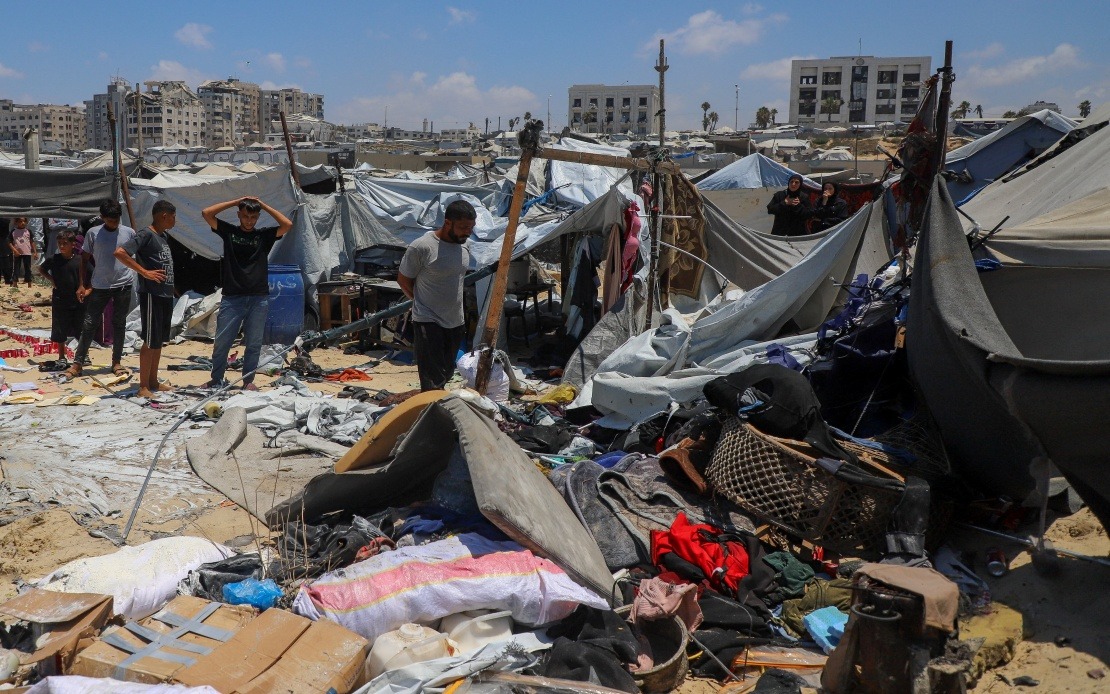
The scale of devastation in the Gaza Strip has reached unprecedented levels, with destruction affecting more than 90 per cent of the enclave's built environment, according to assessments compiled by the Palestinian Government Communication Centre at the Prime Minister's Office. The findings underscore the severity of infrastructure damage accumulated over months of military operations, presenting a humanitarian crisis of staggering proportions for the territory's 2.3 million residents.
Israeli occupation forces now exercise territorial control over approximately 80 per cent of Gaza, according to the Palestinian government's weekly situation report issued on Monday. This assessment reflects the military's expanded operational footprint across the coastal strip, consolidating control following sustained campaigns that have reshaped the political and physical geography of the region. The territorial control extends across major population centers and strategic zones that were previously under different administrative arrangements.
During the period spanning June 29 to July 6, the Israeli military significantly ramped up operational tempo across multiple fronts within Gaza. The intensified campaign concentrated on Khan Younis, Rafah, and Gaza City—three of the most densely populated urban areas within the enclave. Medical sources documented eight Palestinian deaths resulting from these operations, though the actual human toll likely extends beyond the immediate fatalities recorded during this specific timeframe. Residential neighborhoods bore the brunt of the military action, with widespread shelling targeting civilian areas and destroying family homes across multiple districts.
The displacement of Palestinian families has emerged as a catastrophic consequence of the destruction campaign. The Palestinian government report explicitly documented that Israeli forces demolished homes and shelled residential quarters, forcing thousands into makeshift shelters or informal displacement camps. This pattern of forced displacement compounds existing humanitarian challenges, as internally displaced persons struggle to access basic services, clean water, and medical care. The scope of homelessness has transformed the internal landscape of Gaza, with entire neighborhoods rendered uninhabitable by structural destruction.
The military pressure extends beyond Gaza into the occupied West Bank, where Israeli occupation forces conducted an escalating cycle of raids and restrictions throughout the same period. Operations intensified across Palestinian urban centers including Ramallah, Nablus, Hebron, Bethlehem, Jenin, Qalqilya, Tulkarem, and occupied Jerusalem. The campaign encompassed home invasions that disrupted civilian life, forced detentions through what Palestinian authorities term arbitrary abductions, and systematic movement restrictions that curtailed freedom of passage. Road closures in multiple locations further complicated Palestinian access to employment, healthcare, and essential services.
Settler violence has accompanied military operations, with Israeli colonial militias conducting organized attacks against Palestinian communities and their economic assets. These incidents transcended isolated incidents of individual confrontation, representing coordinated actions targeting Palestinian livelihoods and community infrastructure. In al-Lubban ash-Sharqiya, settlers deliberately torched a cafeteria establishment. Pastoral communities found themselves under assault, with shepherd flocks facing theft attempts near Bethlehem. The village of Burqa witnessed its main entrance blocked by settlers, preventing ordinary movement and commerce. This combination of state military action and settler attacks creates a coordinated pressure system that marginalizes Palestinian communities.
The agricultural sector emerged as a particularly vulnerable target within Palestinian economic structures. The Palestinian Ministry of Agriculture documented systematic destruction of productive assets across the occupied West Bank during the same reporting period. This destruction reflects a strategic targeting of Palestinian rural communities and their ability to sustain livelihoods through agricultural production. The ministry's documentation revealed the systematic nature of these actions, indicating coordinated operations across multiple zones rather than sporadic incidents.
Olive cultivation, a cornerstone of Palestinian agricultural tradition and export economy, suffered severe losses. Ministry assessments documented the destruction of 2,559 olive trees through uprooting, burning, or damage across the West Bank, with the most intense destruction concentrated in the Salfit, Jenin, and Nablus governorates. The destruction of olive trees carries particular significance for Palestinians, as these trees represent multi-generational agricultural investments and cultural heritage. Many olive groves in Palestinian territories have been cultivated continuously for decades, making their destruction an assault on both economic livelihood and cultural continuity.
The economic impact of agricultural destruction reached quantifiable proportions that illuminate the scale of material loss affecting Palestinian farming communities. At least 125 farmers sustained direct losses from the documented incidents, though the actual number of affected individuals likely exceeds official documentation. The Palestinian Ministry of Agriculture calculated direct financial losses at approximately US$11.78 million, a figure representing not merely economic damage but the destruction of productive capacity and future revenue streams. For farming families already struggling within a constrained economy, such losses translate into food insecurity and deepened poverty.
For Malaysian observers and the broader Southeast Asian community, these developments carry implications extending beyond immediate humanitarian concern. The Palestinian situation reflects broader patterns of occupation, territorial control, and civilian targeting that resonate across the region where occupation and territorial disputes persist in multiple contexts. The systematic destruction of civilian infrastructure and economic assets, particularly agricultural resources, demonstrates methods of territorial control through economic devastation. The scale of destruction—exceeding 90 per cent of built environment—approaches levels of destruction seen in previous conflict zones, with long-term implications for reconstruction, displacement, and generational trauma that extend decades beyond the cessation of active hostilities.

