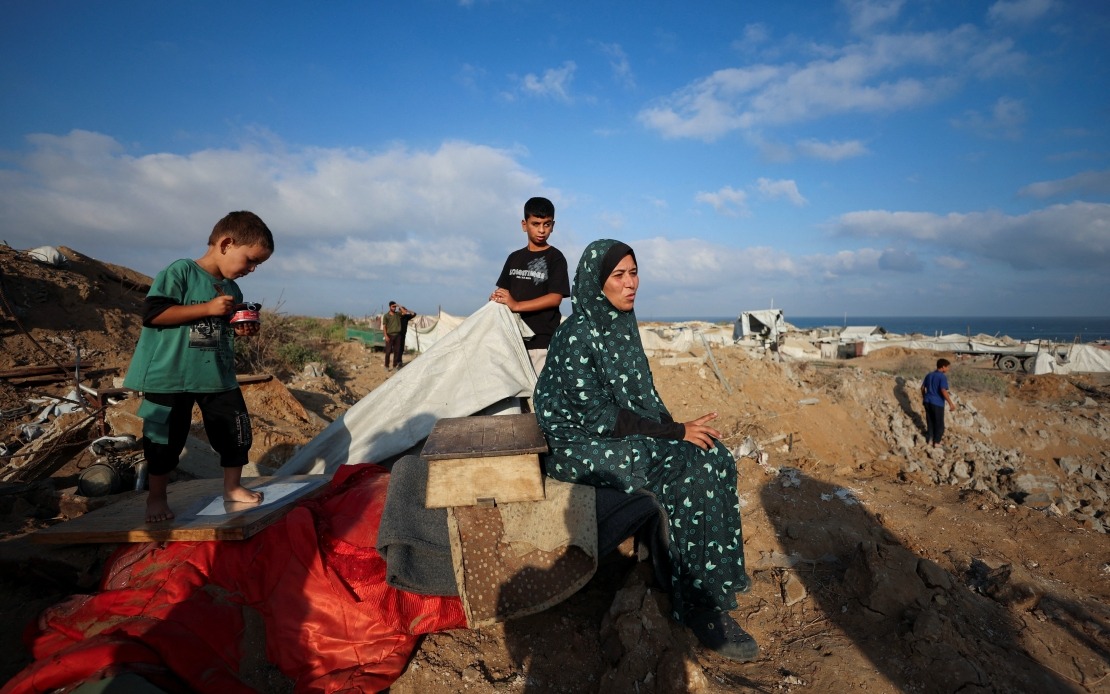
A stark reassessment of Gaza's hunger crisis reveals that approximately 1.4 million residents will grapple with severe food insecurity through December 2026, according to analysis released by the Integrated Food Security Phase Classification framework. The figure represents a troubling climb from 1.2 million people facing comparable hardship during the April-to-June period, underscoring the fragility of recent humanitarian gains and the precariousness of conditions across the Palestinian territory despite ongoing aid operations.
The latest IPC projection paints a dire picture of the population's vulnerability to malnutrition and starvation. Two-thirds of Gaza's inhabitants—roughly 67 per cent—are anticipated to experience crisis-level food shortages or conditions even more severe, a metric known as Phase 3 or worse on the organisation's classification scale. Within this broader cohort, approximately 212,000 individuals are expected to endure emergency conditions classified as Phase 4, representing the most dire circumstances short of famine. Every governorate across Gaza has been categorised as experiencing crisis-level food insecurity, indicating the universal nature of the threat.
The October 2025 ceasefire agreement catalysed some meaningful improvements in food distribution networks, with humanitarian organisations managing to deliver assistance to roughly 1.49 million people by May. This delivery represented a significant logistical achievement in what remains an extraordinarily constrained operating environment. Yet these measured gains obscure a more troubling reality: the volumes of food reaching civilians remain substantially below nutritional requirements, and the trajectory of assistance is moving downward rather than sustaining improvements.
The underlying drivers of Gaza's food insecurity expose the structural collapse of normal economic functioning. The IPC analysis highlighted that 83 per cent of Gazan households report having no viable income sources whatsoever, a figure that underscores the complete disintegration of livelihoods and employment opportunities across the territory. This near-universal absence of household earnings renders the population almost entirely dependent on external humanitarian support for survival, eliminating the possibility of families purchasing food through normal market mechanisms even when supplies are theoretically available.
A critical vulnerability now threatens to reverse the tentative progress achieved since the ceasefire took effect. Humanitarian assistance has contracted markedly since February, driven by severe funding shortages and mounting operational uncertainties affecting international aid organisations' capacity to function. The IPC warned explicitly that recent improvements remain characterised as "highly fragile," vulnerable to rapid collapse if current trends persist. This assessment reflects the reality that gains are not anchored in restored economic activity or sustainable local production but rest entirely on the willingness and capacity of external actors to maintain support flows.
Without sustained humanitarian food assistance, the projections become catastrophic. The IPC estimates that approximately 1.9 million people—constituting roughly 90 per cent of Gaza's total population—would face high levels of acute food insecurity through the final month of 2026. This counterfactual scenario, while acknowledging the critical role of aid, also emphasises that the current assistance levels are merely preventing a wider humanitarian collapse rather than addressing underlying structural deficits in food availability and economic functioning.
The implications for vulnerable populations carry particular urgency. The analysis projected that by April 2027, roughly 74,200 children under five years of age will require medical treatment for acute malnutrition, a condition resulting from severe dietary deficiency. Among these children, approximately 11,432 are anticipated to suffer severe malnutrition, a form that poses immediate risks to survival and carries lasting developmental consequences even if children survive. Simultaneously, approximately 24,600 pregnant and breastfeeding women require prioritised nutritional intervention to ensure both their own survival and the health prospects of infants dependent on maternal nutrition.
For Malaysian readers and the broader Southeast Asian region, Gaza's crisis carries relevance beyond humanitarian concern. The situation demonstrates how geopolitical conflicts dismantle economic systems and create populations entirely dependent on external assistance—a pattern that could theoretically affect any region experiencing prolonged instability. The IPC's call for sustained funding and humanitarian access reflects challenges identical to those confronting aid workers in other crisis zones across Asia and beyond, where funding shortfalls regularly force impossible triage decisions among competing needs.
The IPC's recommendations address three interconnected imperatives. Sustained humanitarian access to Gaza must be guaranteed and expanded, not subject to funding uncertainties or bureaucratic obstruction. Nutrition-specific programmes targeting vulnerable groups—particularly children and pregnant women—require substantial investment and integration within broader food assistance frameworks. Ultimately, the analysis emphasises that without permanent cessation of hostilities, even fully funded humanitarian operations cannot address the fundamental drivers of food insecurity in Gaza. The territory requires not merely assistance flowing in, but restoration of the conditions necessary for self-sustaining food production and economic activity.

