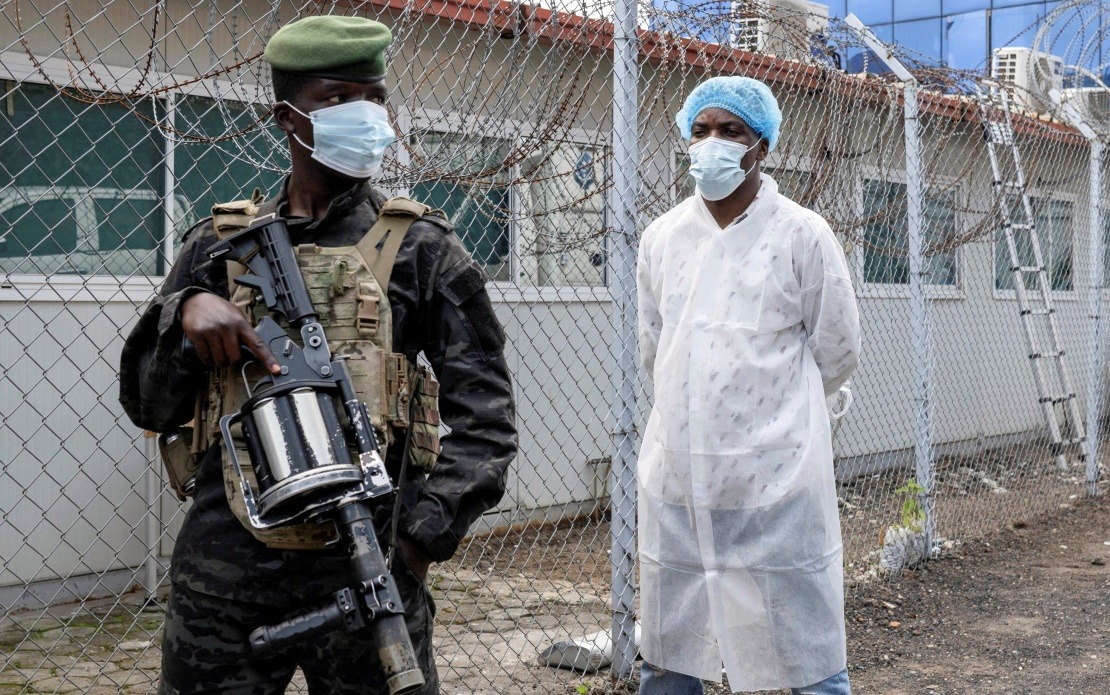
The practice of moving Ebola victims' bodies across the Democratic Republic of Congo for burial in ancestral home communities is significantly amplifying transmission risks, according to a stark warning issued by the United Nations migration agency on Friday. The alert comes as the current outbreak has claimed more than 828 lives and infected over 2,100 people, establishing itself as a rapidly escalating public health catastrophe in one of Africa's most unstable regions. The case fatality rate stands at 37.5 per cent, underscoring the severity of the Bundibugyo virus strain responsible for this outbreak, which was officially declared on May 15.
The geographic footprint of the epidemic has expanded to encompass five provinces—Haut-Uele, Ituri, North Kivu, South Kivu and Tshopo—creating a complex epidemiological landscape that has challenged containment efforts. The outbreak has intensified dramatically, growing by approximately 70 per cent over a two-week period, with health authorities documenting an average of more than 40 new confirmed cases daily. This acceleration places the DRC outbreak among the fastest-growing Ebola epidemics ever documented, having achieved this trajectory within merely two months of detection. The International Organisation for Migration Regional Director Frantz Celestin emphasized during a video briefing that the rate of expansion presents an unprecedented challenge for response coordination across the affected zones.
Cultural practices surrounding death and mourning have emerged as a critical vulnerability in containment strategy. The movement of deceased individuals within the country remains endemic, with border surveillance teams intercepting 105 bodies at crossing points and entry checkpoints into different health zones. These interceptions represent only those individuals apprehended through active monitoring, suggesting that the actual volume of unsecured body movements may be substantially higher. For many DRC communities, the transport of deceased relatives to their birthplaces for traditional burial represents a deeply rooted cultural imperative, one that frequently supersedes recognition of infectious disease protocols. This collision between customary practice and epidemiological necessity has created tension between public health authorities and local populations.
Community engagement difficulties have substantially hampered the effectiveness of safe burial operations across affected regions. Burial teams responsible for managing the deceased according to biosafety protocols frequently encounter active resistance from residents and, in alarming instances, direct physical attacks. These confrontations reflect a complex mixture of distrust toward government institutions, insufficient community health education, and the psychological toll of mass mortality on populations already vulnerable to multiple crises. The violence extends beyond mere obstruction; in one documented incident last month, four Red Cross volunteers were seriously injured at a cemetery in Bunia, the capital of Ituri province, when youths attempted to forcibly open a coffin during the funeral of an Ebola victim. Such incidents underscore the security dimension of health response operations in fragile state contexts.
The epidemiological profile of current transmission patterns reveals particular vulnerability among community members, with Celestin noting that approximately 60 per cent of recorded deaths have occurred within communities rather than healthcare facilities. This distribution reflects the persistent weakness in early case identification, epidemiological surveillance infrastructure, and the timeliness of clinical care access across rural and semi-urban areas. The concentration of mortality outside formal health systems indicates that substantial numbers of infected individuals remain undetected during early, more treatable disease stages, only entering surveillance systems as they deteriorate toward terminal illness. This detection lag extends transmission windows within household and community settings, creating secondary waves of infection that subsequently strain healthcare capacity once cases eventually reach facility-based care.
The World Health Organization has documented an expansion of affected health zones from 36 to 42 within a single week, illustrating the geographic diffusion occurring despite containment interventions. For Southeast Asian observers, including Malaysian public health officials and regional disease surveillance networks, the DRC outbreak demonstrates the vulnerability inherent in any epidemiological response conducted within contexts characterized by limited state capacity, infrastructure deficits, and complex humanitarian environments. The situation mirrors challenges that regional systems must prepare to address should novel pathogens emerge or spread through Southeast Asia's densely interconnected populations and trade networks.
Médecins Sans Frontières, the international medical organization with extensive operational presence in the DRC, characterised this outbreak as the third-largest Ebola epidemic recorded globally and the fastest-growing instance within the compressed two-month timeframe. The organization's assessment carries particular weight given its frontline engagement with both patients and communities, positioning it to evaluate real-world transmission dynamics beneath headline statistics. The clinical perspective from MSF personnel indicates that transmission is not merely accelerating but is doing so within increasingly complex circumstances as fatigue sets into response operations and community cooperation deteriorates.
The implications for regional preparedness in Southeast Asia extend beyond immediate epidemiological surveillance. The DRC experience illustrates how cultural practices, community trust deficits, and inadequate health system infrastructure can transform a containable outbreak into an expanding catastrophe. Malaysian authorities and ASEAN regional bodies can derive important lessons regarding the necessity of culturally-informed communication strategies, pre-existing community engagement mechanisms, and substantial investment in rural and remote health infrastructure. The outbreak also highlights the criticality of cross-border disease monitoring capacity, given that the DRC has experienced repeated attempts to transport infected individuals across provincial boundaries—a scenario that could readily manifest within Southeast Asia's more developed transportation networks should comparable pathogens emerge.
The stated trajectory of the outbreak suggests that containment remains achievable only if immediate interventions substantially alter community behavior regarding body movement and burial practices, while simultaneously bolstering healthcare facility accessibility and expanding surveillance infrastructure. Current trends, however, indicate momentum toward continued geographic and epidemiological expansion. For Malaysia and regional partners, the unfolding situation serves as a sobering reminder that technical capacity alone cannot contain novel pathogens without complementary investments in community trust, culturally appropriate communication, and pre-positioned response infrastructure.

