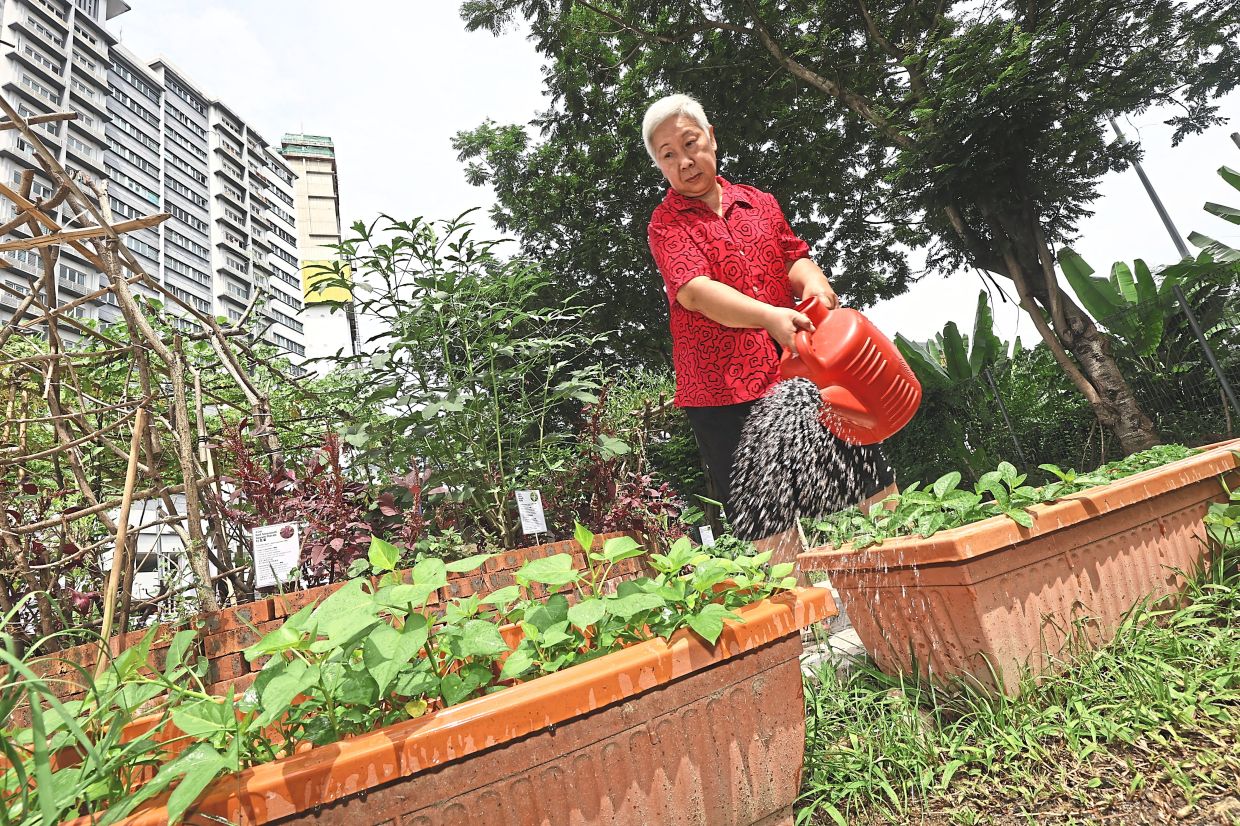
What began six months ago as an overgrown, abandoned field behind 1Razak Mansion in Kuala Lumpur has evolved into a carefully cultivated community food forest, marked by orderly rows of vegetables, herbs, fruit-bearing plants and flowering species. The transformation represents more than mere cosmetic improvement; it signals a potential model for addressing the complex social needs of Malaysia's rapidly ageing urban population, particularly those living in residential developments where isolation and inactivity pose significant threats to wellbeing.
The initiative, spearheaded by social enterprise PWD Smart FarmAbility in partnership with 1Razak Mansion's management and residents, was formally launched recently to considerable enthusiasm from the community. The project gained particular significance following remarks by Hannah Yeoh, Minister in the Prime Minister's Department (Federal Territories), who highlighted that approximately 80 per cent of 1Razak Mansion's population comprises senior citizens. This demographic reality underscores why programmes targeting both physical and mental wellness have become essential components of modern residential management, particularly in urban areas where traditional support networks may have weakened.
Yeoh emphasised that while physical exercise options such as tai chi classes already exist within the compound, mental health remains equally vital yet often neglected. The food forest addresses this gap by creating a purposeful activity that engages residents cognitively and emotionally while improving their overall quality of life. For many residents accustomed to sedentary routines, the garden provides structure, purpose and daily motivation—factors clinicians increasingly recognise as crucial protective elements against depression and cognitive decline in older populations.
Resident Alice Fernandez, 64, articulated the multifaceted benefits with clarity born from personal experience. For her and others, the garden serves dual functions: it provides both therapeutic engagement through plant tending and tangible economic relief through food self-sufficiency. In an environment where fixed retirement incomes often strain household budgets, the ability to harvest fresh produce directly addresses food security while reducing expenses. Fernandez's observation that the space previously remained unused due to its proximity to waste facilities illustrates how environmental design profoundly influences resident behaviour and wellbeing; beautification transforms abandoned corners into inviting community hubs.
The garden has already integrated itself into residents' daily rhythms. Fernandez describes how visiting the food forest has become an extension of her morning exercise routine, demonstrating how well-designed community spaces can reinforce healthy habits. Her voluntary participation in garden maintenance—watering plants and contributing labour—reflects the psychological satisfaction derived from productive activity, a phenomenon that research on active ageing consistently validates. When individuals feel their contributions matter to their community, engagement deepens and isolation diminishes.
Behind the scenes, Thieeben Sivabalasingam, 38, orchestrated much of the logistical complexity inherent in transforming the space. His account of the construction process—witnessing materials transported and organised into coherent form—captures the collaborative effort required. Sivabalasingam's observation that witnessing the completed garden proved "very inspiring" reflects how tangible community achievements generate collective pride and social cohesion, particularly important in residential settings where such unifying experiences may be infrequent.
Sivabalasingam articulated why the project holds particular significance for the predominantly elderly population: beyond nutritional benefits, the garden provides daily purpose and structured activity. For retired individuals navigating the psychological challenges of transitioning from work-defined identities, having a communal space requiring regular attention and offering visible progress furnishes psychological scaffolding. The difference between residents merely residing in a building and genuinely engaging with their community environment proves substantial for mental health outcomes.
Interest extended beyond 1Razak Mansion's boundaries. Jenny Wong, 70, and her husband KC Wong, 76, travelled from neighbouring Razak City Residences to attend the launch, immediately recognising the initiative's value. Their observations about cultivation, hobby development and environmental stewardship reflected broader understanding of how structured activities serve multiple community objectives simultaneously. Notably, KC's expressed hope that similar initiatives could be introduced in their own residential community suggests resident-led enthusiasm for replicating the model, a positive indicator for scaling such projects across other developments.
Founder Dr Billy Tang Chee Seng, 60, positions the current food forest as merely a foundation for expanded programming. Planned additions including an educational kitchen hub and microscopy facilities signal intention to extend benefits beyond the elderly population to younger residents. This intergenerational approach addresses a common challenge in residential communities: creating shared spaces and activities that bridge age divides while serving distinct developmental needs. Children learning soil science and sustainable food production while seniors share gardening knowledge creates natural mentoring relationships and community integration.
The broader implications for Malaysian urban planning merit consideration. As cities like Kuala Lumpur intensify development and populations age, designing multipurpose community spaces that simultaneously address food security, mental health, physical activity and intergenerational connection becomes increasingly valuable. The 1Razak Mansion food forest demonstrates that even small neglected spaces possess potential for substantial community benefit when approached holistically and collaboratively.
The project's success hinges partly on genuine community ownership rather than top-down implementation. Residents like Fernandez and Sivabalasingam actively participated in conceptualisation and maintenance, ensuring the garden responds to authentic community needs rather than external assumptions about elderly preferences. This participatory approach increases sustainability and investment; residents steward spaces they helped create with greater diligence than those imposed upon them.
As Malaysia confronts demographic shifts toward older populations while grappling with urbanisation's social fragmenting effects, the 1Razak Mansion food forest offers a replicable model addressing multiple policy objectives simultaneously. It improves food security, enhances mental health, facilitates physical activity, builds community cohesion and creates intergenerational learning opportunities—all within a modest footprint requiring relatively modest investment. Whether other residential developments, municipal authorities and social enterprises recognise and embrace such integrated approaches will significantly influence quality of life outcomes for Malaysia's growing elderly population in the years ahead.

