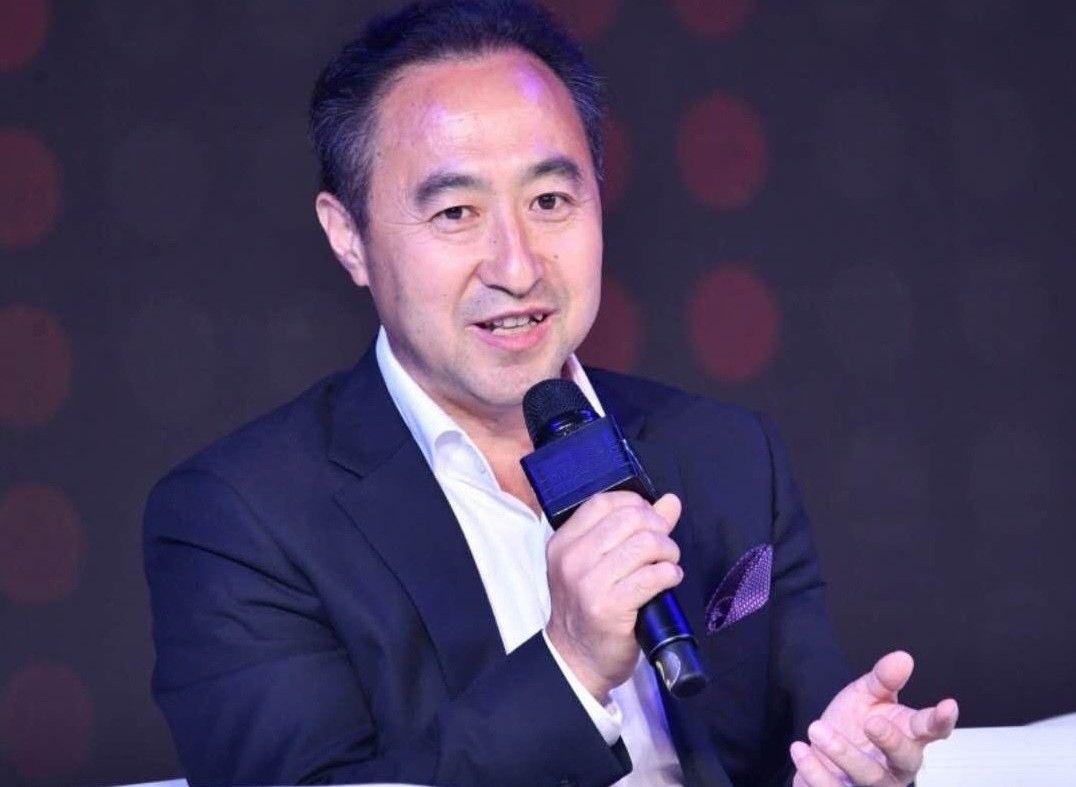
CJ Wang's journey from provincial schoolteacher to billionaire appliance mogul offers a distinctive window into how Chinese entrepreneurs are reshaping global consumer technology markets. Born in Yantai, Shandong province in 1969, Wang transformed a humble childhood memory—grinding soybeans by hand at his uncle's stone mill—into the founding principle of a business empire that now spans two continents and commands a US$10.4 billion valuation.
Wang's early life embodied the rhythms of China's pre-industrial domestic economy. His formative years were punctuated by the labour-intensive process of preparing soy milk, a breakfast staple so deeply embedded in regional culture that he would instinctively recognise its commercial potential decades later. After completing his electrical engineering degree at Beijing Jiaotong University, Wang followed the conventional path expected of him, entering the teaching profession much as his parents had done. Yet beneath this compliance lay a restlessness; in interviews with international media this month, Wang reflected that he had yearned to pursue something more ambitious and create his own trajectory rather than inherit one.
The decisive moment came in 1994 when Wang resigned from his teaching post to pursue what he described as his passion for engineering. His insight was elegantly simple: if soy milk and fried dough sticks would continue anchoring Chinese breakfasts for generations to come, then mechanising their preparation represented a genuine gap in the market. That year he invented the world's first electric soy milk maker, a device that, while imperfect in its initial form, constituted a genuine technological breakthrough. He immediately established Joyoung, a kitchen appliance brand that would become synonymous with affordable, reliable home technology across East and Southeast Asia.
The early success was striking. By 2004, Joyoung had already sold over one million soy milk makers, and the company was broadening its portfolio into blenders, rice cookers, and other kitchen essentials. This growth trajectory continued for more than two decades as Joyoung consolidated its position as a dominant appliance manufacturer within China's domestic market. The company eventually secured a listing on the Shenzhen exchange, yet despite its formidable presence at home, it remained virtually unknown in Western markets—a limitation that would drive Wang's strategic thinking as he entered the late 2010s.
Rather than attempting to build brand recognition from scratch in unfamiliar Western markets, Wang pursued a more pragmatic acquisition strategy. His attention focused on SharkNinja, an American company that had already cultivated a loyal customer base through its vacuum cleaners and blender products. Wang was attracted not merely to SharkNinja's product quality or expansion potential, but to the calibre of its leadership, particularly CEO Mark Barrocas, whom he persuaded to remain in position following the takeover.
Yet Wang's acquisitional instincts were tempered by a critical eye for operational weaknesses. SharkNinja's product line was comparatively narrow, its marketing apparatus remained tethered to traditional television infomercials with minimal social media presence, and its distribution networks lacked the sophistication required for modern retail environments. Most significantly, the company's manufacturing relied upon a concentrated cluster of Chinese suppliers, constraining flexibility and limiting innovation potential. These gaps represented precisely the kind of operational challenges that Joyoung had learned to navigate across two decades of Asian market expansion.
Wang's private equity firm acquired a majority stake in SharkNinja in 2017, subsequently placing it under JS Global Lifestyle Co., his Hong Kong-listed holding company established in 2019. The strategic rationale was transparent: apply Joyoung's proven expertise in product development, supply chain management, and market penetration to revitalise an American brand with genuine but underrealised potential. Wang invested significantly in expanding SharkNinja's research and development infrastructure, enabling the company to develop innovative products designed with algorithmic social media virality in mind, particularly on platforms like TikTok.
The results have been transformative. Under the combined stewardship of Wang's financial backing and Barrocas' operational leadership, SharkNinja has evolved into a multibillion-dollar enterprise, structured across two principal brand architectures: Shark for vacuum cleaners and beauty care products, and Ninja for kitchen appliances. This dual-brand strategy has enabled SharkNinja to segment its market positioning while maintaining unified supply chain and technological advantages. In 2023, SharkNinja underwent a direct listing on the New York Stock Exchange, separating from JS Global Lifestyle and establishing itself as an independent publicly traded entity.
Wang's financial position reflects the spectacular success of this transatlantic strategy. As of May 2026, he held approximately 35 percent of SharkNinja alongside a 52 percent stake in JS Global Lifestyle, generating an estimated net worth of US$10.4 billion according to the Bloomberg Billionaires Index as of August 21. His compensation arrangements underscore his continued operational involvement; in 2024, Wang ranked as Hong Kong's second-highest-paid corporate director, receiving a total remuneration package exceeding HK$520 million (US$66.3 million).
Yet Wang remains consciously private despite his extraordinary commercial achievements. Time magazine characterised him as soft-spoken and reticent, noting his interests in golf and premium whisky as rare glimpses into his personal life beyond the corporate sphere. His decision to grant extensive media interviews represents a calculated departure from this established reticence, motivated by contemporary geopolitical considerations. Amid intensifying US-China trade tensions and heightened governmental scrutiny of Chinese investment flows into American markets, Wang recognised that proactive narrative control had become strategically essential. By articulating his own biographical story directly to Western audiences, he seeks to preempt speculation regarding his background and commercial intentions while emphasising the legitimacy and transparency of his business operations.
This biographical moment carries particular significance for Southeast Asian observers and investors. Wang's trajectory illustrates how Chinese entrepreneurs with homegrown manufacturing excellence and operational discipline can successfully scale Western brands through patient capital and operational integration rather than simple financial engineering. As regional economies navigate evolving trade relationships and technology transfer dynamics, Wang's model—combining deep operational expertise with strategic patience and cultural adaptability—offers a template that other Asian technology companies may increasingly attempt to replicate in advanced markets.

