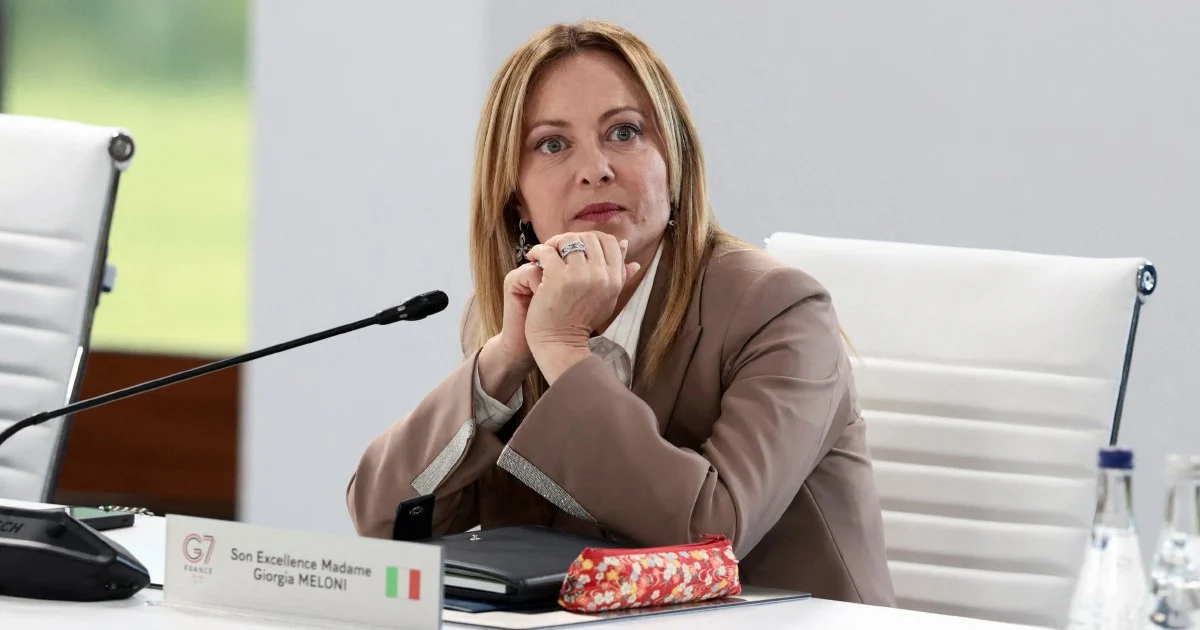
When Donald Trump took his oath of office for a second presidential term in 2025, Giorgia Meloni stood apart from her European counterparts. The Italian Prime Minister received the singular honour of an invitation to the inauguration—a distinction that underscored her status as Washington's preferred leader on the continent. That gesture appeared to herald the opening of a new chapter characterised by harmony between the Trump administration and Rome, cementing Meloni's position as perhaps the most influential bridge between Europe and a resurgent America. Yet in the months since that ceremonial moment, the relationship has undergone a dramatic and public unravelling, with Meloni now openly challenging Trump and his policies on a scale few European leaders have dared.
The deterioration marks a striking departure from the careful relationship-building that characterised the early stages of Meloni's premiership. When she first assumed office in 2022, the Italian leader cultivated what many observers viewed as a pragmatic alignment with Trump, despite the wider European skepticism towards the former president. Rather than joining in the chorus of criticism common among mainstream European politicians, Meloni positioned herself as someone who could work constructively with Trump should he return to power. This calculated approach appeared to yield dividends when she secured the presidency of the Group of Seven—a position of considerable prestige—and maintained cordial relations with the incoming Republican administration.
The timing of Meloni's visible frustration with Trump carries particular significance for the broader European political landscape. Italy, as the world's eighth-largest economy and a founding member of the European Union, occupies a position of considerable weight within continental affairs. Meloni's willingness to challenge Trump publicly signals that even the American president's most favourable European interlocutor has reached the limit of her accommodation. This shift suggests a hardening of European resolve against what many perceive as capricious or damaging American positions. For smaller and medium-sized European nations watching from the sidelines, Meloni's transition from trump whisperer to trump critic provides crucial cover for their own resistance.
The roots of the deterioration likely lie in Trump administration policies that directly affect Italian and European interests. Tariff proposals, trade disputes, and shifting security commitments have tested the patience of even the most America-friendly European leaders. Meloni, constrained by her responsibility to Italian voters and the European consensus, cannot indefinitely defend decisions that threaten European prosperity or security. The gap between her initial optimism and her current scepticism reflects the collision between diplomatic aspirations and economic realities that demand a more confrontational stance.
For regional observers in Southeast Asia and across the Asia-Pacific, Meloni's recalibration carries instructive lessons about managing relationships with an unpredictable superpower. Nations like Singapore, South Korea, and Australia have similarly attempted to balance engagement with Trump while protecting their core interests. Meloni's experience suggests that such balancing acts, however skillfully executed, face eventual strain when divergent priorities become irreconcilable. Asian governments closely watching European responses to American policy shifts understand that even privileged allies cannot indefinitely absorb demands counter to their national interests without consequence.
The transformation also illuminates fault lines within the conservative political movements that have emerged across the Western world in recent years. Meloni represents a distinct brand of nationalist-conservative politics, rooted in Italian and European concerns rather than American populist rhetoric. While she shares certain ideological affinities with Trump, these commonalities do not override her fundamental loyalty to Italian interests. This distinction proves crucial: where some anticipated that Meloni's right-wing credentials would translate into unconditional support for Trump, her conduct demonstrates that nationalism—by definition—privileges the interests of one's own nation.
The diplomatic implications extend beyond bilateral relations. Meloni's increasingly critical posture provides political cover for European Commission and EU Council positions that resist American pressure on issues ranging from trade to defence spending. When the Group of Seven presidency holder expresses doubts about American policies, other democratic nations gain diplomatic space to voice similar concerns without appearing to engage in coordinated anti-American behaviour. The appearance of disunity among Western allies paradoxically strengthens their collective hand by preventing Trump from dividing them as easily.
Looking forward, Meloni's shifting stance raises questions about the durability of any European consensus around Trump. If even his most amenable European interlocutor has become a public critic, the prospects for a coherent western alliance increasingly dependent on shared values and common purpose grow more fraught. The Italian leader's journey from honoured guest at the inauguration to vocal challenger reflects the structural impossibility of Europe subordinating itself entirely to American priorities, regardless of which American president holds office or which European leader seeks accommodation.
For Malaysia and other Southeast Asian nations navigating their own complex relationships with great powers, Meloni's experience offers a reminder that even careful diplomatic positioning cannot guarantee alignment indefinitely. Interests diverge; pressures accumulate; and leaders ultimately answer to their own populations and institutions. The Italian Prime Minister's transformation from Trump's closest European ally to his critic demonstrates that in international relations, today's privilege rarely translates into tomorrow's deference. As global alignments shift and realign, the capacity to pivot swiftly while maintaining dignity and purpose becomes perhaps the most valuable skill a leader can cultivate.