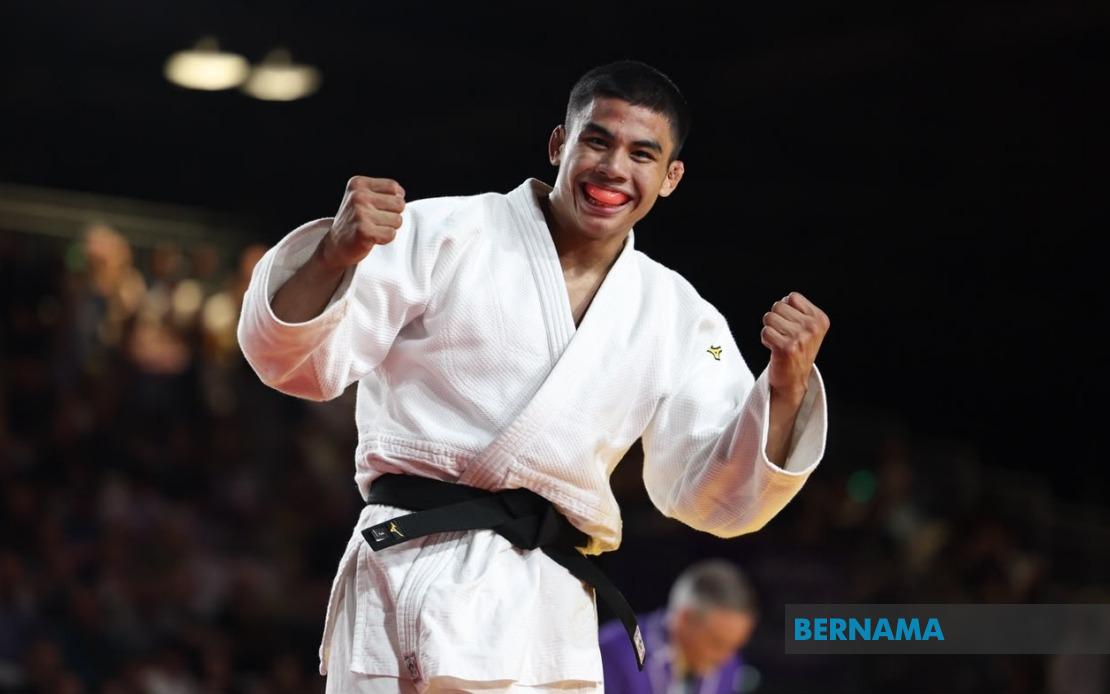
A storybook became the unlikely catalyst that revealed Amir Daniel Abdul Majeed's extraordinary resolve, years before the Penang-born athlete would etch his name into Malaysian sporting annals. At Glasgow 2026, the 21-year-old judoka defeated South Africa's Timothy Meuwsen in the final to claim the men's under-81 kilogramme gold medal, making history as Malaysia's first-ever Commonwealth Games judo champion and delivering the nation's eighth gold of the Games. Yet the seeds of this historic achievement were sown in his earliest years, when a simple parental bargain became the first demonstration of the discipline and commitment that would define his athletic career.
Amir Daniel's mother, Yeoh Suatkhim, recalls a pivotal moment when her son was just four years old. The young boy had developed the common childhood habit of thumb-sucking, which his parents sought to address through conventional means, all to little effect. Recognising his desire for a particular storybook, Yeoh made him an offer: abandon the habit and the book would be his. The transformation was immediate and complete. By the very next day, Amir Daniel had entirely ceased the behaviour, driven solely by his yearning for the promised storybook. What might appear a minor episode in parental guidance actually revealed something fundamental about the child's character—an ability to commit to goals and execute with unwavering focus, qualities that would later translate into sporting excellence.
This early display of determination did not merely fade with childhood but instead became woven into the fabric of Amir Daniel's approach to life and sport. According to his mother, this persistent willingness to see objectives through to completion has characterised him into adulthood. She observes that once he sets his sights on an ambition, whether trivial or monumental, he possesses the internal fortitude necessary to achieve it. This psychological foundation would prove invaluable when he encountered the rigours and complexities of competitive judo, a sport demanding both physical prowess and mental resilience. The child who abandoned his thumb-sucking for a storybook had learned perhaps the most essential lesson an athlete could: that desire combined with action produces results.
Amir Daniel's introduction to judo came at age five, when he began training under national coach Md Nashriq Md Nassir, who continues to guide his development today. This relationship has proven transformative, extending far beyond the confines of the martial arts training mat. Md Nashriq emerged as more than a technical instructor; he became an integral part of the family's support structure, actively involved in nurturing Amir Daniel's broader personal development. When examination periods approached, Yeoh would consult directly with the coach, who would establish informal agreements with his protégé to ensure academic responsibilities remained balanced with sporting ambitions. This holistic approach to athlete development—one that refuses to compartmentalise sport from education and personal conduct—reflects a philosophy increasingly recognised as essential for sustainable success in contemporary elite sports.
The strength of Amir Daniel's commitment to his coach's expectations cannot be overstated. His mother emphasises that once the judoka pledges his word to Md Nashriq, he maintains that promise without compromise. This unwavering loyalty and reliability have created a powerful training dynamic, one that has facilitated rapid technical improvement and consistent mental preparation. For Malaysian sports observers, such relationships between coach and athlete offer a model worth emulating, particularly in environments where competing demands frequently pull young athletes in different directions. Yeoh credits the coach's influence as absolutely instrumental to her son's trajectory, stating plainly that without Md Nashriq's guidance and mentorship, Amir Daniel might never have reached the pinnacle he has now achieved.
Prior to his Glasgow triumph, Amir Daniel had already demonstrated promise on the Commonwealth Games stage. At Birmingham 2022, he captured bronze in the men's under-73 kilogramme category, signalling that he possessed the quality to contend at the highest amateur level. That podium finish, however, represented merely a stepping stone toward greater ambitions. The progression from bronze to gold, combined with a weight category increase, underscores both physical maturation and technical refinement. For Malaysian judo, the significance extends beyond a single medal; it validates a development pathway and suggests that future generations of Malaysian judokas may now look to Amir Daniel as evidence that Commonwealth and Olympic success lies within reach for athletes from the region.
Yeoh's philosophy regarding childhood development bears noting for Malaysian parents and educators navigating the contemporary landscape of youth engagement. She advocates for early exposure to structured sports and formal learning as mechanisms for channelling youthful energy into constructive endeavours. This approach, applied first to her eldest child Nur Yasmeen and subsequently to Amir Daniel, reflects a deliberate parenting strategy informed by observation of how purposeful activity shapes character and capability. In an era when digital distractions proliferate and unstructured leisure dominates many childhoods, Yeoh's insistence on meaningful engagement through sport and education offers a counterpoint worth considering. The discipline acquired through athletic training transfers readily to academic pursuits and broader life challenges.
Amir Daniel's historic Gold Coast victory carries implications extending well beyond personal achievement or even national pride, though both are legitimately present. The triumph signals to Malaysian sporting administrators and investors that investment in specialist coaching and athlete development pathways yields measurable returns. Judo, long overshadowed by more popular martial arts disciplines in Malaysian consciousness, has now produced an athlete capable of winning at the Commonwealth level. This achievement may catalyse increased funding, recruitment, and support for the sport domestically, creating opportunities for subsequent generations of judokas. Regional competitors throughout Southeast Asia will similarly take note, recognising that Malaysia now possesses demonstrable expertise in this Olympic discipline.
Looking ahead, Yeoh articulates ambitions that transcend even Commonwealth Games success. She envisions her son competing at the Olympic Games, a stage that would represent the ultimate validation of his sporting journey. This aspiration is neither unrealistic nor unprecedented; athletes have leveraged Commonwealth Games performances as springboards toward Olympic qualification and medal success. For Amir Daniel at age 21, the Olympic pathway remains entirely accessible, with multiple Games cycles still within realistic reach. His mother emphasises, however, that this pursuit must remain balanced with continued academic development and a commitment to supporting fellow judokas within the Malaysian sporting ecosystem. This holistic perspective—one that refuses to allow sport to consume all other dimensions of life—echoes the principles that have guided his development throughout his youth.
The journey from a four-year-old child motivated by a storybook to a Commonwealth Games gold medallist at age 21 encapsulates something fundamental about athletic development that extends beyond Malaysia's borders. It demonstrates how early character formation, parental guidance, expert coaching, and unwavering personal commitment converge to produce excellence. For Malaysia, Amir Daniel Abdul Majeed's achievement represents not merely a medal at Glasgow 2026 but confirmation that the nation possesses the structural and human resources necessary to develop world-class athletes across diverse sporting disciplines. As he contemplates his next chapter, whether toward Olympic qualification or other ambitions, his younger self's simple determination—quit a habit for a storybook—remains his most valuable asset.

